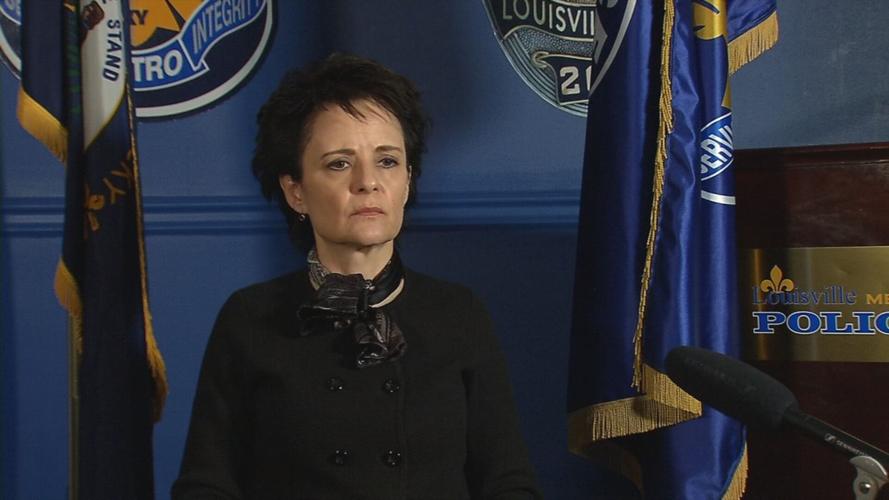

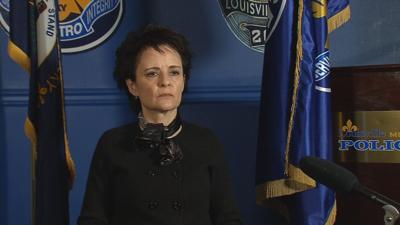
LOUISVILLE, Ky. (WDRB) -- In her first sit-down interview since her first week on the job, Louisville Metro Police Chief Erika Shields addressed the city's violent crime problem and how she and the department plan to address it.
Keep reading for a transcript, edited for clarity, of the interview. The full interview with Shields, conducted by reporter Travis Ragsdale, is at the end of this story.
Question: What have you learned about the city of Louisville in your time so far being here?
"I've learned that there's an enormous number of individuals who want to see things change; they want to see things improve. And they understand that there's no just going back to the way it was. And I think that there's a lot of energy around finding a path forward so that Louisville is in a healthier, happier space, if you will. The amount of support and engagement has been phenomenal."
Q: What have you learned about about the department so far?
"The department is — I'm thrilled. I was concerned that I was going to come in and that maybe people wouldn't want to work. I would understand that, because that's across the country, quite honestly. And yet, what I've encountered is an incredibly motivated and dedicated department. They want to work; they want to get it right. They're open to change. I could not be more pleased, quite honestly."
Q: Violent crime, obviously, is a problem. I think you'd probably agree with that. It's what a lot of people in town are talking about. Almost 50 homicides so far this year. What is going on in our city with violent crime right now?
"When you look at the crime pattern in LMPD, what you see is this actually started — the real uptick — in 2019. I believe there was several incidents around traffic stops. And what you saw — you can track the data and see that there was a real halt in officers being proactive. And with that lack of proactiveness, you see crime spike. Then it gets back, it levels off a bit, and you have this past summer, where there's no enforcement and crime spikes.
"The reality of it is, if you're going to offset violence, you have to have a police agency that's proactive. If you're reactive, you're going to see what the space that we're in — what we're getting. And then you layer on top of that COVID and all of the issues that have accompanied that. So the department has to get to a space where officers feel confident in re-engaging with the public. So my task is to say, to show them, 'I need you to be proactive, I need you to be engaged, but this is how we're going to do it; we are going to operationalize it in a very different manner than previously.'"
Q: How so?
"So previously, well, I won't comment on previously. But let me say forward thinking. It's very focused, intelligence-led policing. You know, you identify those individuals who are driving your violent crime — the repeat offenders. You identify them, you identify their network of associates and you have very targeted enforcement. And then what you're doing is, you are impacting the violent crime circuit. And it doesn't just end there. You track where these individuals go. You track if they get signature bond. You hold others in the criminal justice system accountable. You know, it's very deliberate in how you go about your operations."

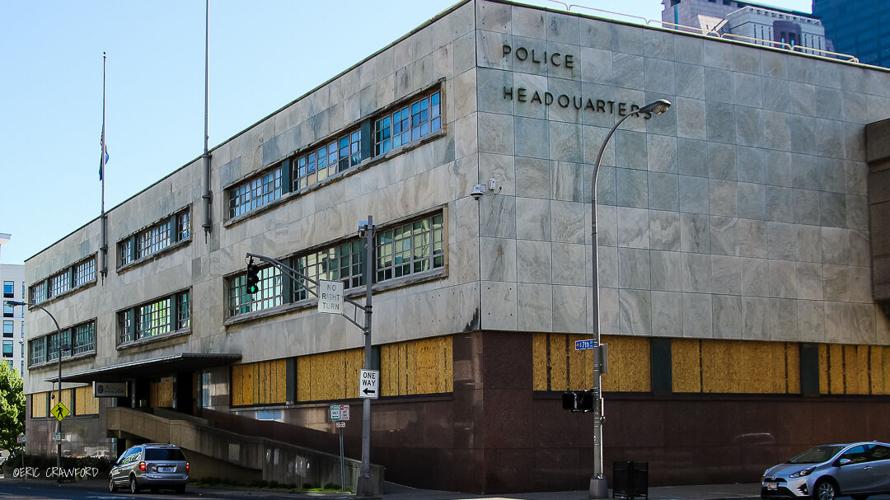
Louisville Metro Police Headquarters at Seventh and Jefferson streets on July 27, 2020.
Q: When you talk about enforcement, What do you mean? Do you mean traffic stops? Do you mean targeting them for gun crimes? Figuring out anything you can target them for?
"I am a huge proponent of getting illegal guns off the street. When you focus on illegal guns, you are going to get the individual who's committing violence and you're going to get the individual who is pushing the drug trade through the city; they go hand in hand, but you have to triage it. Without question, the highest offense is the gun charge, because that's what ultimately ties to the murders. So it's very focused; it's very deliberate."
Q: Looking at your latest Compstat data, year over date, citations, arrests and warrants served are all down. That seems to fly in the face of what you want to do. So have you had that meeting and the messaging with your officers to say these things need to improve?
"I've been very, very cautious on how I approached just because what cannot happen is, I could not come in and just say, 'Go do it.' Because this city cannot afford another incident, questionable incident. It just cannot. And it's important to me that I don't just say, 'Go make arrests.' I need to have them understand really what we are intending to accomplish. It's a process. I mean, you've got a department that's been reeling and has really been off the proactive enforcement piece for, jeez, I don't know, a year and a half. So it's takes time to get people back in the space and to understand what the directive is. Just opening up the the gates and saying, 'Here, go make arrests' is the worst thing I could do."
Q: Do you have enough officers to do that right now?
"I always take the posture of this is who I have so let's figure out how to leverage it so that we can bring forward the most success. Obviously, we are trying aggressively to hire folks. We're in the same posture as every city, every department in the country. It's a struggle, but I also do think that what I really need our commanders to do is understand you have to be willing to do some things differently, and I promise you there are areas here where we are not utilizing individuals to the full capacity that we can."
Q: Expand on that for me a little bit. Do you mean individual officers and their specific assignments currently?
"I think you have to look at, what officers are doing assignments that can be done by a civilian? That's step one, because that's always a chunk of officers. What officers do we have doing things because we've always done that? Should we be doing it? Should the private sector or the private company be paying for security? Have we operationalized private security measures? I mean, there's always things that you can tweak, and the key is for me to get the commanders into a space where they're looking to recognize these areas where we can perform better."
Q: But you would want more officers?
"Oh, certainly. Yeah, I mean, I readily admit I would love nothing more than for 200 officers to fall on my lap, but we're hiring. At the same time, you can't lower the standards. When you lower the standards, then you're just going to pay the price down the road."

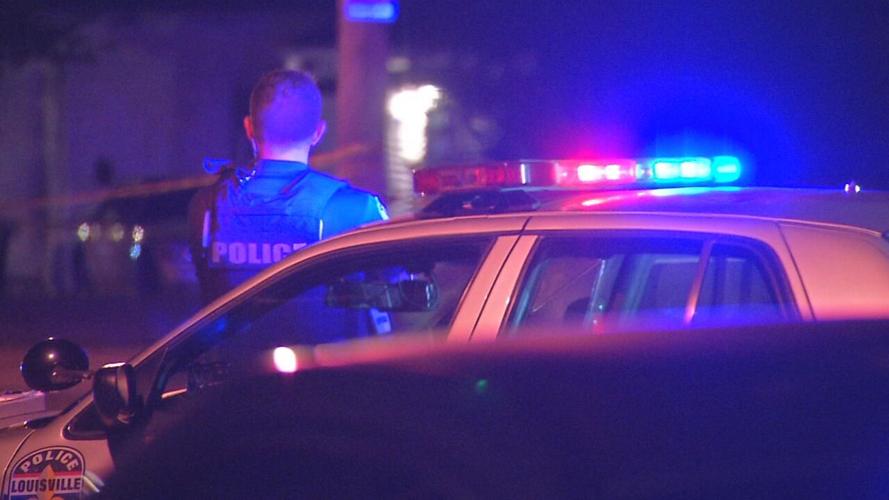
A Louisville Metro Police officer responds to a crime scene. (WDRB file photo)
Q: There is a perception in the community that, if a crime occurs, the police aren't necessarily always going to come. You may get somebody on the phone to report a crime, but I think that there's a perception that crime is high because people know they can get away with things right now.
"I think that we're blending a couple issues. I think the lack of being proactive has impacted crime and crime rate but I also will say to you it's not just COVID. Before COVID, you saw a number of agencies across the country stopping from responding to certain types of calls because they simply did not have the manpower. That is something that, you know, you've got to triage. What are you going to go to? I mean, if you go to someone's car that's been broken into, there's no suspects. Do you take an officer out of service for 45 minutes to go and print that car when you could have them in an area and be deterring a shooting? So it's unfortunate. In a perfect world, you don't have to make these decisions, but the reality of it is we do."
Q: What will the public see differently on a day-to-day basis with the department and any changes you might want to make?
"What I want the public to be seeing is, I want them to say, 'OK, I'm seeing more of LMPD. They're out here, they're engaging with us and they're doing it in a professional manner.' I need the interaction between police and public to be positive. We set the tone of the encounter in 95% of the incidents, so if we adopt the policy approach of we're going to navigate this professionally it will change the tenor of how this department operates."
Q: Do you feel like you have full autonomy to run the department independently of the mayor's office?
"Oh, I know I do."
Q: Without any question?
"I know I do."

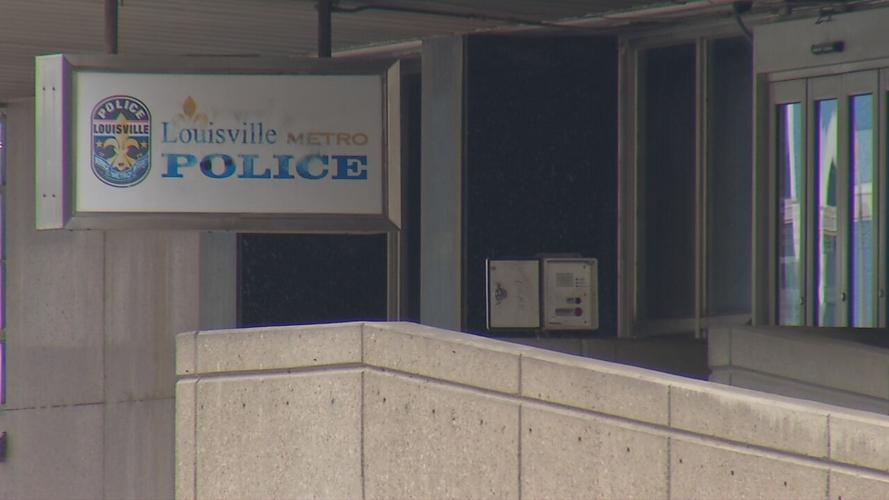
Louisville Metro Police headquarters in downtown Louisville, Ky. (WDRB file photo)
Q: When we talk about LMPD, a lot of focus is is made on the Ninth Mobile Division. I wanted to get your thoughts on that division and their effectiveness at deterring violent crime. They've gone by a few different names over the years.
"They were abolished before I got here, so I've heard about them. They were like a street-level task force and they went from division to division. They're not actually operating right now, correct?"
LMPD spokesperson (off camera): "The actual Ninth Mobile was disbanded, and a lot of those detectives were absorbed into (the Criminal Interdiction Division) — what is now known as CID."
Q: I don't think I knew that, actually. Interesting. OK. So then let me ask you this. It gets into my next question about task forces. You know, you mentioned it again earlier is focusing on guns. Do you view the department as needing specific task forces like that to focus on crimes? Or do you think that that can be done at a division level?
"Oh, no, I think that you absolutely have to have people dedicated exclusively to focusing on guns and violent criminals. The reality of it is because, at the division level, the approach to crime fighting is 110% different. At the division level, individuals are conditioned to be reactive, their responses to 911. When you're talking about being proactive and getting guns and violent criminals off the street, that's a complete different mindset. You have to get somewhat conditioned into just policing the day differently.
"It's like the starter in a baseball game and closer. To the outsider, it looks like you're just throwing the ball, and yet it's the mindset that determines how successful you will or won't be."
Q: Is it a situation where you — let me rephrase. When will we see a difference in the violent crime problem?
"Listen, it can't come soon enough. Believe me, it is something that I am hammering away at. But at the end of the day, we have to do it. We have to do it properly."

Louisville Metro Police respond to a crime scene. (WDRB file photo)
Q: How much of the issue is driven by juveniles?
"I think that with COVID, with the schools being closed, with all of these programs that are no longer operational that kids could go and spend time, you're seeing a significant increase in crime being driven by juveniles. Then you layer on top of that, that the Metro Corrections, juvenile corrections, is not operational. And listen, I'm not a proponent of putting a kid in custody, period. But what I will also say to you is if you have a kid who is in the middle of some sort of turf gang war, the answer is not to put that child back into a school, because now, at that point, you have introduced the violence into the school. We need to resolve the issue at hand first. So I think that there is definitely, there's number of issues that are compounding what we're seeing as it relates to crime and juveniles."
Q: Is that an issue that is happening? Where a kid who may be involved in gang activity is maybe not being held in custody and being released when they shouldn't be?
"I think that what you've seen in the last year across the U.S. — in the last year, year and a half — you've seen a real strong push to not keep people in custody, which as a practice and policy I fully support. But you have to be looking at everything individually. And clearly there's been more of a blanket application. And that's not going to solve the problem."
Q: Does Louisville have a gang issue?
"Oh, certainly. There's not a major city in the United States that doesn't have a gang issue. So the question is, what are you doing to interrupt it? What are you doing to redirect it? And, honestly, for us to really rein in the any level of organized crime for any police department, that's where you have to have the relationships with the federal government so that you can layer on the appropriate RICO charges."

Louisville Metro Police investigate a fatal shooting in the 100 block of West Broadway on March 20, 2021. (WDRB photo)
Q: The reports and the arrests for drug-related offenses are down significantly. Is that an issue? Or do you see that as we need to focus our resources somewhere else?
"Well, I think everything's been down because there's largely been a pause on the people being proactive. In saying that, the focus has to be on guns and violent offenders. And when you get them, you will also get individuals who are engaged in the drug trade. The problem with focusing on drugs is you may get someone who's involved in the drug trade, or you may get the recreational user and then you've spent all these resources and time and what you've done has no way of impacted the violent crime rate."
Q: What do you want the public to know about? Particularly about violent crime, because it has been such an issue.
"Yeah, the violent crime is, you know, it's been an issue here for a while, and but I will tell you we are going to get a handle on it. This department is focused, it's talented and it's going to rein it in."
Q: It's a hard question to answer, and I'll ask you it again — when?
"You know what, I'll say this again: It cannot happen soon enough."
Q: Do you think we'll see progress this year by the end of the year?
"We better."
Watch the full interview below:
Copyright 2021 WDRB Media. All Rights Reserved.