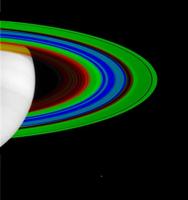
Saturn's Rings, Cold and Colder
Saturn's Rings, Cold and Colder
Did you know the Hubble telescope, the same one that has been sending back stunning images from space for years, is reporting on planetary weather? In the last few weeks, NASA has released updates on what Hubble has observed around Jupiter, Saturn, and Uranus which we will break down here.
Saturn is easiest to spot right now after it's recent opposition, and you can find four other planets fairly easily in a dark sky around the Ohio Valley. Remember to get away from all lights, including city lights, and give your eyes time to adjust to the dark. If you have binoculars, bring those along, then take a look at how to find each planet

Monday, Tuesday, and Wednesday mornings this week you can look for Saturn and Jupiter in the sky!
Tonight look up into the night sky to see planets and starts meeting in unique ways! If you look up into the southwestern sky during the early evening, you can find Mars higher in the sky.
Tonight is the night! Look into the southwest sky between sunset and one hour after sunset to see the planets in the picture above. 5:30 PM - 6:30 PM is when you can see Saturn and Jupiter align.

Thursday morning will be cold, but it also presents you a special opportunity to see three planets all lined up in the night sky.
Today the Earth is passing between Saturn and the sun which is why it is easier to see now. That also means Saturn should be pretty easy to spot tonight

NASA scientists recently announced they'd solved a major mystery about Saturn: the length of a day on the ringed planet. But a University of Louisville professor made a similar discovery 10 years ago.
December gives you a great chance to see several planets in the night sky. Jupiter, Mercury, Saturn, Venus, and Mars will all be visible during part of the month.


