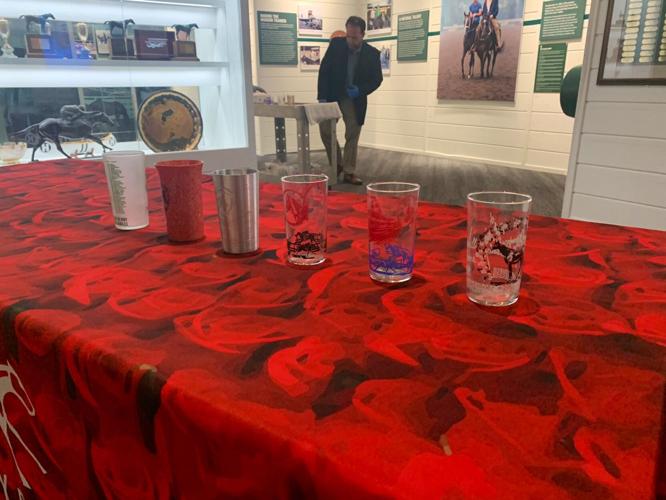
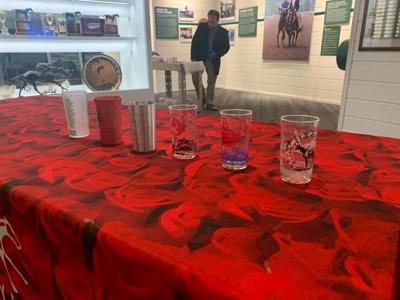
LOUISVILLE, Ky. (WDRB) -- The Kentucky Derby Museum preserves all things Derby and that includes an iconic mint julep glass collection.
Chris Goodlett, Director of curatorial and Educational Affairs, showed WDRB News some of the standouts through the years and about how it all started.
"Like a lot of traditions with the Kentucky Derby, some of these things just kind of happen almost accidentally," Goodlett said.
He said in 1938 Churchill Downs used a decorative glass for water in the clubhouse area. After employees realized the glasses were being taken home that year, Churchill Downs capitalized on it, releasing the first official Mint Julep glass for the Kentucky Derby.
"Churchill does put a lot of effort into this collectible as it's a very popular one among those that come to the Derby and those that don't because these are available widely off track as well," Goodlett said.
The first design quintessential Kentucky and minimal. Two years later the United States joined World War II and the mint julep glass nixed the glass.
"Then for the years '41 to '44 when there definitely was some rationing of glass they switched to a plastic material for the glasses. It's called Bakelite made by the beware company, and they have this plastic grain," he said. "It's a very unique look to them that's a very much different from all the other souvenir glasses."
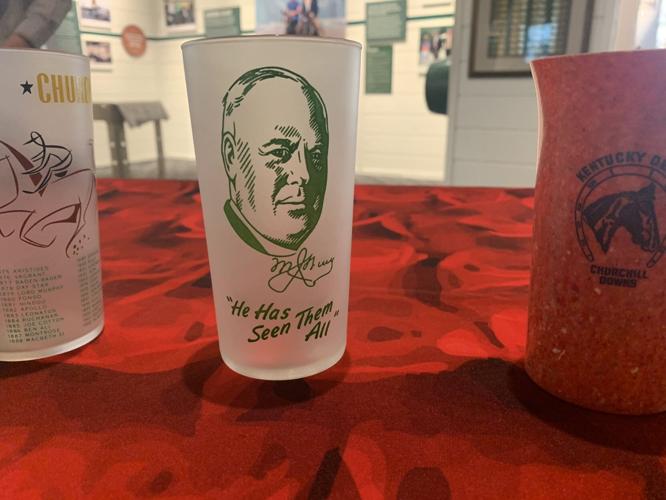
One of the only faces you'll see on a mint julep glass is the prominent Churchill executive Matt Winn.

The 1949 Mint Julep Glass featured Churchill Downs icon Matt Winn with the words "He has seen them all," because at that point in time he had.
"He's the man that's often credited with making the Derby this international cultural event it is today," Goodlett said.
Winn's face is on the 1949 glass, accompanied with 'He has seen them all,' because he had. Winn watched the very first running of the Kentucky Derby in the infield in 1875 and the 75 races after that.
Originally the mint julep glass was exclusive to guests who went to the track.
Which makes any glass made before 1974 a lot more rare, since less were produced.
"These days they produce well over 700,000 glasses annually for distribution here at the track and a certain off track outlets," Goodlett said.
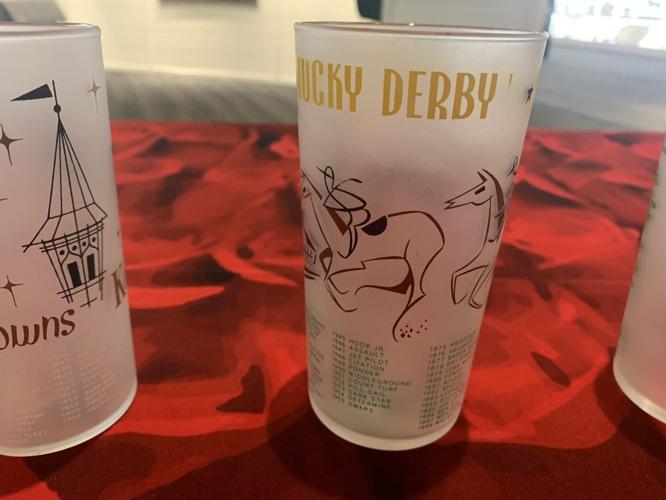
Another rarity that could raise a collectible's value is a misprint. Goodlett said specifically in 1956 there were four variations of the glass printed.
"If you see them on auction, the one of course that's the most rare will usually fetch the highest price," Goodlett said.
One of the variations of the misprint is a missing tail on one of the horses.

Some Mint Julep glasses in the 1950s had design misprints and that meant some glasses were missing a tail for a horse, or maybe a star.
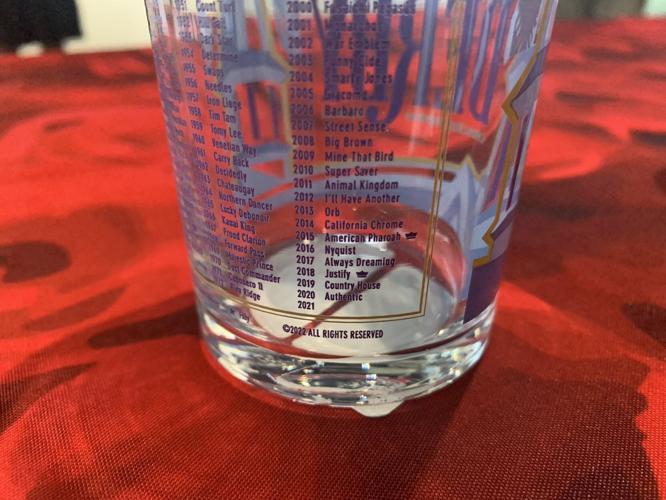
This year there's something missing too from the glass, a 2021 winner name.
"At the time of printing there wasn't an official winner, that didn't happen until late February of 2022, so as far as we know there's not going to be any other glasses produced for 2022," he said.
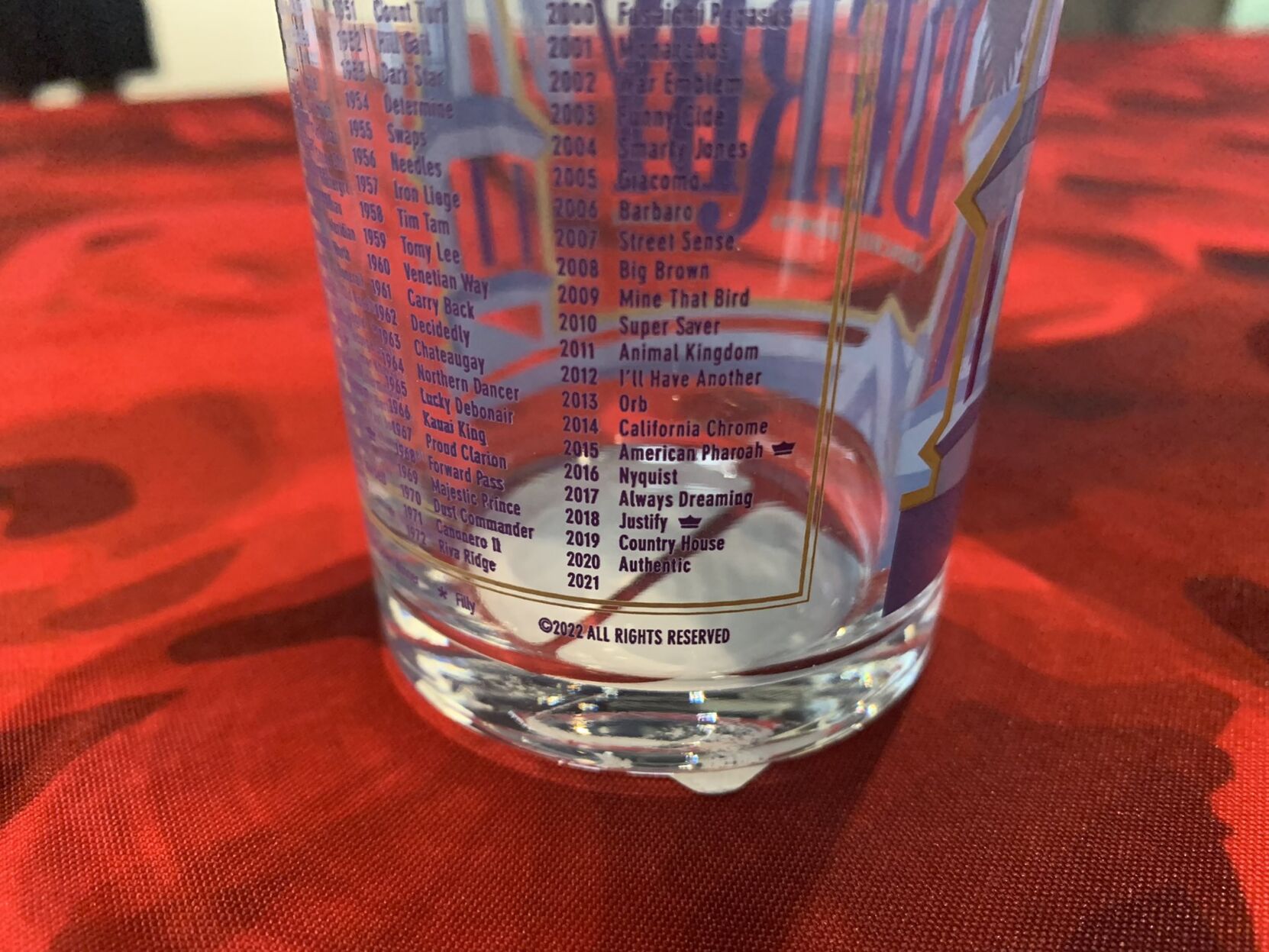
The official 2022 Mint Julep Glass was printed before a 2021 Derby winner was finalized, meaning the 2021 winner spot is blank on the glass.
The only catch to making it a collectible is there's hundreds of thousands printed.


