


LOUISVILLE, Ky. (WDRB) -- They are the six words I've been waiting to write since Nov. 5:
Pitchers and catchers report next week.
I knew there was a reason I saw somebody wearing a San Francisco Giants cap at the park and then watched another person rock a Brooklyn Dodgers' hat walking on Main Street on Tuesday.
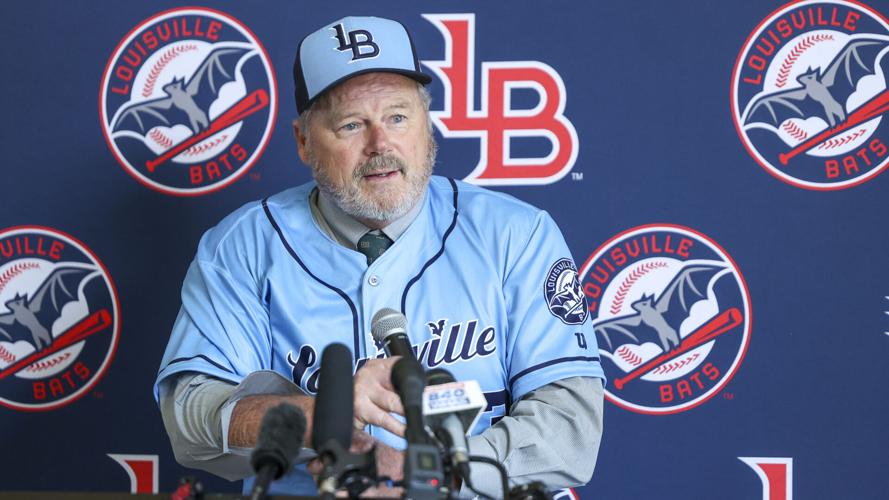
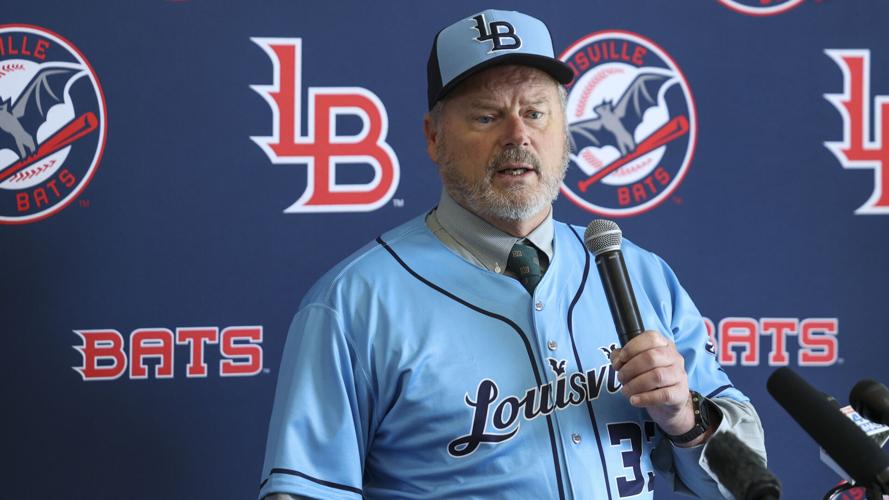
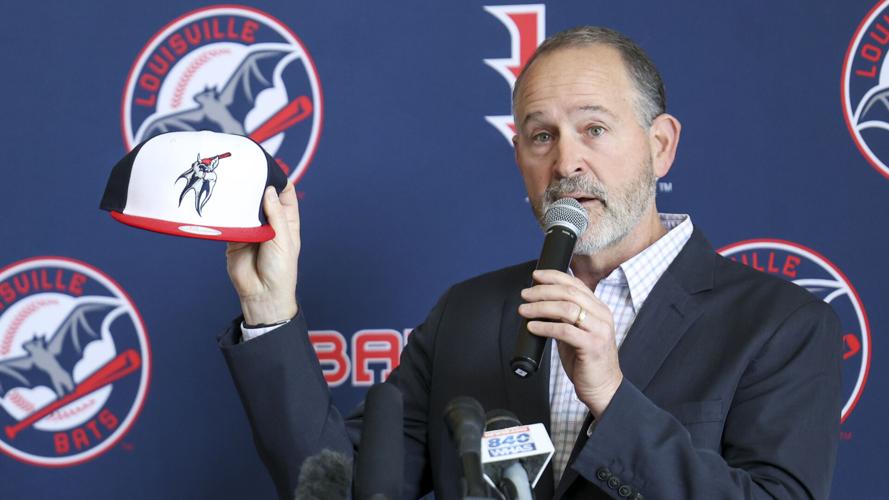
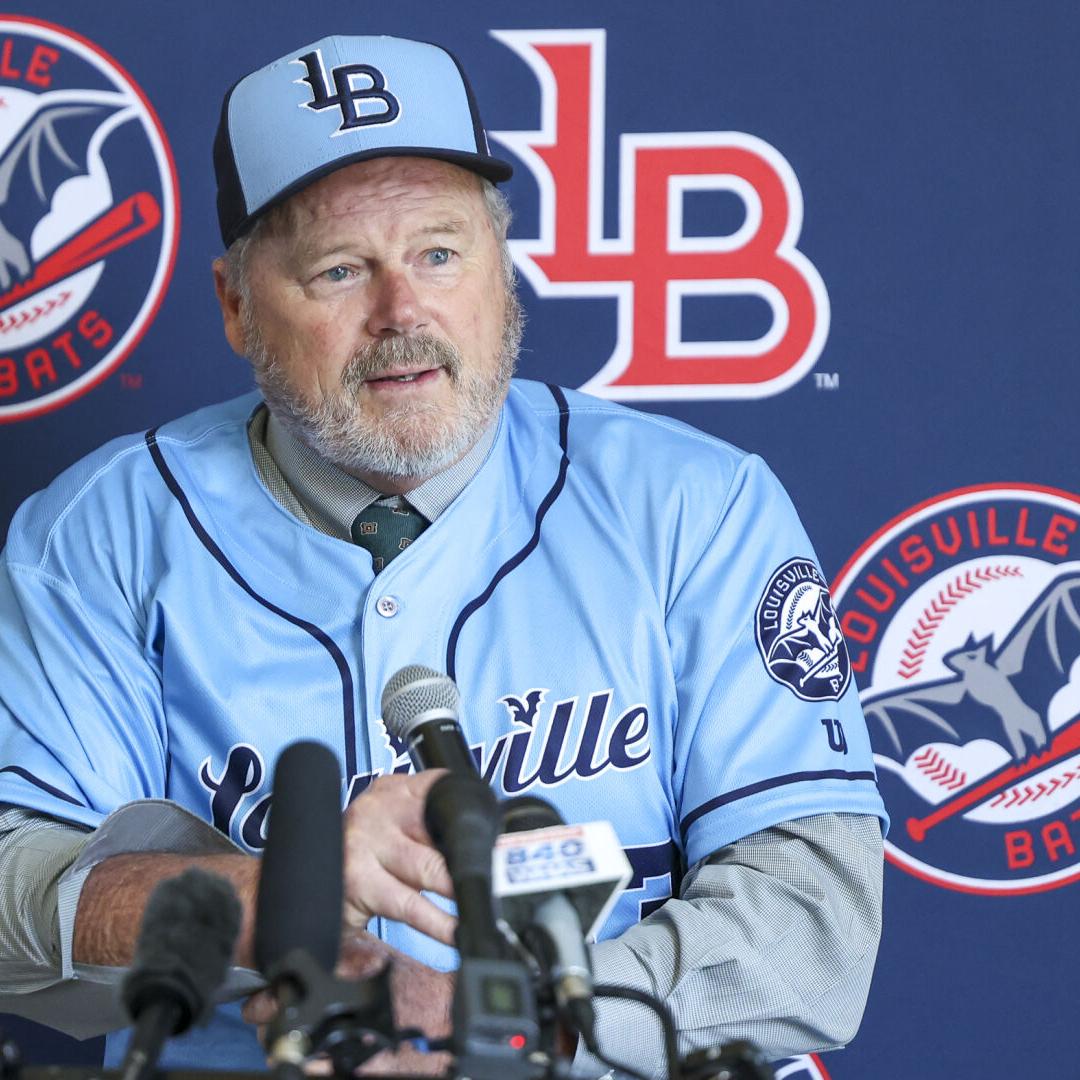
Baseball talk filled Louisville Slugger Field. Louisville Bats' manager Pat Kelly came to town to discuss the 2023 season, which opens March 31 with the team in Nashville.
Kelly will be in Goodyear, Arizona, when Cincinnati Reds players report for the start of spring training Feb. 15.
After losing 100 games last season, the Reds are not expected to contend in the National League Central Division. The Bats have not delivered a winning season since 2011.
This season is supposed to be better. It's February. Who says this season is going to be worse in February?
But there is optimism about the top prospects percolating in the Reds' farm system, and there are rule changes swirling through the big leagues as well as the minor leagues.
I sat with Kelly and asked five questions about the start of the 2023 season.
QUESTION: Keith Law writes about baseball prospects for The Athletic. He ranked the Reds' farm system 13th (of 30) in the big leagues, with four players ranked among the top 60 in the game. That's encouraging.
Law had shortstop Elly De La Cruz the No. 4 prospect in baseball; Cam Collier, a third baseman the Reds drafted last season, ranked 17th; shortstop Noelvi Marte ranked 49th and Edwin Arroyo, also a shortstop at No. 58.
Are these guys legit?
KELLY: "I think so. They're middle-of-the-diamond guys, so you know they very good athletes.
"I remember being with the Braves years ago and I was in a meeting with (manager) Bobby Cox one time, and he said that seven of our nine defenders started as shortstops. If you can play shortstop, you can play anywhere.
"And I think that's where we've gone in a lot of our trades."
QUESTION: De La Cruz is expected to play in Louisville at some point this season. Law wrote that he has the "highest ceiling of anyone in the minors," giving him the highest grades possible for power and speed.
He's listed at 6 feet 5 inches tall and 200 pounds. Can he stay at shortstop or will he outgrow the position?
KELLY: "He gets bigger every year. So I don't know. I mean, somebody said they saw him a week or two ago and his shoulders looked even bigger. So we'll see.
"He's a big kid but he's so athletic and runs so well. He's performed very well at shortstop. So I think you leave him out there as long as you can. The bat is going to determine a lot. I just think the bat is going to be elite. ... He can run like a deer and he's a switch-hitter with power."
QUESTION: This is going to be a season of change in the major leagues with new rules that will reshape the game. The primary move will be the pitch clock.
Pitchers will have 15 seconds to deliver a pitch when the bases are empty, 20 when there are baserunners. The hitter must be ready when the pitch clock reaches eight seconds.
The Bats played with a pitch clock last season. How will it change the experience for fans?
KELLY: "Well, I think you're gonna enjoy the fact that the games are about a half an hour shorter. We proved that in the minor leagues.
"It's gonna be a tough adjustment (for big-league players). I think the first month is going to be very tough. When we first started, everybody talked about how it affected the pitchers.
"But the hitters have to be in the box ready to hit and that eight-second mark comes real quick. They're so used to stepping out of the box and cleansing themselves and adjusting their (batting) gloves.
"I found that the hitters have more trouble than the pitchers. ... So we'll see. I think April's gonna be really entertaining, but there's gonna be a lot of guys get hammered (with a strike or ball called against them). And then you know, you'll learn quickly.
"But, I mean, there's nothing better than a two and a half game."
QUESTION: The second big change is the banning of the shift. No more crowding three or four infielders on one side of the diamond. No more positioning infielders on the outfield grass.
Will baseball benefit?
KELLY: "I think it's gonna be great for left-handed hitters. I mean, there's so many balls that go in those holes.
"Just in your mind, you'd always see somebody grab one that was a hit over your whole life. But there's somebody standing out in short right field and he throws the guy out.
"I think the left-hand hitters will take advantage of it. I think for the right-handed hitters that the second baseman basically has just been playing up the middle for a long time and he can almost do that because they just can't be on the other side (of the base). So I don't know that's going to affect the right hander so much.
"I think it's also going to put a premium on having athletic defenders."
QUESTION: The minor leagues, not the major leagues, will expand usage of "robot umpires," also known as the Automatic Balls and Strikes system. Balls and strikes will not be determined by a human. They will be determined by a computer and cameras.
During every six-game series, a human will call balls and strikes for three games and the ABS system will be used for three games. Each team will get three challenges per game.
This is coming to the major leagues soon, isn't it?
KELLY: "First time they had it in some AAA cities last year. The Pacific Coast League had a few and the only one in this league was in Charlotte and we didn't go to Charlotte last season.
"So we'll see how it plays out. I've never experienced it. ...
"... They haven't totally decided how they're going to do it. But they're leaning toward three games on and three without. And part of it is to find out what's going to work in the big leagues. Because, eventually, they want to put it into the big leagues.
"Everybody seems to like the challenge system. The robo, not so much. So we'll see how the summer goes."
Copyright 2023 WDRB Media. All Rights Reserved.