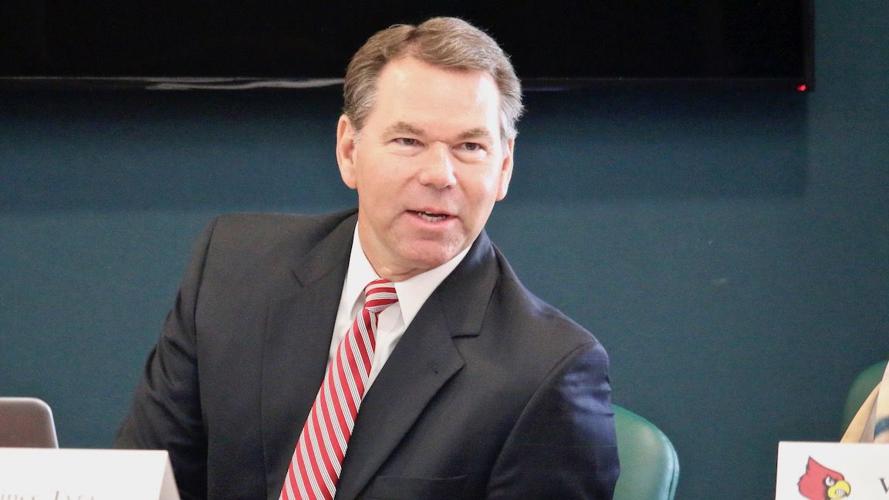
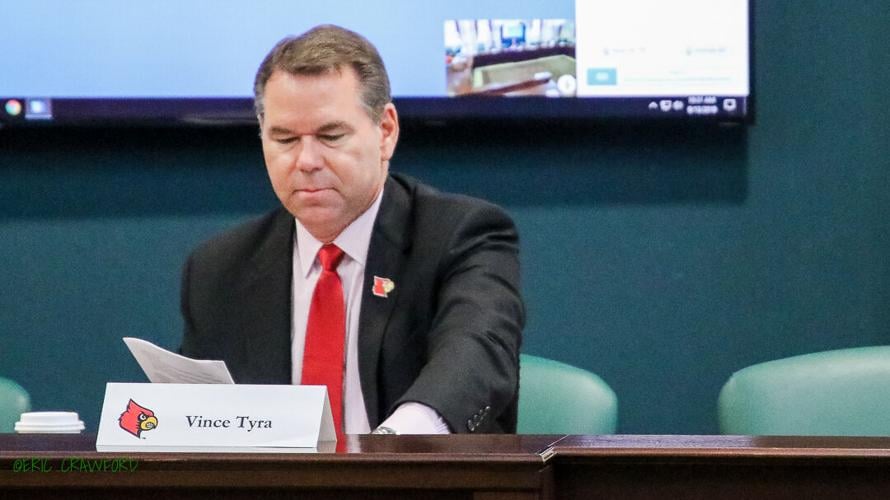
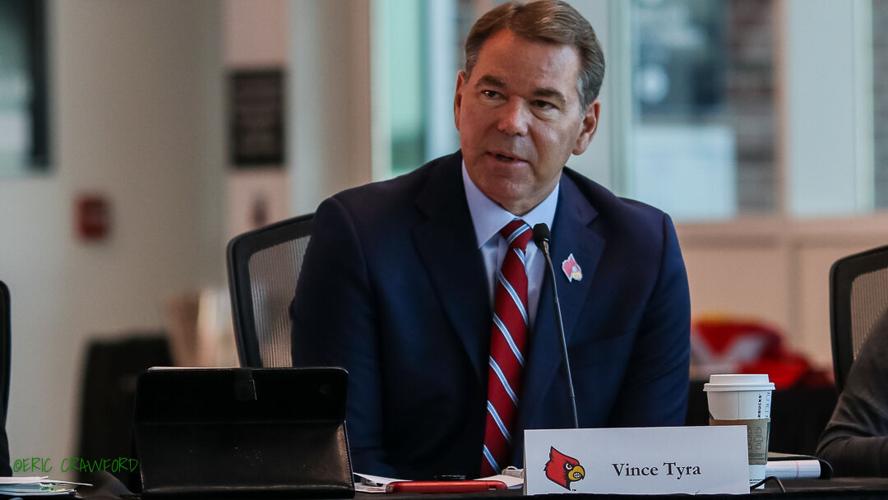





LOUISVILLE, Ky. (WDRB) -- By now, everyone has read about the U.S. Supreme Court ruling in Alston v. NCAA. A day after the ruling, athletics directors like Vince Tyra at the University of Louisville are still working to ascertain the full practical import of what it means.
In the end, Tyra said in a conversation Tuesday that the ruling itself was rather narrow. It was limited only to academic benefits and only to the sports of FBS football and men’s and women’s NCAA Division I basketball.
“The hard part of this is the Alston case, with what came out, is not a definitive ruling,” Tyra said. “The definitions of educational benefits go back to the NCAA, so that’s left out there. It’s not a requirement that a school or a conference puts in an amount (for academic benefits) and avails it to (athletes). So, it’s a weird kind of nuance. And if they do, it probably sets the tone for another lawsuit from former athletes, who say, ‘Hey, I should’ve had that.’ So, this thing has a lot of runway on it, as you can tell. And understanding that it’s limited to three sports right now, does it cause any Title IX implications? You can’t really write a definitive recap of the game. All we’ve done is just start.”
At Louisville, the athletic department has expanded academic benefit offerings to all athletes, as it has been allowed by NCAA rules and court rulings. The list of academic benefits you might not think about is long. And those benefits do not come with a price tag to Louisville athletes.
If you’ve ever wondered about all those extras, the two-page list given to athletes (provided by the athletics department) is available below.
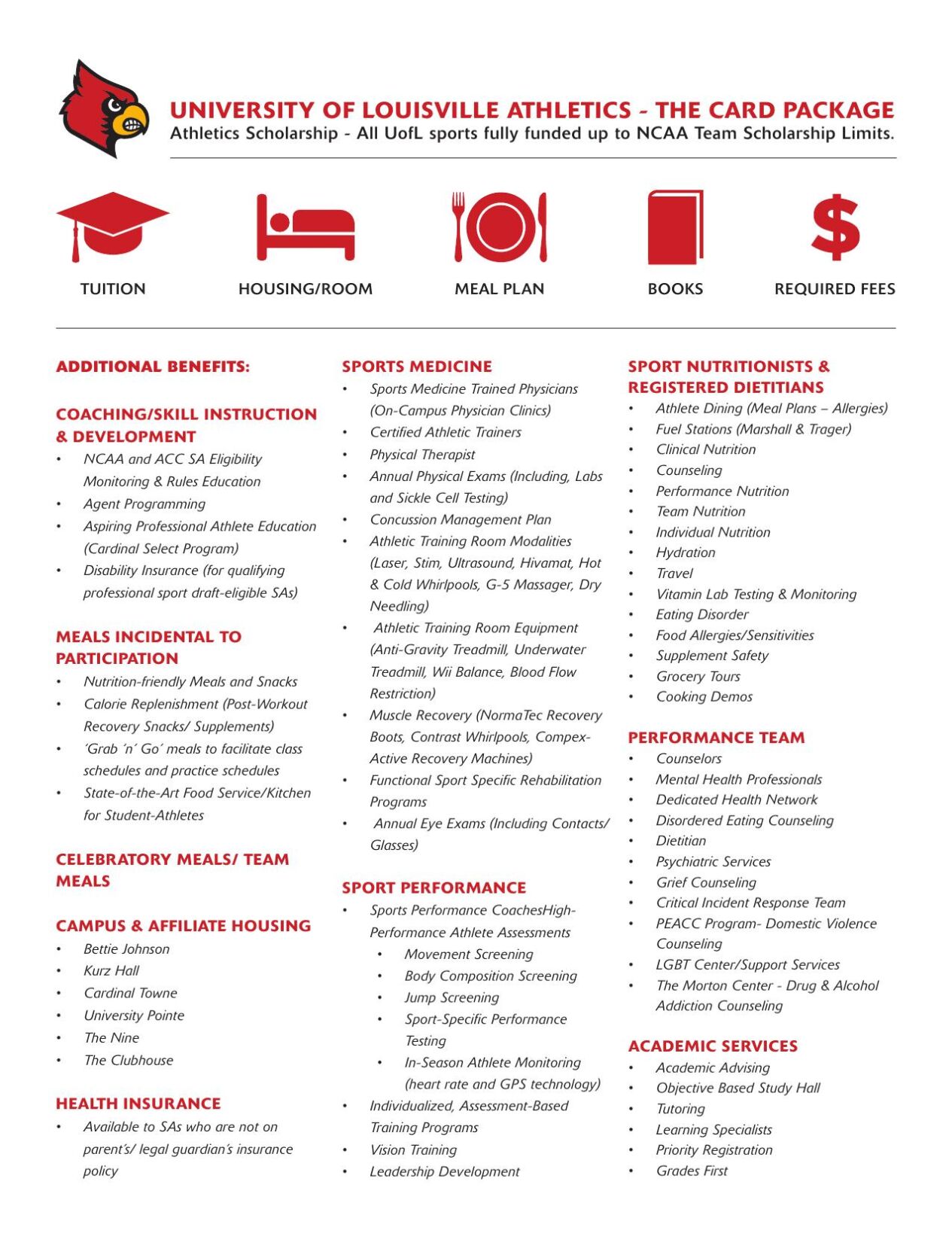
Among those services and benefits are academic advising, an objective-based study hall, tutoring, learning specialists and testing, priority registration for classes, access to the Thornton’s Academic Center of Excellence, iPads, laptop computers, scheduling software, various academic awards, summer school aid, winter term aid, the Red & Black Banquet and more.
If educational benefits begin to be classified as earned benefits that could count against an amount provided to students, how is the university supposed to handle that? It’s one of many questions Tyra and athletic directors around the country have about Monday’s ruling.
As it is, there have been discussions about monetary payments for athletes in the three sports in question who reach certain mileposts of academic achievement.
“Do you want to pay out the full available (amount) for the student-athletes? And if so, what are the criteria for them to meet it?” Tyra said. “ACC honor roll? Dean’s List? Graduating? Earning the APR point? There’s a variety of things you could put in place to allow them to objectively earn some educational-related award, whether that award be cash or not. And another question is when would it have to be paid out? If they were to earn something, you don’t graduate every year, you graduate at the end. So do you tether a larger amount to the end if you want to apply something? ... And is there a deduction allowed for what we already do today? Tutors and iPads and computers and things we provide, summer school aid, winter aid, all the things that Louisville goes, I’ll say, over and beyond to provide? Are there values to those not recognized by the court? So I don’t know what our full exposure is today ... I don’t think the courts fully know all that we do.”
While this week’s focus has been the Alston case and its implications, much of the preparation of the Louisville athletics department, and others, has been on changes in Name, Image and Likeness rules that could be imminent.
Six states have laws going into effect on July 1. Kentucky is not one of those. Tyra, speaking to the U of L Athletic Association board two weeks ago, told them he wasn’t terribly concerned about it, because he felt like there would be NCAA or Atlantic Coast Conference guidance by then, or at least the beginnings of a bill moving through congress. With legislators at an impasse, NCAA president Mark Emmert told NCAA members last week that he wanted legislation passed to present everyone a working procedure before July 1, or he would step in and provide guidance.
“I do think, from reading the tea leaves, it sure feels like Mark and the NCAA are pressed to do something. I don’t know exactly what that is. I just have the sense that history speaks, so right or wrong they’re going to have something. Waiting around for the feds to make a decision at this point is a tough strategy.”
For some time, Tyra has been working to make Louisville ready, even without pending state legislation. Last fall, the university signed up for a third-party program called Opendorse, which assists athletes with marketing and other commercial opportunities online, as well as endorsements and issues related to those.
Opendorse is a service of the Elevate program, which provides athletes the opportunity to understand their NIL rights and receive hands-on assistance from experts to maximize their value. The program offers assistance in assessment, education and performance, tailored to individual athletes.
Tyra has put associate athletics director of compliance Matt Banker at the head of NIL issues at the school, but acknowledges that it’ll be all hands on deck on those efforts.
“We’ve done as much preparation as we can related to, one, advising the student-athletes,” Tyra said. “We’ve created kind of a law clinic on campus with the law school, so we have professors and law students who will be able to assist our student-athletes, and just students. We’ve talked about the Opendorse social media app that we use, to make it available to the student-athletes under the program Elevate. But you can’t just say, ‘Here it is.’ You have to teach them how to use it, where there’s value, engagement rate. Because if not, they’ll just get on there and pound out a bunch of tweets or posts and all that, and that’s not creating value for them either. So there’s a lot of education and guidance that goes with this.
“One thing I want to make sure we can avail them of is guidance on taxes. If you’re going to make money in this, you’re going to have to pay taxes, and how do we advise them on that? Getting agents and all those things, how to make sure you disclose everything you earn? When it does go into place, you’ve got to disclose it, and if not, we’ve got to understand what’s in play, whether it’s an NCAA rule or an institutional rule that is being applied. Somebody makes an appearance and shows up at Eric Crawford’s house for a birthday party for some fee and they forget to disclose it -- that’s our starting player in Saturday’s game, what do we have there? What’s the stick?”
There will be sticking points. Everywhere. This will not be a neat, clean process. Tyra serves on the ACC’s NIL Committee and sees the various approaches and hears the questions on a daily basis. No one knows what the NCAA’s playbook will look like, and nobody can even define what will be included in the package.
“I don’t think you can define it all,” Tyra said. “I’ve been on the ACC’s Name, Image and Likeness committee and spoken nationally on it, but I still think that it’s going to be trial and error and it’s going to be ugly.”
Copyright 2021 WDRB Media. All Rights Reserved.