
LOUISVILLE, Ky. (WDRB) – For more than 20 years, Kentucky jailers improperly took millions of dollars in booking fees and daily charges from inmates without a finding of guilt or innocence or a judge’s order, violating a state law passed in 2000.
“Jails had been robbing people,” said attorney Greg Belzley, who represented an inmate who was charged $4,000 for his jail stay even though the charges were dismissed. The basic approach, he says, amounted to: ‘You come in my jail, I take the money out of your wallet.’”
But that was all supposed to stop in October 2021, when the Kentucky Supreme Court ruled that state jails could no longer collect those fees without a judge’s order – as was intended in the original law.
The ruling was expected to devastate a huge moneymaker for jails and create a more cumbersome and lengthy process for jailers to collect any funds.
So, earlier this year, Kentucky legislators wrote a new law that removes the judge’s role and gives elected jailers the power to take fees before a person is found guilty or it’s determined if they can afford to pay.
“The counties all understood what was going to happen if this was left to judges who applied due process,” Belzley said. “People who couldn’t pay, or whose money needed to go to rent or for medicine or to support children, that judge wasn’t going to make them pay the money.”
The new law requires county jails to reimburse people who are later found not guilty. But the legislation didn’t explicitly address how that’s supposed to work.
Campbell County Jailer Jim Daley, president of the Kentucky Jailers Association, said some jailers don’t believe it’s their responsibility to track down defendants and reimburse their money.
“The jury is still out on that one,” he said. “There is some argument that that is incumbent upon the individual to come back and ask for it. … I don’t think there is a consensus on it as we speak, but it’s something on our radar that we are keeping an eye on and talking about between the jailers.”
Rep. Michael Meredith, (R-Oakland,), who sponsored the bill, did not respond to requests for comment for this story. Nor did he respond to written questions that included how the reimbursement is supposed to work or if the law needs to be clarified.

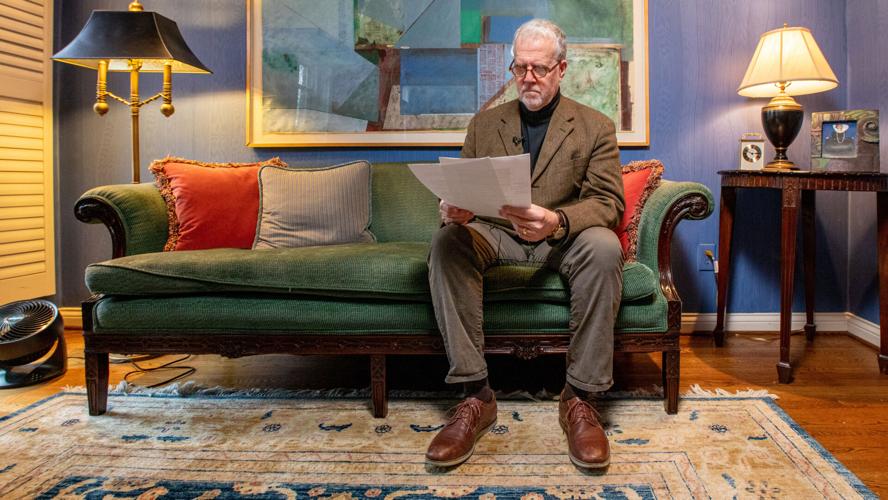
Attorney Greg Belzley (WDRB photo).
Speaking during the General Assembly in March, Meredith told legislators that one of the largest expenses in every county is running a jail.
“This is a way to ensure that inmates still have a stake in those costs and it’s not just the taxpayers funding those things,” he said. He added: Judges “do not have any financial stake in how those jails are run.”
While the bill passed in March and was signed into law by Gov. Andy Beshear, Belzley and others argue it is still unconstitutional to take money from defendants without a hearing in front of a judge.
As far back as 2000, when the initial legislation was approved, lawmakers raised concerns about inmates who couldn't afford the fees, as well as constitutional issues with seizing money from someone who hadn't yet been convicted or had charges dropped, according to audio recordings of hearings at the time.
As a condition to moving the bill forward at that time, legislators added specific language to "require the sentencing court, rather than allow the county, to order reimbursement" to jails, according to a review of the bill's history.
During the 2022 effort to amend the law, Sen. Johnny Turner told his colleagues that his local jailer was against the bill because jailers would be required to take money from people who have not yet been convicted.
“It’s saying you’re going to pay before we find you guilty,” said Turner, R-Harlan. “The fine print of this bill says we’re going to punish you up front just as soon as some police officer sticks you inside that jail. We don’t care about your constitutional rights.”
And more often than not, the money jailers are taking – up to 50 percent -- comes from an inmate’s family or friends who are putting funds in a jail account that’s used for things like extra food or hygiene products.
“If I had a child in jail and I went down and put $50 on his account, then the jail would take 50 percent of that, is that correct?” Rep. Norma Kirk-McCormick, R-Inez,R-Martin County) said during a March legislative hearing. “Man, I hope I don’t ever get put in jail.”
Law unclear for not guilty defendants
One part of the Supreme Court ruling and the changed law remains the same: Defendants who are found not guilty or whose charges are dismissed are required to be reimbursed.
The law says jailers “shall” return the money. But Daley of the state jailers association, said it’s not clear that the jailers must instigate the process of returning the fees, just that they must reimburse when it is requested.
“We’re talking about it with counsel we use … to look at these type of issues,” he said.
Belzley, the attorney who argued the case before the state Supreme Court, said he believes the language in the law requires jails to track cases and refund fees to a defendant who eventually has their charges dropped.
But he doubts most jailers will do that. “It’s infuriating,” he said.
In March, Belzley said he has a hearing in his case in Clark County on whether the jail is responsible for keeping track of inmates they owe money to.
In Louisville, Metro Corrections has stopped taking a $35 booking fee.
A jail spokesman did not respond to follow-up questions as to why Metro Corrections stopped collecting the fee.
Local jail officials previously estimated the booking fees generate about $300,000 per year. The jail has never taken daily fees.
Jailers in Bullitt and Oldham counties did not immediately return phone messages.
Belzley expects someone to eventually again challenge the constitutionality of the new law.
“Everybody who is assessed a jail fee ought to ask their defense attorney for a hearing before the court, and for the court to rule on the fairness of that,” he said in an interview. “Jail fees are a punishment, just like a fine. You have to have due process before you can be lawfully punished in this country.”
But Daley insists jails are now properly following the state’s current law.
“I don’t have any concerns,” he said. “As long as jailers and counties follow the law, I don’t know why it would be unconstitutional. We are charging them fees for services; we’re not just arbitrarily taking their money.”

Copyright 2022 WDRB Media. All Rights Reserved.


