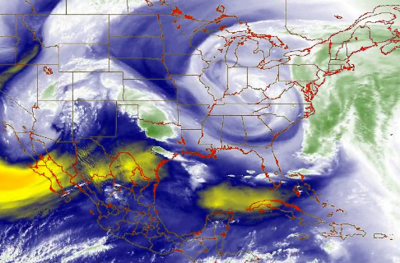

The cloudy, rainy and cooler pattern Derby weekend can be explained in two words... omega block! Blocking patterns occurs when centers of high pressure and/or low pressure set up over a region in such a way that they prevent other weather systems from moving through. When the blocking pattern is in place other systems are forced to go around it. Blocking patterns can remain in place for several days, resulting in long spans of persistent weather for locations under the block. Let's go through 3 different types of blocks that can often take shape.
Blocking High
Typically a summertime occurrence, blocking highs are responsible for major heat waves. Any precipitation is usually shunted around the periphery of the high-pressure area.
High pressure aloft causes the air to subside or sink. This downward motion compresses and warms the air in the lower atmosphere while simultaneously trapping heat rising from the Earth's surface, leading to heat waves.
The skies are usually clear due to the downward motion of air. Eventually, blocking highs will weaken when a shortwave moves over the top of the high, causing it to decrease, with an end to the heat wave.
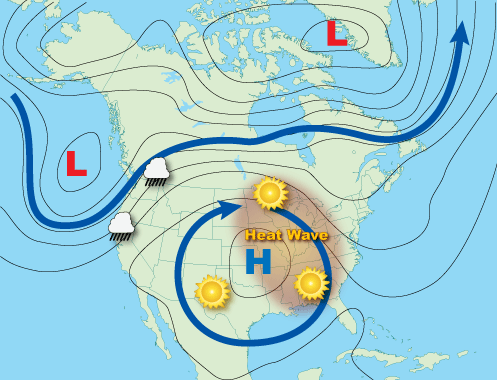
Image Credit: NOAA
Omega Block
Omega blocks get their name because the upper air pattern looks like the Greek letter omega (Ω). Omega blocks are a combination of two cutoff lows with one blocking high sandwiched between them.
Because of their size, Omega blocks are often quite persistent and can lead to flooding and drought conditions, depending upon the location under the pattern. Cooler temperatures and precipitation accompany the lows, while warm and clear conditions prevail under the high.
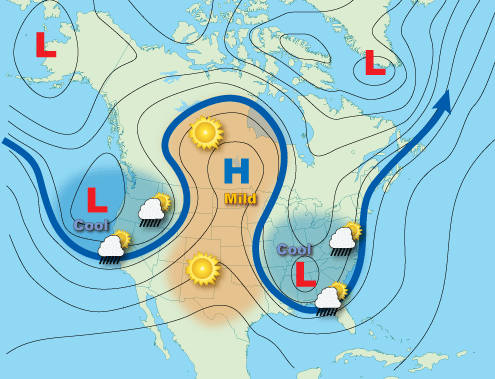
Image Credit: NOAA
Rex Block
Rex blocks are characterized by a high-pressure system located pole-ward of a low-pressure system. The Rex block will remain nearly stationary until one of the height centers changes intensity, unbalancing the high-over-low pattern.
Unsettled, stormy weather is usually found near the low pressure, while dry conditions are typical with the high-pressure. Strong, particularly persistent Rex blocks can cause flooding near the low-pressure part of the block and short-term drought under the high-pressure part.
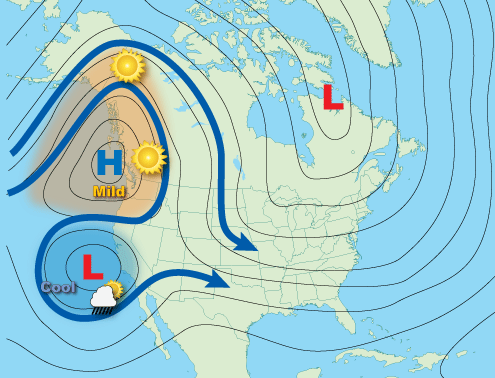
Image Credit: NOAA


