

LOUISVILLE, Ky. (WDRB) -- The University of Louisville plans to establish a new downtown health research site with the largest financial gift in school history.
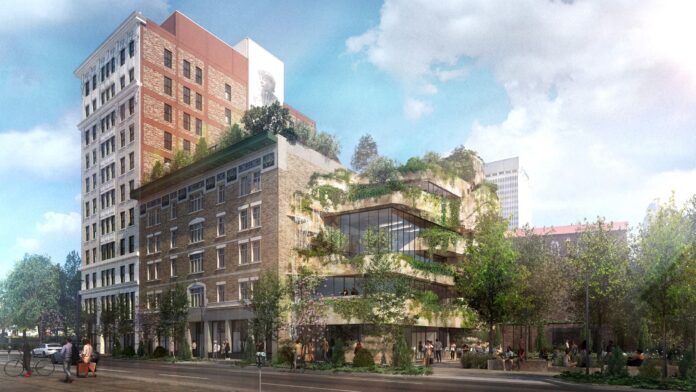
Philanthropist Christy Brown announced a $47 million contribution to create the Christina Lee Brown Envirome Institute’s New Vision of Health Campus at two buildings and a vacant lot her family owns in the 400 block of West Muhammad Ali Boulevard.
“This is a commitment once again to the heart of the city,” Brown said at a news conference Wednesday morning.
Her support includes $30 million for the institute’s work and $17 million in rent credit for UofL. Brown previously provided $5 million to start the institute in 2018.
The university’s board of trustees agreed to a lease that lets UofL use the property. The Brown family would pay for renovations to the buildings and rent them to the university for $1 a year, said Ted Smith, director of the institute’s Center for Healthy Air, Water and Soil.
The institute studies the relationship between the natural, social, and personal environments and health. Its work has included monitoring levels of SARS-CoV-2, the virus that causes COVID-19, in the city’s wastewater to better understand the virus’ prevalence.
The campus proposed for downtown also would be accessible to the public. It would include Founders Square at 5th Street and Muhammad Ali Boulevard, where Smith said research on “urban greening” and vegetation in cities could take place.
The institute also plans to have roofs on the buildings that will retain rainwater and help the structures cool themselves, as well as a “vertical park” on the side of one building that would catch water and send it to the aquifer and not MSD’s treatment plant, Smith said.
Mayor Greg Fischer's proposed capital projects budget recommends $6 million in bond funds for those projects. The Metro Council continues to analyze the mayor's request.
In addition, Smith said people will be able to walk inside the buildings and see researchers at work.
“It's really to enable this public interface and bring some of the science to the public — not secret science behind closed doors — but visible tangible science that is relevant to an urbanizing world,” he said.
UofL estimates the first research facilities could move into the new space in the next 12-18 months, with the entire project operational there within three years.
Copyright 2022 WDRB Media. All Rights Reserved.


