


LOUISVILLE, Ky. (WDRB) -- On the fourth floor of the University of Louisville's Baxter Biomedical research building, the "Talaris" logo is still faintly viewable on the drywall, though it's been scraped away. A once-busy lab is mostly empty and quiet.
Talaris Therapeutics, founded by a U of L transplant surgeon, tried for 20 years to develop a cell therapy that would help the body accept a donated kidney without a harsh regimen of immunosuppression drugs.
But after clinical trials didn't pan out, investors pulled the plug on Talaris earlier this year, deciding to redeploy its $180 million in cash.
The former Talaris space on the U of L Health Sciences Campus downtown won't be quiet for long, however.
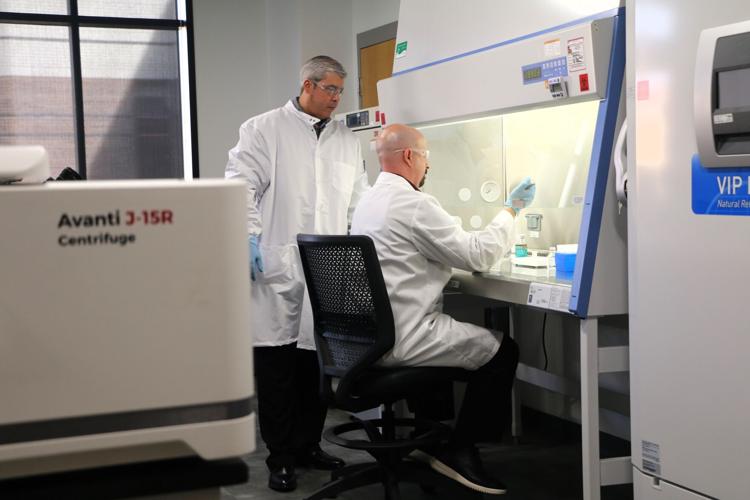
New York Blood Center Enterprises, or NYBCe, is taking over the 20,000-square-foot lab and has hired a handful of former Talaris employees, with the goal of restarting work there in early 2024.
NYBCe, a nonprofit that operates community-based blood centers, hopes to make the Louisville space into a manufacturing hub for cell and gene therapies, a rapidly growing corner of the biotech industry.

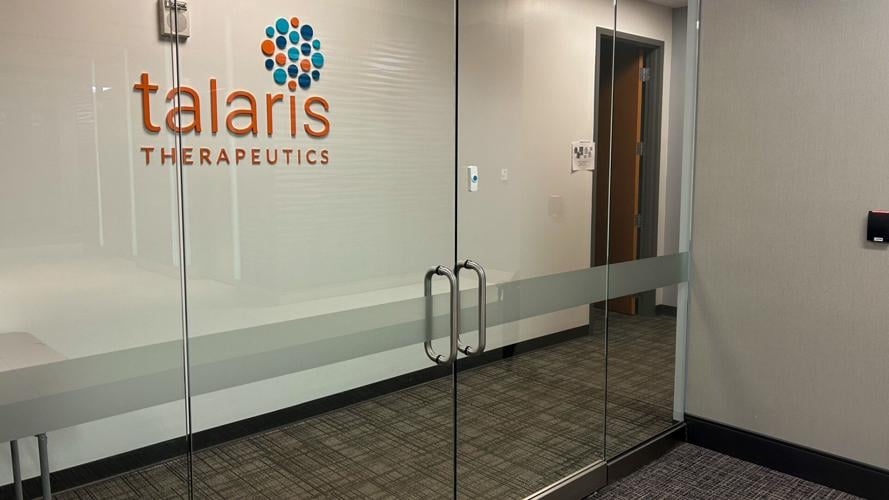
Talaris Therapeutics' office on the third floor of the Atria Building in downtown Louisville on May 2, 2023.
"We are using the capabilities that they (Talaris) had built and created there in Louisville to expand our own mission to manufacture these cutting-edge therapeutics," said Jay Mohr, NYBCe's executive vice president and chief business officer, in an interview.
Cell and gene therapies, which are regulated like pharmaceuticals, involve modifying a patient's stem cells or genetic material before reintroducing the product into the patient.
So far, the U.S. Food & Drug Administration has approved 15 cell and gene therapies, mostly to treat rare diseases and blood cancers, according to the Alliance for Regenerative Medicine, an industry trade group. Another 1,035 are undergoing clinical trials, according to the group.
Talaris, which grew from the work of U of L surgeon Dr. Suzanne Ildstad, had used the downtown lab to manufacture an experimental stem-cell therapy aimed at improving transplant recipients' tolerance of new kidneys. It was also trialing a therapy for scleroderma, an autoimmune disease.
NYBCe, rather than developing its own therapy, is one of a handful of manufacturers that make cell and gene therapies on contract for pharma companies. These third-party manufacturers are called CDMOs, or Contract Development and Manufacturing Organizations.
As more companies seek FDA approval for new therapies, the contract-manufacturing industry is worth about $70 billion in all, according to a regulatory filing from Catalent Inc., one of the biggest CDMOs.
Mohr said cell and gene therapies are an emerging weapon against blood cancers such as multiple myeloma, but the "holy grail" would be to develop such therapies for solid-organ cancers such as colon, lung and prostate.
NYBCe has a niche in cell and gene therapy manufacturing for products that are early in the clinical-trial process, he said.
Not all CDMOs handle the withdrawal of the patient's blood and the reintroduction of the product following manufacturing, but NYBCe will have that capability in Louisville, Mohr said.
"One of the nuances of cell therapies is the patient's own blood has to be collected, processed and then given back to them, and you have to be relatively close to where the patient receives treatment from their physician and their care team," he said. "So having multiple locations like this around the country brings us closer to the patient and that's critical in cell and gene therapy."
Talaris employed 51 in Louisville when it began downsizing following its pause in clinical trials earlier this year, according to a government notice filed by the company.

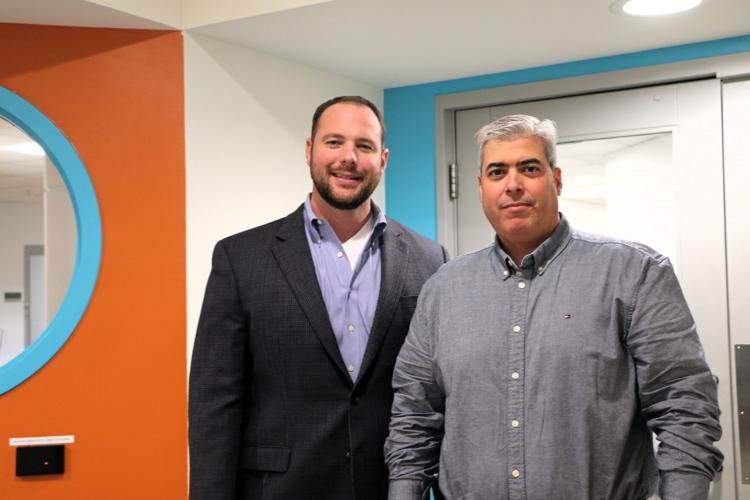
From left, Devin Blass, senior vice president of NYBCe's Comprehensive Cell Solutions and Omar Baez, senior GMP manufacturing director and Louisville site head, inside the former Talaris lab on the University of Louisville health sciences campus downtown on Dec. 6, 2023. By Chris Otts, WDRB News
NYBCe has taken on a few former Talaris employees in Louisville, including Devin Blass, senior vice president of NYBCe's Comprehensive Cell Solutions business unit; Omar Baez, senior manufacturing director and Louisville site head; and Joseph Dwyer, senior director of quality control.
Mohr said it's too soon to say how many the Louisville site may employ. NYBCe also hopes to collaborate with U of L researchers working on cell and gene therapies, he said.
"We are excited about this partnership with NYBC, given our aligned missions focused on research, education and health and the opportunity to continue advancing Louisville as a hub for clinical cell therapy innovation," said Kevin Gardner, U of L's executive vice president for research and innovation, in a statement provided the university.