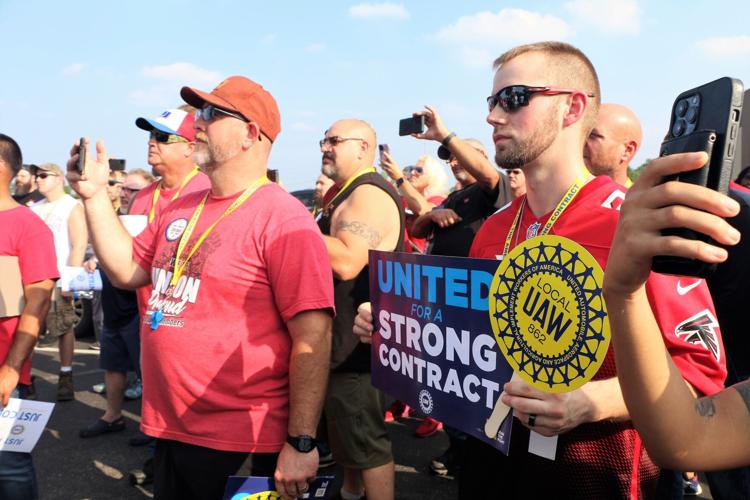



LOUISVILLE, Ky. (WDRB) — The United Auto Workers union will strike auto plants in Missouri, Ohio and Michigan unless the American automakers -- Ford, General Motors and Stellantis -- agree to a last-minute deal.
The "historic action" against all of the Detroit Three begins at midnight Friday, UAW President Shawn Fain said.
"This is our generation's defining moment. The money is there. The cause is righteous," Fain said in a livestream Thursday. "The world is watching and the UAW is ready to stand up."
The targeted factories include a General Motors assembly plant in Wentzville, Missouri; a Ford factory in Wayne, Michigan, and a Stellantis Jeep plant in Toledo, Ohio.
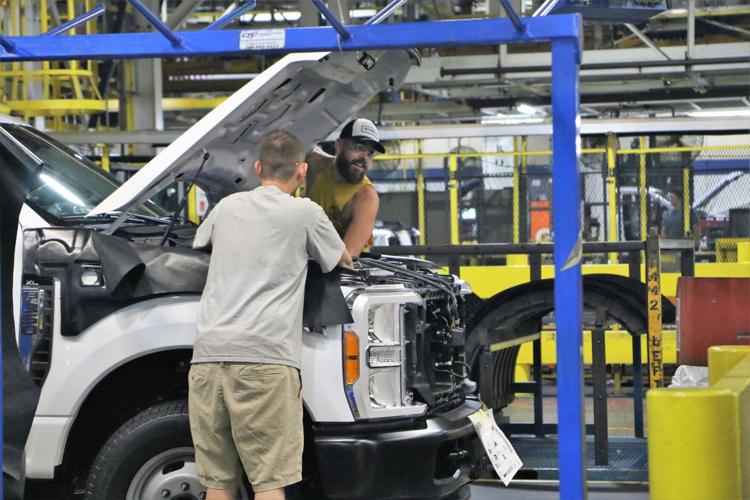
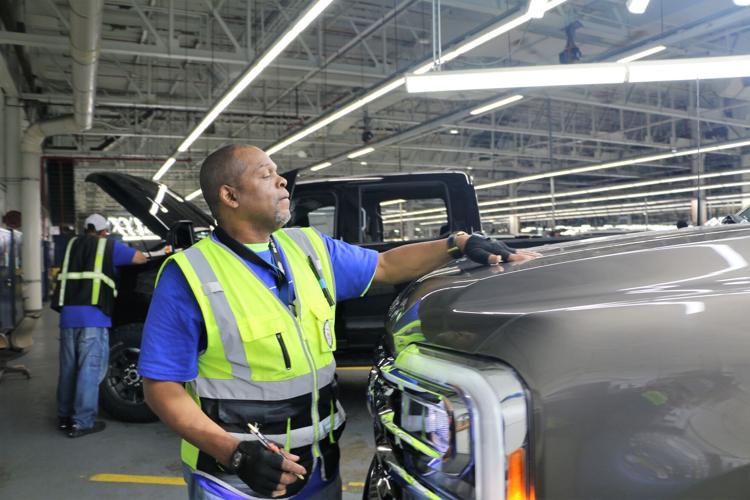
For now, the roughly 12,000 hourly workers at Louisville Assembly Plant and Kentucky Truck Plant will continue to report to work.
However, the UAW’s targeted strike plan could eventually lead a work stoppage at either of the plants. The union has said the strike will expand to other facilities if needed, and it hasn't ruled out walking all 146,000 workers off the job.
"If we need to go all out, we will," Fain said Thursday.
Also, the automakers' manufacturing operations are an inter-connected web, with various engine, component, stamping and transmission plants delivering necessary parts to assembly plants such as Kentucky Truck and Louisville Assembly.
Among the five U.S. states with significant Ford operations, Kentucky workers enjoy an advantage. If their plant is shut down by Ford because of a work stoppage elsewhere — as opposed the Kentucky workers going on strike — the Kentucky workers would be eligible to receive state unemployment benefits.
That’s also the case in Illinois, according to Ford sources, but not in Michigan or Ohio.
Status of talks
Ford sources said Thursday that the company was still eager to make a deal, and that the UAW finally presented a counteroffer the company's fourth economic proposal about 8 pm, or two hours before the announcement of the plants that would be targeted for a strike.
The UAW's counteroffer "showed little movement from the union’s initial demands," the company said in a statement.
Ford’s latest offer includes wage increases that would amount to 20% over the four-year life of the deal — short of the UAW’s initial demand of 40% — but significantly more than the company has offered in previous contracts, according to company sources.
The UAW said Wednesday that a 20% wage hike “barely makes up for minimal past raises combined with high inflation and doesn’t safeguard against future inflation.”
The company’s offer also includes restoring cost-of-living adjustments to wages, though the company didn’t detail how those would be calculated, and Fain said Wednesday that the proposed formula was “deficient.”
Ford has not budged on some of the UAW’s more ambitious goals, such as restoring traditional defined-benefit pensions that were discontinued for new employees in 2007, and Fain’s call for a four-day work week in which auto workers would get 40 hours of pay for 32 hours of work.
All in, Ford estimates that the UAW’s demands would more-than double its total costs for worker compensation over four years.
The company calculates that as of 2022, the average compensation of its UAW workers amounted to $112,000, including all wages, overtime, profit-sharing bonuses, retirement pay and healthcare contributions. The UAW’s demands would raise that to $286,800 by 2027, while the company’s proposal would result in an increase to $132,000, Ford sources said.
In its statement Thursday evening, Ford reiterated that the UAW's demands are "unsustainable," saying the company's labor costs "are already significantly higher than the labor costs of Tesla, Toyota and other foreign-owned automakers in the United States that utilize non-union-represented labor."
The Associated Press contributed to this story.


