LOUISVILLE, Ky. (WDRB) -- Black jockeys and horsemen played an integral part in the founding of thoroughbred racing, once dominating the sport. Now, an expanded exhibit at the Kentucky Derby museum is making sure the history of horse racing is inclusive and not forgotten.
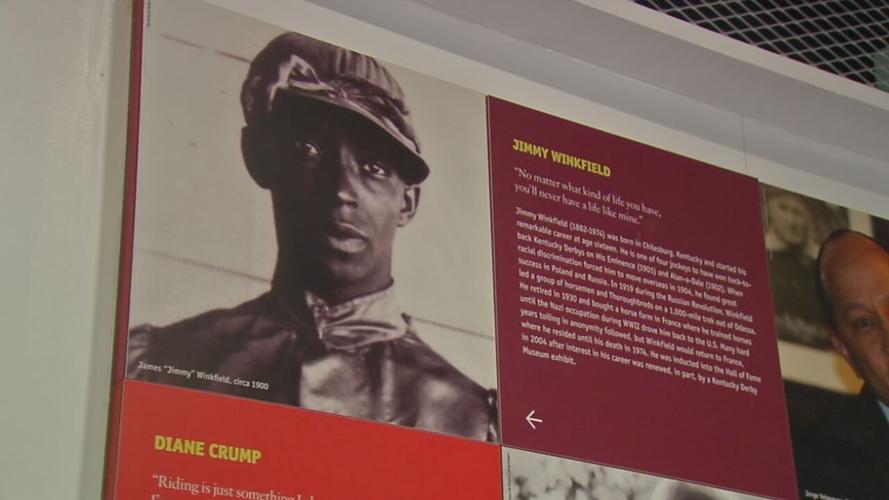
Among the cheers, horses galloping around the track, the bugle echo the names of Kentucky Derby legends Barbaro, Secretariat, American Pharaoh. But what about the names never spoken, like Oliver Lewis, Isaac Murphy, Jimmy Winkfield, the horsemen who started it all.

Inside the Kentucky Derby Museum in Louisville, Ky.
"They are the reason we have the Kentucky Derby," said Rachel Collier, director of communications with the Kentucky Derby Museum.
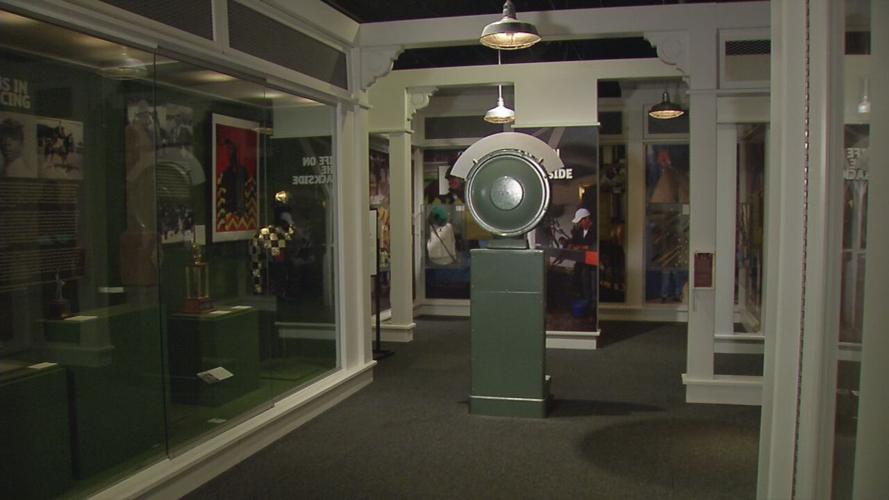
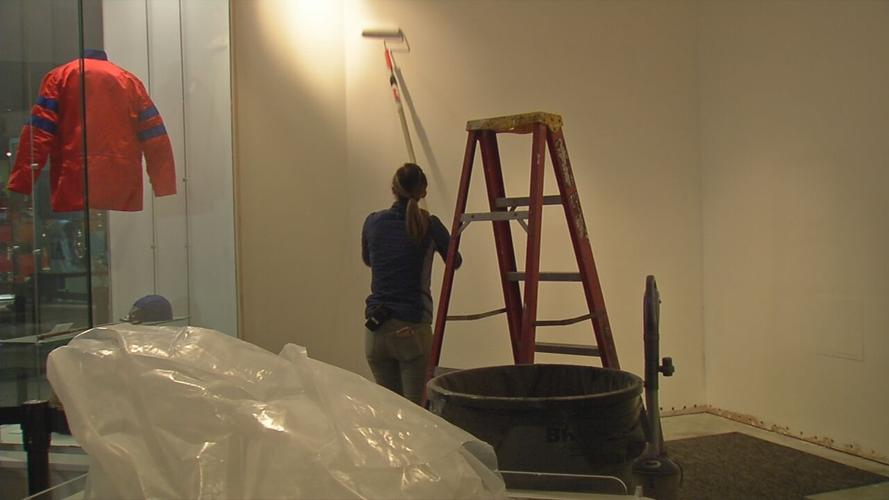
Since 1993, a permanent exhibit on the Kentucky Derby Museum's second floor has paid tribute to Black heritage in racing. Now, the display is getting an update and an upgrade, moving to a more prominent location on the first floor.
"The current exhibit is just around 50 square feet, the new exhibit 930 square feet. We're talking 20 times bigger," said Collier.
That means more room for pieces celebrating that legacy and stories, celebrating milestones and accomplishments while not shying away from the grim parts of the history.
"That's part of the story that we tell here. We tell it all. We tell the good, the bad and the ugly and unfortunately as we've had in our whole history as a nation, that story played out in horse racing too," said Collier.

Inside the Kentucky Derby Museum in Louisville, Ky.
The exhibit tells the history of how Black jockeys were pushed out of the sport during the Jim Crow era and includes harrowing artifacts like the grave marker of famed jockey Isaac Murphy.
"One of the greatest jockeys of all times, was buried in an unmarked grave in a cemetery simply called African American cemetery 2 in Lexington," said Collier. "Imagine a jockey today being buried in an unmarked grave. It wouldn't happen."
The updated space will also include modern day Derby history as well, like the protests that erupted at Derby 146 just months ago.
"We want to be able to tell the whole story and not leave anything out. And that includes tying in the present day," said Collier.
The updated Black Heritage exhibit opens at the end of March.
Copyright 2020 WDRB Media. All Rights Reserved.


