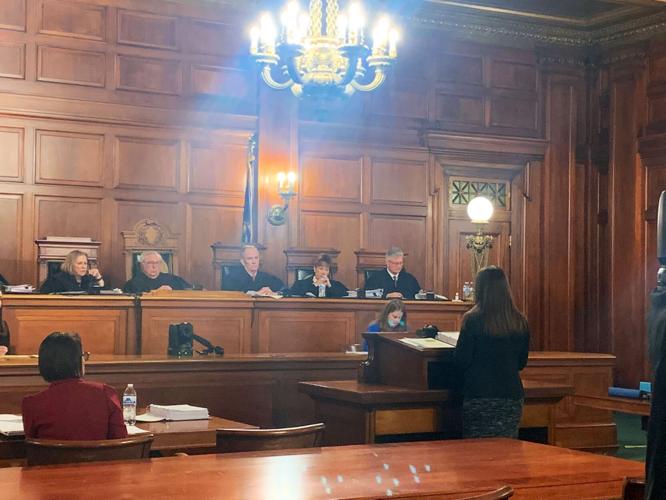
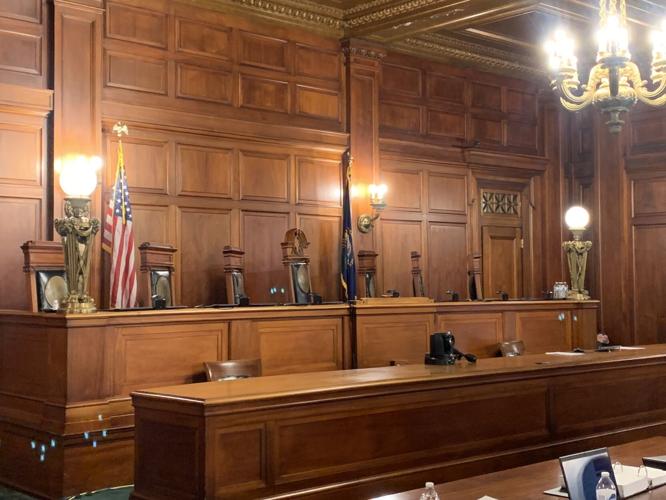


FRANKFORT, Ky. (WDRB) -- Kentucky's Supreme Court is considering abortion rights in the commonwealth.
The case before Kentucky's Supreme Court is the first legal test since voters in Kentucky and three other states signaled their support for abortion rights in last week's midterm election.
In July, a Louisville judge said the new, post-Roe abortion bans likely violate "the rights to privacy and self-determination" protected by Kentucky's Constitution. Judge Mitch Perry said it was not the court's role to determine whether the state Constitution contains the right to abortion, but whether the state's restrictive laws violate freedoms guaranteed by its Constitution.
The near-total abortion ban was reinstated on an appeal to the intermediate state Court of Appeals. The state Supreme Court later opted to keep the abortion ban in place while it reviews the case, leaving abortions on hold in Kentucky and forcing women who can afford the procedure to look elsewhere.
Tuesday, outside the courtroom people rallied in the Capitol chanting in favor of abortion access. The chanting was so loud you could hear it during the oral arguments.
ACLU of Kentucky attorney Heather Gatnarek represents Kentucky's last two remaining facilities that provide abortions, EMS Women's Surgical Center and Planned Parenthood in Louisville. She argued that the state's ban on abortions interfere with a woman's right to medical care.
"Doctors are supposed to treat their patient holistically and with an eye toward the patient's needs, interests, self determination through that time, and they are currently unable to do so while these laws are enjoined," Gatnarek said.
Kentucky voters said no to Amendment 2 on election day, which would have denied constitutional protections for abortion, so the arguments before the state's high court on Tuesday morning took on an added urgency, as abortion opponents seek a temporary stay on the ban.
Matthew Kuhn, from the Kentucky Attorney General's office, asked the court to ignore the outcome of Amendment 2.
"I think if the court is going to read an implicit right to an abortion in, you have to have got to have historical evidence, and there's none -- none at all -- from our constitutional debates," Kuhn argued.
He argued that the General Assembly hasn't had a chance to weigh in since election night when Constitution amendment was struck down, but Deputy Chief Justice Lisabeth Hughes said it's not all up to the General Assembly. She added that it is the job of the courts to interpret the constitution.
"I think history agrees there were no women at the 1890 constitution. Women did not have the right to vote in 1890. Women could not even own their own property," Hughes said.
Arguments focused on Kentucky's trigger law, which does not have any abortion protections for victims of rape and incest. Kuhn suggested that state legislators could fix that in next session. While Justice Michelle Keller said timing is critical since pregnancies are time sensitive and could be a life or death situation.
Leading up to Tuesday, Democrat Gov. Andy Beshear expressed the hope that the state's highest court "will listen to the will of the people and know that the people have rejected extremism and rule accordingly.”
Republican Attorney General Daniel Cameron continued to claim there's “no right to abortion hidden in Kentucky's Constitution.” He said abortion policy should be left up to the state's legislature, where GOP majorities have passed a series of anti-abortion measures in recent years. Cameron is among several Republicans vying to challenge Beshear's reelection bid in 2023.
It's not clear when the justices could reach a decision. The main decision is weather or not re-instate the temporary injunction, which would temporarily allow abortions up to 15 weeks. The abortion bans in totality would then have to go back to the lower courts if the justices side with the ACLU.
Copyright 2022 WDRB Media. The Associated Press contributed to this report. All Rights Reserved.


