

LOUISVILLE, Ky. (WDRB) -- The Louisville Metro Police Department's recent past has been tumultuous.
At a news conference June 25, Louisville Mayor Craig Greenberg said former Chief Jacquelyn Gwinn-Villaroel resigned after being put on administrative leave over her handling of sexual harassment allegations from a high-ranking officer.
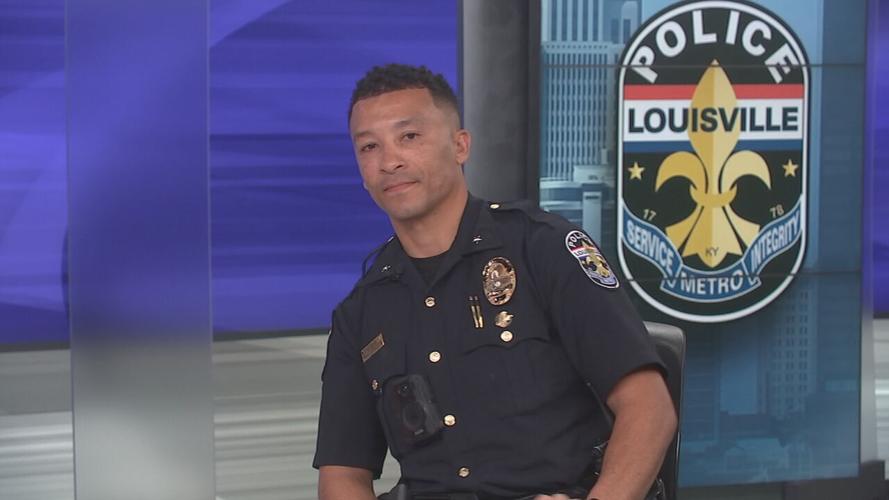
Greenberg made acting chief Col. Paul Humphrey the interim chief until a permanent chief is named. Humphrey spoke to Candyce Clifft and Sterling Riggs WDRB Mornings on Thursday about the changes he's made since he's been in charge.
Here is a transcript of the nearly 12 minute interview:
Clifft: LMPD Interim Chief Paul Humphrey joins us this morning. We're grateful for that to talk about his new role in the department.
Riggs: We're going to address some hot topics, like the city's gang issues, public safety, new policies and work environment at LMPD, thank you so much for taking your time. We know you're busy to come on our show.
Humphrey: I appreciate you all having me here, and it's important that we take the opportunities to speak to you all, but to speak to the public and let them know what we're doing.
Sterling: Absolutely, and I'll just tell you firsthand, it's not easy doing a live interview. Let's start here. What changes have you made at LMPD since you took over?
Humphrey: Well, right now, it's really a process of understanding what officers need. So I've been trying to ask, particularly the command staff, but officers as well, what do you need out of the chief of police? Not, what do you need out of Paul Humphrey? What do you need out of the chief of police? And some of the themes that we're...I'm getting, is, we need consistency. We need stability. We need a focus on crime. And so that's, part of what we're working on right now is, is actually having a plan for what we're doing. I think so many for so long, I think unfortunately, what we've done -- our brand is crisis, as the police, as first responders. Our brand is crisis, and we're very good at dealing with that. But what happens sometimes is we get so focused on the crisis in front of us, that where we end up is at the result of crisis after crisis. And so we really need a plan that says this is what we're going to focus on. This is what we where we want to get, so that while we're dealing with those crises that are inevitable, that we still go in the direction that we desire, that we fulfill the vision and the mission of the police department.
Riggs: And you can track progress.
Humphrey: Right.
Clifft: Identify priorities.
Humphrey: Right.
Cliftt: The mayor said he wanted change. You were part of the command staff that just left. What would you say to people who go, well, how do I know this is not more of the same?
Humphrey: Well, I think for those people who know me personally and they know my career, I think that's been my career is everywhere, everywhere I've been, and everything I've done has been about, how can we do this better? Sometimes I think we get caught in a 'this went well.' So this is what I should keep doing. But take the failures out of it. We always need to address failures, but when we're doing things well, how can we do it better? And so when you create a culture that says, all right, then we always have to focus on how to improve, even when we're doing well, it becomes normalized. And that's what we have to do. We have to have a culture that is self-critical and self-improving, and that's hard to do, because you are constantly looking at the ways that you are the failing, or that extra work that you need to do, and so understanding that status quo is never satisfactory. We always have to be building towards 'how can we do this better?'
Riggs: Two people were recently shot in The Highlands, shot and killed another one person was hurt. A Metro Councilman said that that was gang related, and we've talked about gangs in our city. That's something that you have talked about in live interviews with us. How are we addressing the gang problem in our city? And it seems like a lot of nonprofits say we are here to stop the violence. Do we have any proof that we're making any headway on stopping the violence and curbing gang activity?
Humphrey: So I think we have made a lot of progress, particularly in our intelligence led investigations. If you just look at our number of federal indictments, which the Feds don't pick up cases to indict people and put them in prison for a long time unless they know they're solid cases. Our number of federal indictments have more than doubled in the past two years, which means that the FBI, the DEA, the ATF is trusting the investigations that we're doing, and those detectives are doing a great job.
Now the next iteration is, how do we make sure that all the way down to the patrol level, everybody has the right amount of intelligence, the right information, so that they can, they can proactively police and take the right people off the street. So I think we're getting it up here, and now we have to come back to a model of, we have to be very visible, very present in the community, both in enforcement work and just proactive contact. It's been shown time and time again that police activity reduces crime. So considering everything that we're facing, both environmentally as well as our numbers, we have to figure out, and that's part of what our crime plan has to address. Is how do we make the most of what we have, and how do we use the technology and the intelligence that we have to be as efficient as possible and get those right people off the street? And I think part of that is working with those community groups. Part of that is working with individuals in the community, so that we address it holistically.
You know, it's been said for years, we're not going to arrest our way out of crime problems and things like that. Community safety. We always talked about public safety, but public safety is something that the police provide for you. Community of safety is something that we have to do together, and so we have to make sure that the police are incorporating what are those other aspects of community safety that we can be a liaison for, and make sure that it's not just locking people up, which we have to do, we need to do. But what are those other aspects of community safety that we can help facilitate? We might not be the providers of those services, but we can help connect those services and facilitate those things getting done.
Cliftt: Speaking of relationship with the community, part of that comes in you gaining their trust, and them gaining your trust. It goes both ways. We've talked a lot in the past about policing the police. What kind of changes do you want to make, or how do you want to approach looking at issues within the department, so that the community has your trust?
Humphrey: Well, I think there's a couple of things internally. The negative self talk has to go away. We have amazing people in LMPD, and we need to boost each other up. We really need to work on how we make each other better. So that negative self talk has to go away and when, when you when you get rid of that, and you do create that culture of improvement, a lot of those issues naturally go away because we do police ourselves. It's not a command staff. It's not external. It's peer to peer. We're policing ourselves to be better, as opposed to waiting until something goes wrong.
The other thing is, is that the self-inflicted wounds that have nothing to do with policing, I'm telling everybody, look, if you're doing police work and you're out here trying to do the right thing, and you mess up, so what? We'll fix it. We'll make it right. Yeah, you might get slapped on the wrist, but you're trying to do the right thing. You're out here working to keep the community safe. We can work with that. But if it has nothing to do with work, we don't have time for that. We need to, we need to move on from those types of problems, so that we can focus on actual police work. We've spent way too much time talking about things that have nothing to do with policing, and we have to focus on actual police work. So they're just we're in a time where there can't be much tolerance for nonsense that's interfering with police work.
Riggs: Talk to me about transparency and the importance that is to you and being transparent with the community. We recently learned that when there's a police officer involved shooting, where an officer discharges his or her weapon, that will be sent out in TV terms, like a package form, pre-packaged, to where a message is sent out. How will that provide transparency? First and foremost, and secondly, how do you feel about transparency moving forward?
Humphrey: So I think transparency is one of those words that it's kind of a buzz word, and oftentimes we misinterpret it, and we think that information is transparency, or a visual is transparency when, in fact, it's how does the information give you context of what's happening? And so I actually think that the way that we're going to do this now, and we're not opposed to, I'll answer questions anytime that I can, and not opposed to doing press conferences when, when they're needed. But I actually think that doing it this way will actually increase transparency.
Because what happens is, in those press conferences, I stand up there and I answer the same two or three questions that are generic questions that you could just make up and you could can that actually don't have anything to do with that particular shooting. So it's not adding much context. Sometimes we're able to do that, and sometimes we're not. But when that gets posted and it gets put in posterity, not everybody is watching the news live. Not everybody is watching your package of the press conference. So our ability to take all of that information put it in one spot, it's there on YouTube. Now anybody who goes to that from the day that's released until forever, is going to get that same information in the same way about that officer involved shooting.
The other thing that people have to understand is that the officers don't see those videos either, and so we have a responsibility to protect that investigation. Also we can't give officers answers to questions, so the only thing that they see after they give their initial interview in the investigation is that pre-packaged video also. So if we get up there and we try to provide more information, because constantly we want to provide more information, we run the risk of saying things that we shouldn't, that's going to interfere with that investigation in some way. And so we all, we also have duty to protect the integrity of the investigation and protecting an investigation and making sure that that's done the right way. To me, that's the utmost transparency that you can have, because I do not want to slip up and harm an investigation, good or bad, in one of those press conferences, and give away information that that it's just not time to do.
I want, I want the public to fully understand. I love to teach like, that's part of one of the things I do on the side, is I teach. And so that's part of the approach that I was taking to those, and I think we can still take that, because I think it's our responsibility to teach you, the public, how to understand what we're doing and why we're doing it. And I think sometimes that's that's a big part of the frustration and the lack of trust is that people don't know what we're doing and why we're doing it, and then we get frustrated at people's response because they don't know. Well, we take the steps to educate the public on what is actually happening here and why, and that's our responsibility.
Riggs: I was going to say, when you release the video in the context of the video and the moments leading up to that video, that's the story. It is, what it is, however you feel about it. Everybody determines how they feel about it, but the video in the moment is there. It is in in black and white for everybody to see.
Humphrey: Right. And that's not the moment for us to explain the why. Sure that that video release, that early investigation, is the what happened, sure, and there will be an opportunity later to explain the why.
Clifft: Lots more we wanted to ask you, but we've run out of time, but we do appreciate you coming by this morning. I hope you'll stop by again, and we'll continue to just have this conversation. Thanks.
Humphrey: Sounds good. Let's make this a regular thing.
Riggs: We appreciate you answering our questions.
Humphrey: I appreciate the opportunity.
Riggs: As I said, it's hard to do a live TV interview well, but I learned so much through our you know, six, eight minutes together.
Humphrey: Well, like I said, I think that's our role. And you know, there's a lot of good people at LMPD, and all I hope to do is make them proud.
Humphrey is the sixth person in four years to lead LMPD. He joined the department in 2006 and spent several years as an officer in the city's 1st and 6th divisions in the Newburg and Russell neighborhoods. In 2010, he joined the SWAT team and became its commander in 2017.
Related stories:
- Louisville police chief said she leaves with 'heavy heart' after mayor asked for her resignation
- LMPD chief had 'deeply concerning' response to major's sexual harassment allegation, attorney says
- LAWSUIT: LMPD officer sexually harassed at 'adult pool party' by superiors in open marriage
- Appeals court finds LMPD used stale information in raiding vacant home, handcuffing wrong couple, child
Copyright 2024 WDRB Media. All Rights Reserved.


