

LOUISVILLE, Ky. (WDRB) -- A Buechel-area nonprofit is helping hundreds of birds of prey get a second chance at the power of flight.
Raptor Rehabilitation, at 1025 Southern Avenue, averages between 300 and 400 birds-per-year in their rehabilitation program.
Board of Directors President Dave Dicks says the nonprofit currently has around 160 different species of birds, most healing from injuries or illness. Birds you can find at the facility include hawks, owls, eagles, vultures, falcons, osprey and kites.
While the goal is for each bird to be reintroduced to the wild, Dicks says not every bird will leave the nest.
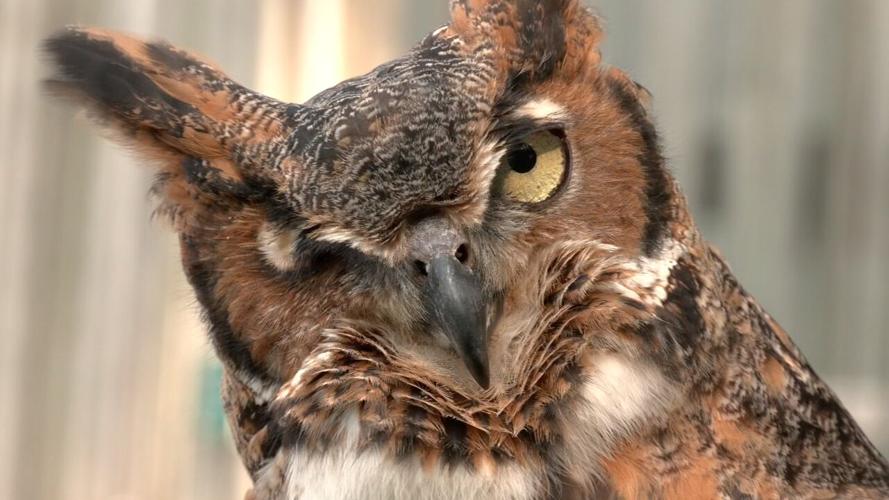
Luna, a Great Horned Owl, is one of the many educational birds now helping educate the community at the facility.
"Luna, because she was so young when she was brought to us, hoots all the time. She is very socialized to people which obviously is not the main goal, but typically is kind of a show-stopper because she is so vocal all the time," said Dicks.
Luna turned 26 this year and has been with the rehabilitation facility since she was hatched in 1995. An eye injury prevented her from learning how to hunt and care for herself on her own.
Grey Horned Owls are ambush predators, due to their wings which give them the ability of silent flight.
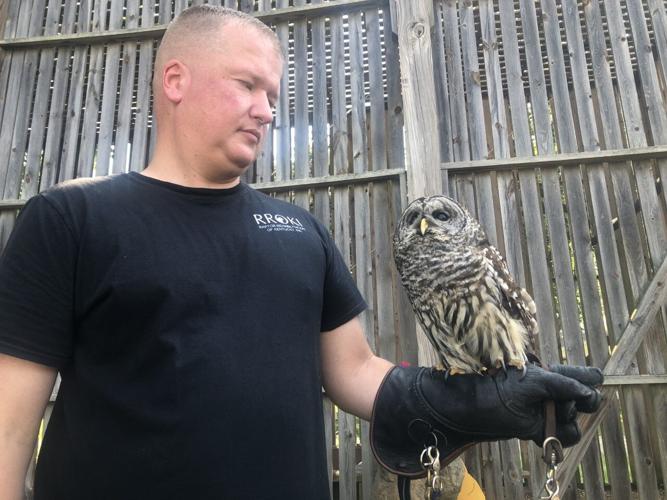
Becoming an educational bird allows volunteers to give the public a close-up look at what makes the animals unique.
"You may see a raptor from afar and know what it is, but this gives us an opportunity to point out some of the finer details about the bird, as well as educate the public on some of the dangers that affect these birds," said Dicks.
The rehabilitation program also has a number of bald eagles.
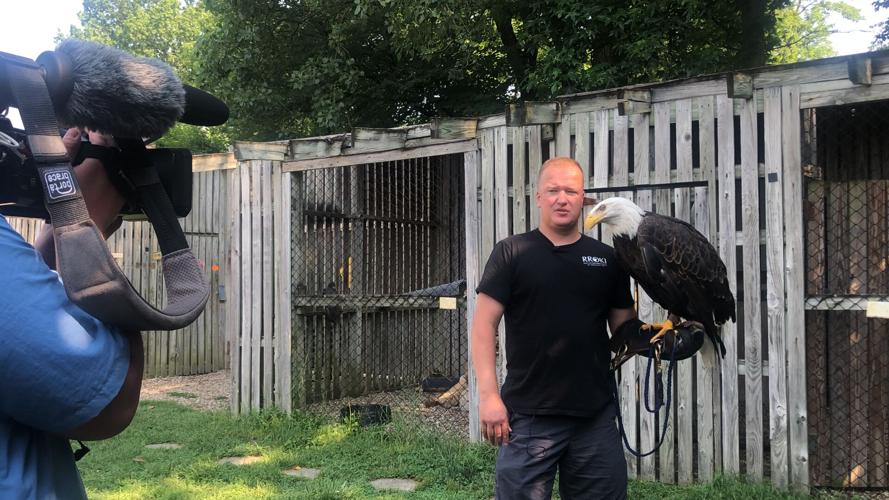
Spirit, is an education bald eagle who has been helping educate the community for over 20 years. She was hatched in 1992 with the intent on being released.
"When she was released, her first flight wasn't very graceful, she flew into a tree and broke her collarbone," said Dicks.
Spirit then became a part of the American Eagle Foundation who tried to rehabilitate her and released her for a second time.
"She flew about 450 miles from eastern Tennessee almost all the way to Augusta, GA, when the radio beacon attached to her stopped moving. They went out to check on her and found her at about half the body weight she should have been, so for whatever reason she wasn't hunting," said Dicks.
Spirit remained with the AEF for over 20 years, until a few years ago when she moved to become an educational bird with Raptor Rehabilitation.
Despite spending much of her life in captivity, Dicks says Spirit weighs about ten pounds which is right in line with a normal weight for a female bald eagle in the wild.
"Here in Kentucky, our male eagles will weigh anywhere from six to ten pounds and our female eagles will weigh between nine and fourteen pounds," said Dicks.
Spirit is one of five bald eagles currently at the facility.
The four others are wild birds, expected to be released sometime soon.
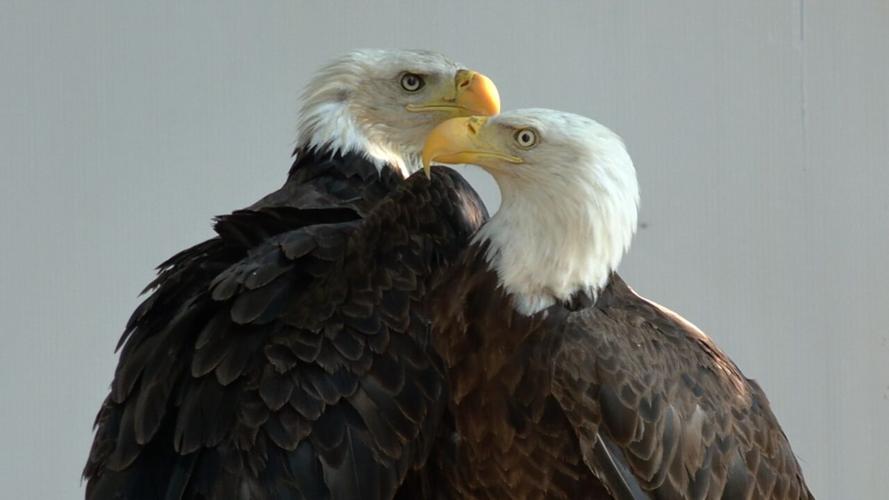
Two adults, one male and one female, are a mated pair who were brought in after suffering from both rat and lead poisonings.
"The second we brought them out to the flight was one of the coolest things I've seen. They literally walked up to each other and nuzzled each other," said Dicks. "They have some muscle atrophy they're trying to work through, so the next step is allowing them to move around and fly a little bit."
Two younger birds also in the program are about a year old and are sharing a space with the older birds.
"These two eagles actually are going to act as birds for the young eagles to emulate off of and learn how to be eagles," said Dicks.
Dicks says there are several things humans can do to help prevent birds from ending up in rehabilitation programs.
He says lead poisoning is a common cause of sickness in birds. To help with the problem, Dicks says people should find an alternative to lead sinkers and use lead-free ammunition.
Additionally, Dicks says to stop using rat poison.
"Things like rat poison are very dangerous for our birds. A rat will eat the poison and be injured, it may take a couple days for that to die, and if a bird comes along and eats it, it's directly moved into the birds blood stream," said Dicks. "We've had a big case of poisonings alone from here in Louisville."
The program is always looking for volunteers and Dicks says they appreciate any donations to help the nonprofit provide food and medical care for the animals.
To learn how to volunteer or make a donation, click here.
To hear about more success stories on the program's Facebook page, click here.
To sign up for newsletters, contact: raptorrehabofkentucky@gmail.com.
Raptor Rehabilitation is open from 10 a.m. until 2 p.m. and is closed Mondays, Wednesdays and Fridays.
Copyright 2021 WDRB Media. All Rights Reserved.


