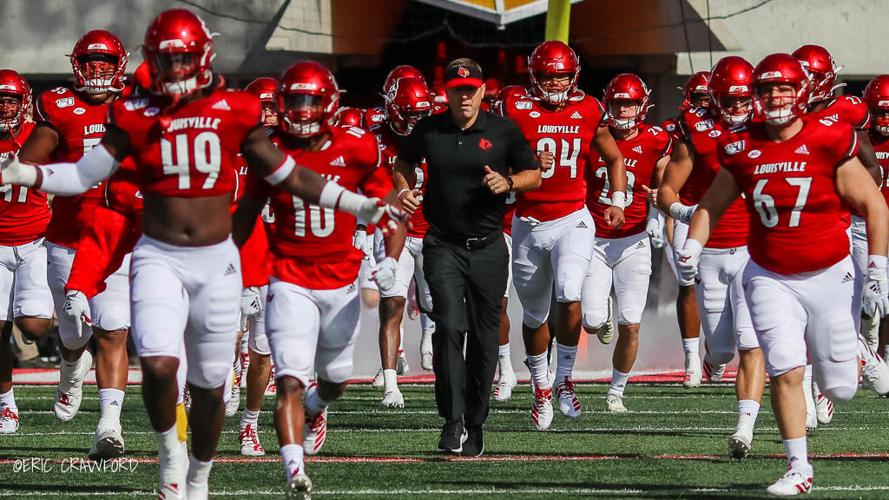
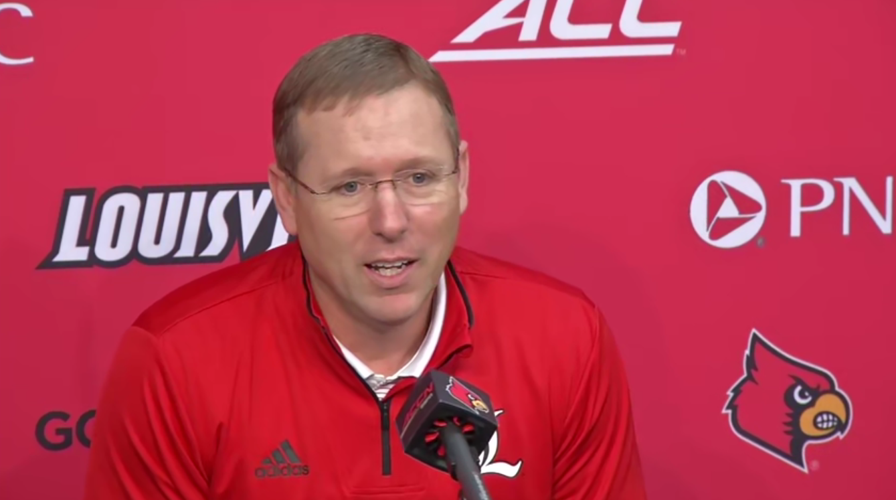


LOUISVILLE, Ky. (WDRB) -- Louisville football coach Scott Satterfield answered questions for nearly 30 minutes on a teleconference Tuesday afternoon.
My copy of the transcription included more than 4,400 words about Satterfield’s thoughts about when the 2020 college football season might begin, how much time players will need to prepare, his opinion on the NCAA Name/Image/Likeness and one-time transfer issues and other topics.
I could share 10, 15 or 20 takeaways from the discussion with Satterfield. But I’ll limit it to five, because Five Takeaways seems to be the gold standard in the takeaway game these days.
1. What’s your thinking about when, or if, the college football season will start?
SATTERFIELD: “I think all our talks we've had over the course of the past five or six weeks, we feel like we're coming back and playing. The whole gist of this is we don't know when. We're all just kind of sitting in limbo.
“What we're doing now is trying to come up with plans for a return to play. I think we have a consensus of a six-week return to play plan so that whenever we do come back and say, ‘All right, we're going to start playing on this specific date,’ you back it up six weeks and get everybody in.
“Here at Louisville, we're trying to have a plan, a best-case scenario when we could get our guys back on campus to start working out and training. And if you have a plan for that, then you can always adjust back.
“So much of this is coming down from our leaders of government in our state and country and then of course on our own campus. So we're kind of at the mercy of what everyone tells us, and whatever they tell us, we want to have a plan for that. So we're just kind of sitting here waiting on it right now.”
2. What is your best-case scenario?
SATTERFIELD: “The best-case scenario is when the state of Kentucky starts opening up and we're allowed to have group settings where, maybe phase one is 10 people, then phase two maybe 25. So whatever we're allowed to do.
“We'd love to be able to bring our guys in with that number of people we can work with. We know we're gonna have to do it incrementally and break those steps down, but as soon as that can happen, we want to bring our guys in.
“In a perfect world, if we could get them in June, that would be awesome so we have time to find out where they are shape-wise. But also you have to go through all the testing and things we're gonna have to do, which we understand is gonna take a little bit of time. And then start training them.
“If we're able to play on time in September, you start your six-week protocol of return to play right around July 18.”
3. How do you view the scenario of whether there will be people in the stands or if it’s not healthy enough for that, would it be healthy enough for your players?
SATTERFIELD: “Obviously, in a perfect world, you'd want to have as many fans as possible in the stadium. We are a spectator sport.
“In the collegiate world, a lot of athletic departments rely on the revenue that is generated by ticket sales, and quite frankly, it's hard to envision football without people in the stands.
“Now, I think if you did a poll and ask people, 'Would you rather have football with nobody or no football at all?' I think they'd rather have football. We don't know what that's gonna look like.
“I think a lot of this is going to depend on what happens the next week, the next two weeks, the next month. The data that comes in, where we are with things is going to dictate what's gonna happen.
“Is it gonna be a deal where you have to have separation between people in the stands, maybe your family members could be beside each other, but other than that, you have to have space? I don't know.
“Or do you open it up and say, ‘You guys that want to come see us play, you can come in, wear your protective equipment and roll the dice?’
“I don't know what it's gonna look out. Only time with tell. Over the next four to six weeks, where we're at with the numbers, I think will be the biggest indicator of that.”
4. What is your stance, not only on the name/image/likeness but also on the one-time transfer rule?
SATTERFIELD: “Those are obviously two hot topics right now. I understand that they tabled the one-time transfer rule for this season. They'll push it back until next year.
"And the NIL is, to me, is one of the topics that is has grown so much traction over the last few years, and now it's going into the political realm where now states are even ruling on it. I’m more of a purist when it comes to collegiate sports.
“I mean, I like the art of amateurism. And when we open up those can of worms, then the amateurism part of it is really going away. And the tentacles that we're going to have off of that, if that in fact that comes to fruition, then we don't know what that's going to look like.
“You know, I'm all for giving as much as we can give our student athletes, but it's going to come down to where now we're having to put packages together,
“And with recruits, as far as how much money these guys can make and here's what we can set you up with and use – and we're not even talking about the education and that's what we’re in this business for, you know, they're called student-athletes. And so now what this model will suggest, and then we'll start looking more like a professional league if that's what we're going to.
“So that's not to say this week and last week that you know that part of it is not going to be the same collegiate model that we all signed up for when we signed up to play, you know what I did a long time ago and when I got into coaching.”
5. What kinds of issues will be created by immediate transfer eligibility if players are cutting NIL deals?
SATTERFIELD: “They are two separated entities. We understand that.
“But if you’re able to transfer at any point in time and be eligible immediately, don’t you think tampering is going to get involved with that, if you couple that with NIL?
“It’s going to happen. We know that’s going to happen. And we don’t want that in the game. And there’s hardly any way to monitor that.
“Those are just some things that I think as coaches throughout the country, and I think media also has a big part in this as well because they can spin the narrative out there, one way or the other.
“If we want ... what’s great about collegiate sports and the football model ... so many times, they try to compare it to other sport. Because in a lot of other sports, it’s already that way. You can transfer and go play. But in our sport, it’s been a little bit different.
“You’re dealing with in football, this is one example, so many positions specific. Like, for example, if eight of your (offensive) linemen decide to transfer, there’s nobody else on your team you can just put right in there to play offensive line.
“It just doesn’t work that way.
“For example, golf, if a couple golfers transfer and leave, the next best golfer is going to play, right?
“Our sport is specific in the fact that, O line or corners or quarterbacks, tight ends. It’s very specific. It’s just a very slippery slope. There’s a lot of different things that could come off of that.
“I also think about a freshman that comes in. We all know. I was the same way. I got in there, the first three months about every day I wanted to call home and say, ‘I’m coming home. This is too hard.’
“Or, ‘I’m transferring. This is not what they said (it would be).’ We all go through those emotions. But then you stick it out and you say, ‘OK, the next year is better. Oh, man, what a difference a year makes.’
“If we’re enabling these guys to say, ‘OK once it gets tough, I’m outta here.’ I mean what are we saying? That’s going to be really bad.
“And then go look at the guys who have gotten in the (transfer) portal with our rules that we have now. There’s been a lot of reports that of (that) it’s less than 10% than have gotten in the portal in the ACC football, less than 10% have signed at another power five school. So is there opportunity out there for people to leave? I don’t know.
“As a coaching staff, what if we’re going to start holding how many of our scholarship numbers to say, ‘OK, how many transfers are out there? I’m going to sign 10 high school kids and save 15 for transfers.’
“Now we’re hurting the high school kids. There are just so many tentacles out there that I think are going to come about if this rule gets passed at some point in the future.”
Copyright 2020 WDRB Media. All Rights Reserved.


