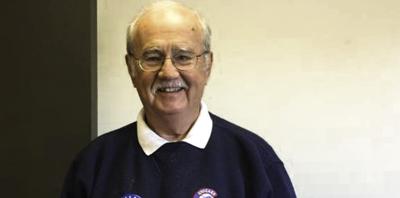

LOUISVILLE, Ky. (WDRB) – Billy Reed, a legend in Kentucky journalism if ever there was one, a member of the U.S. Basketball Writers Hall of Fame, the Kentucky Journalism Hall of Fame, the Kentucky Athletic Hall of Fame, and the Hall of Fame of his alma mater, Transylvania University, died Saturday morning at the age of 78.
During the course of his storied career, Reed poked and prodded and sometimes downright bludgeoned his subjects in the pages of The Courier-Journal, Sports Illustrated, the Lexington Herald-Leader and, later in life, at a collection of smaller outlets, most recently the Northern Kentucky Tribune.
If he didn't anger or offend you with something he'd written or said, it's probably because he just didn't get around to it. But Reed also offered some of the finest writing that any Kentucky journalist ever produced, chronicled the career of Muhammad Ali up close, passionately covered the Kentucky Derby, played a key role in bringing about the resumption of the Kentucky-Louisville basketball rivalry and authored or significantly contributed to 15 books while winning national acclaim for his work.
Reed had been in a rehabilitation facility after suffering a fall in recent months. A story from the Northern Kentucky Tribune said he had been battling liver disease.
Dave Kindred, who worked with Reed at The Courier-Journal in the late 1960s and early 1970s, memorialized his friend on Facebook Saturday morning.
"Billy was my great friend, confidant, advisor, and professional colleague for nearly 60 years," Kindred said. "I spoke with him earlier this week as he entered hospice care. He summoned all his strength to show me how happy he was to have known the unconditional love of his family and friends. I’ll miss him dearly."
Louisville women's basketball coach Jeff Walz said Reed was, "a friend from Day One. I remember Billy telling stories of covering my dad when he played high school football and then at UK, covering my sister on the basketball court and then Louisville women's basketball. You could listen to his stories for hours."
Later in life, Reed enjoyed nothing more than watching and covering Bellarmine basketball, often showing up in his Bellarmine sweatshirt. He donated his papers and other memorabilia from his career to the university in 2019.
Bellarmine coach Scott Davenport said he visited with Reed just three weeks ago in a facility where he was rehabilitating from a fall. "We had a great conversation and were able to talk for a good while. He was a giant in sports in this state, without question. I don't know if he ever said no to anyone who needed help. We need more people who give the way Billy Reed gave."
Before Bellarmine's game Saturday night against Kennesaw State in Freedom Hall, the arena observed a moment of silence in Reed's memory.
"I held it together until I looked up and saw his picture," Davenport said. "I can cry at a grocery store closing, but this was a rough thing. He was a great friend to me. A proud product of the South end, Manual High School, Transylvania, worked in Lexington, Louisville, New York for Sports Illustrated. He gave so much to this community."
Senate Minority Leader Mitch McConnell said he was saddened to hear of Reed's death and said Reed provided, "some of the best sports coverage in the Commonwealth."
"I knew Billy well since our time playing little league baseball together and always enjoyed reading his takes on Kentucky’s sports teams," McConnell said. "From covering more than fifty Derbys, to shadowing Muhammad Ali, to attending NCAA championships, he enjoyed every opportunity Kentucky athletics had to offer. He had an outstanding career and Kentucky sports fans will miss him dearly.”
That's what all the important people have to say about Billy. I first knew Billy from the newspaper on the kitchen table every morning. Usually, he'd written something to stir me up, and I in turn would use it to stir up our daily debate on the school bus, sitting next to my friend Jeff Miller, right behind the bus driver Dude Payton. They've both now passed away, too. When I wrote my first Courier-Journal column, I wanted to make sure those three names were in it. And they were.
I guess when I got to do the job Billy Reed did, and Dave Kindred, and Rick Bozich, and Pat Forde and Jerry Brewer, and a handful of other top-notch writers, I figured I'd gotten about as far as a kid who grew up in Bagdad, Ky., could go, or would want to.
When I was young, there was no ESPN. If there was sports talk radio, it didn't reach out where I was, save for Van Vance on WHAS radio taking calls some nights, and guys like Billy, whose words showed up the morning after the game and, somehow, were more full of life than the game itself.
Reed was a Kentucky institution. After the death of the great C-J Kentucky columnist Joe Creason, Reed gave that column a try from 1974 to '77, before giving it up to focus on sports again. Bob Hill also had it for a while, before the job went to my dad, Byron Crawford, who took it and held onto it for 29 years until his retirement. Billy seldom failed to remind me that he had written that column before my dad.
In 1973, Reed and Jim Bolus won a prestigious Sigma Delta Chi award for investigative journalism for a series on fixed races and other horse racing issues. The two flipped a coin to see who would go to accept the award. The loser had to go get the hardware, the winner got to watch Secretariat win the Derby. Reed wound up accepting the award. It was one of only two times he missed the Derby in more than a half-century (the other was to attend his daughter's graduation from Duke University). The runner-up reporters that year were two guys from The Washington Post, Bob Woodward and Carl Bernstein.
In his prime, Reed could wield prose with the best of them.
"The day begins at 5 a.m., when The Boss shatters the quiet of his training camp by ringing the bell outside his private log cabin," Reed began a story written in mid-1978. "Immediately the misty darkness is punctuated by lights coming on in the other cabins on the hillside. The bell tells everyone that Muhammad Ali is up, ready to get at the business of training for what promises to be a dramatic end to his epic career."
The kid reading those words on a sleepy morning could dream about where words might take a person. More often, Reed would pronounce a judgement that sent me wondering how he could be allowed to write that.
Younger fans I meet today who only knew Billy after his heyday, after his Sports Illustrated run and his days on the front pages of Kentucky's two largest newspapers, don't have a great appreciation for what exactly Reed and the other writers of that time meant to the state, or the influence they exercised.
Reed never shied from controversy and at times seemed to court it. I knew people who hated things he wrote so much that they didn't even want to hear his name, unless it was to cuss it. Later in his career, a great many felt that way about his political pieces, too. But Billy never held them back. He let you have it at full force.
In his later years, Reed would sit in with Drew Deener on his morning sports talk radio program on ESPN 680 in Louisville, and was always insightful. But like any of us of a certain age who do those things, we wind up being the subject of jokes, because we live, in a lot of ways, in a world gone by.
Also in recent years, Reed was less preoccupied with the games people played than real-life challenges they faced.
“I love sports, but my heroes no longer are found in arenas and stadiums," he wrote in the Northern Kentucky Tribune on his 78th birthday. "My heroes are those fighting injustice wherever they find it. They always put morals ahead of money. They still believe in and practice the ideals we learned at a young age.”
In that column, he started out by noting that the winner of the Kentucky Derby in '78 was Affirmed, and then riffed on the No. 78 seamlessly. Just a little while earlier, he wrote about a trip around the backside at Churchill Downs during Derby week.
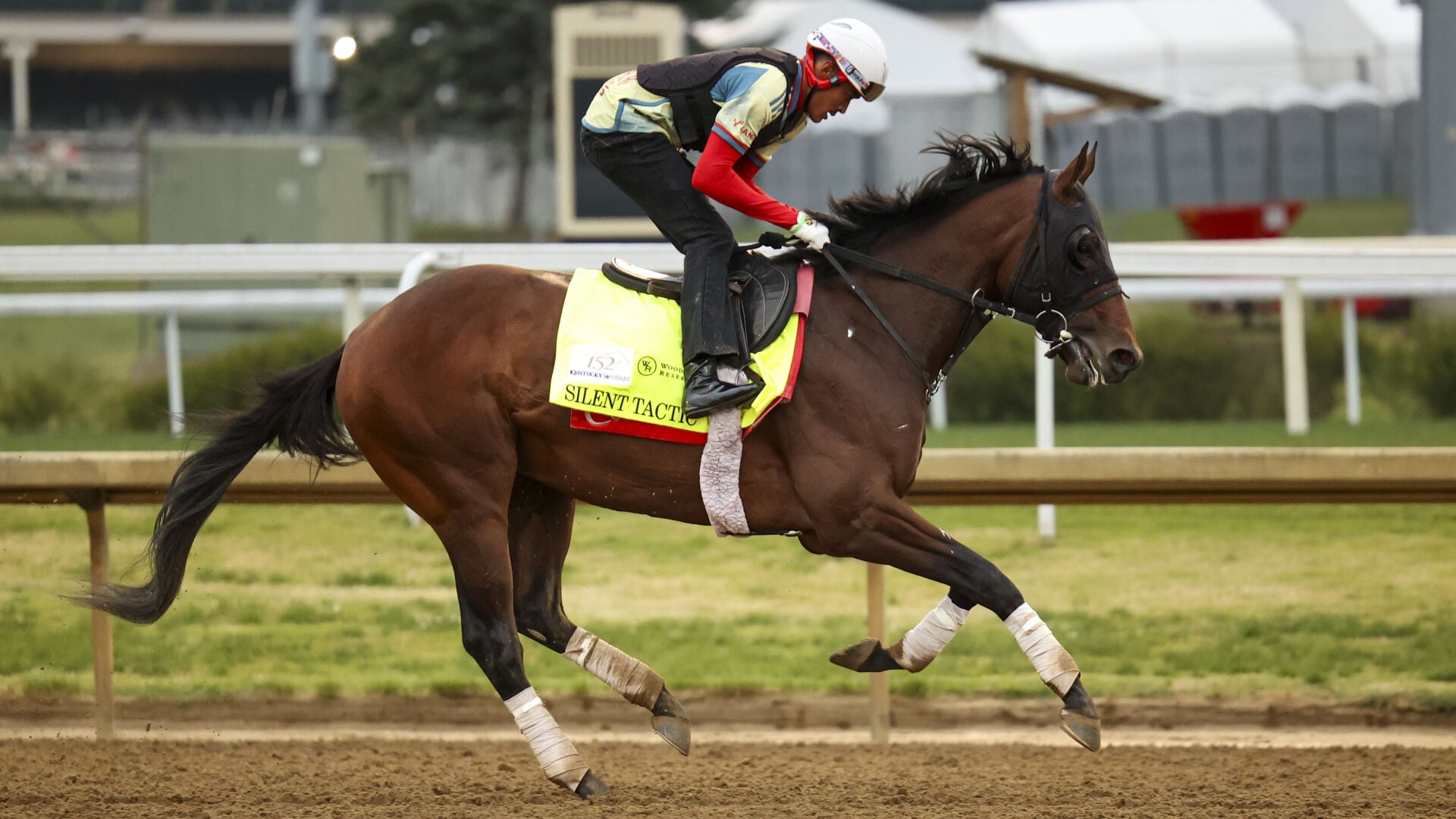
"As soon as I got out of the car, I knew I was where I belonged," he wrote. "Every Kentucky Derby week from 1966 to 2018, I was as much a fixture on the backstretch at Churchill Downs as the truck that sold hot coffee."
He wrote of old friends and lamented the loss of so many newspapers and writers who used to flood into the race from around the country. He wrote about his excitement about getting to see the Derby, "one more time." A few days later, after a morning-after trip to the barn to see winner Medina Spirit, he wrote, "In the deep recesses of my mind, I began thinking if I might stay healthy enough to do it again next year, same time, same place."
But Reed was not healthy. He suffered from chronic lymphocytic leukemia and had experienced several falls. Though he was robust as ever, calling for the abolition of "My Old Kentucky Home" as the state song and railing against the ever-increasing influence of money in college athletics, he was slowed in October by a fall that left him with four broken ribs.
In one of the final handful of columns he was to write, Reed said of his injuries, "I’m not sure anybody noticed or cared, because I’m only a typist, not a superb athlete who has the World Series or the Super Bowl on the line. Nevertheless, I refused to go on the Disabled List. I typed a column while in the hospital, but couldn’t send it because the hospital people didn’t have a cord that allowed me to recharge my computer. I kid you not. And so did I miss my deadline. I’m not complaining about my injuries because a lot of people have it worse. My hospital roommate, for example, had been shot eight times, one bullet missing his heart by only two centimeters. When I overheard his sweet conversations with his scared and confused young children, my support of anti-gun legislation rose to new heights."
Lest anyone forget -- and if they did, Billy had no problem reminding them -- he walked among giants. He sat on a bed next to Muhammad Ali and listened to him. He covered Adolph Rupp and Wes Unseld, Paul Hornung, Bob Knight and Johnny Unitas. He knew every Kentucky governor from Lawrence Wetherby on, and even liked a few of them.
As life tends to make it, these losses seem to hit hardest at Derby time, on still, chilly mornings at Churchill Downs, when the breathing of horses and the sound of their not-to-distant hoofbeats welcome the sunrise, and the memory of all the people who have made those mornings special over the years comes galloping around the backstretch turn.
"I can only hope the Derby angels smile on me one, last time," he wrote after picking up his race credential last year, with the distant hope of writing about the Derby this year.
He will not make it. Like in '73, a more important assignment has called him away. But his words will continue to ring in the morning air in the state he loved so well.
Copyright 2022 WDRB Media. All Rights Reserved.