
LOUISVILLE, Ky. (WDRB) -- For years, Kentucky judges have improperly ordered some criminal cases erased from the public record despite state laws that should have kept those charges on the books, according to former Kentucky State Police officials.
The expungement process has not always been followed correctly, and it was a problem with multiple judges and in several counties sending ineligible expungement orders to KSP from across the state, according former Lt. Col. L. Scott Miller, who was both an attorney and top commander in KSP until 2017.
"In these instances, it was a direct violation of the statute," Miller said. "It was concerning to us that it kept happening and it was odd to us that it kept happening."
KSP plays a key role in Kentucky's expungement process. It certifies a case is eligible for expungement before it goes to a judge. Then, once a judge orders the case expunged, it is up to KSP to ensure the records are sealed and removed from law enforcement databases.
But, for years, top agency officials felt they were ordered to purge cases that were not eligible for expungement under state law, such as erasing the criminal records of people who had multiple convictions or expunging charges for high-level felonies or cases that had not waited five years post-conviction, as required.

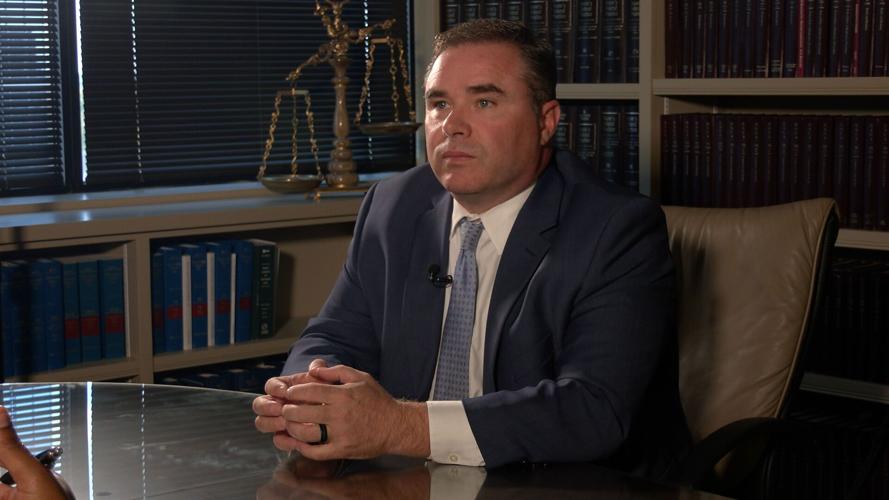
Former KSP attorney L. Scott Miller (WDRB photo).
"It obviously raised red flags for us and kept us in the position of not knowing really what we can do about it," Miller said. "It put us between a rock and a hard place of, 'How are we going to comply with this court order while also complying with (state law)?'"
WDRB has examined potential abuses of expungement laws in a series of stories this year after the case of a former Louisville Police officer turned Jefferson County sheriff's deputy thrust the issue into the spotlight.
Todd Walls had a sexual relationship with a 15-year-old girl when he was 28 and working for the old Louisville Police Department. He confessed in 1996 and pleaded guilty to misdemeanor sexual misconduct under the terms of a plea deal.
In 2015, former Jefferson County Circuit Court Judge James Shake set aside the guilty plea and expunged Walls' case, prosecutors said.
"It makes you feel violated all over again," the victim, now an adult, said in a recent interview. "I wouldn't wish this on anybody."
The purging of Walls' criminal record is at issue now because of a new state law that forbids people convicted of misdemeanor sex crimes from serving as police officers. Prior to House Bill 206, officers convicted of misdemeanor crimes could keep serving in law enforcement. The Jefferson County Sheriff's Office was forced to fire Walls in September after the Kentucky Law Enforcement Council revoked his police certification, a result of the bipartisan legislation that went into effect in July.
Walls is attempting to get his badge back, his attorney arguing that his conviction was lawfully vacated.
Kentucky law says sex crimes and crimes against children are ineligible for expungement. Because Shake vacated Walls' conviction first, his case was then able to be expunged under the statute for someone who'd been acquitted rather than someone who'd convicted of a crime. The difference is what's missing in this law: The provision blocking sex crimes or crimes against children from being wiped away didn't apply.
Jefferson County Commonwealth's Attorney Thomas Wine, who has said Walls' case should have never been expunged, recently won a motion to access the sealed court records and video of the July 2015 proceeding. He said his office had no record to explain why Shake, who has retired, set aside the Walls' conviction.
Widespread problem
KSP employees say Walls wasn't the only expungement with questionable legality.
Several sources, who declined to risk their jobs by speaking on the record, said it was a consistent problem across the state. One source within the current KSP administration said the police agency kept a stack of ineligible expungements sitting in limbo. The problem was passed down the line from administration to administration since at least 2008. What happened to the stack remains a mystery.
KSP Commissioner Phillip Burnett Jr. and Kentucky Justice Cabinet Secretary Kerry Harvey did not respond to WDRB's repeated requests for interviews.

Kentucky Justice and Public Safety Cabinet Secretary Kerry Harvey (L) and Kentucky State Police Commissioner Phillip Burnett (R).
Expungement is the legal process by which an arrest, charge or conviction is completely removed from someone's criminal history. Once a case is ordered expunged, the court file, court videotape, fingerprint cards and all other records are supposed to be sealed forever. The cases are sealed and removed from public files. If asked about the case, court clerks are required to say it does not exist.
Expungement is meant as a tool to allow people to keep their lives back on track without being dogged by old criminal charges.
"This helps people become taxpayers, advance in their careers, get better jobs, be more influential and involved in their community and their child's lives. That's what expungement is supposed to do," said attorney and former Jefferson County District Court Judge Benham Sims, an advocate for the process.
"It's not for serious offenses. It's not for career criminals. They've lost those rights."
The Kentucky legislature passed its first expungement law in 1992, and it's been revised five times since to expand from misdemeanor to certain felony offenses. In each revision, lawmakers set strict rules on the process to follow to get an expungement, what charges are eligible and which crimes cannot be wiped away from the public record.
"For (KSP) we're trying to follow statue," Miller said. "It made it real difficult for us to try to figure out what to do."
Miller worked with state police for 19 years, first as a trooper, then as an attorney in the KSP legal office before reaching top command staff and leaving the force in 2017. Now, in private practice at the Sturgill Turner law firm in Lexington, Miller primarily works as a defense attorney for police departments and officers.
He recalled an issue in 2008 when KSP refused to expunge a case because, at the time, state law did not allow the offense to be erased. Miller was one of the attorneys who argued against sealing the record, and, as a result, the judge held then-KSP Commissioner Rodney Brewer in contempt of court.
Miller said KSP was told it did not have the legal standing to challenge the expungement.
"We weren't involved in the case. We were just like a witness," Miler said. "So you can't file something if you don't have standing in the case to file it."
The burglary case in question was expunged, but a few skeletons of the contempt issue remain traceable in Kentucky Court of Appeals records.
The appeals court reversed at least 14 expungement orders between 2007-19, nine of which were from Jefferson County, according to a WDRB review of court opinions. Some phrases appear repeatedly in the in the court's opinions, such as the expungement being "improperly granted" or the lower court "erred as a matter of law."
While some cases were challenged, many were not, as Brewer's being held in contempt and the issue of legal standing loomed over KSP for years.
Checks and balances not followed
In 2013, the General Assembly passed Senate Bill 78, which required expungement petitions to include a certificate of eligibility. The goal was to involve KSP at the beginning of the expungement process rather than the end.
A person seeking an expungement now must certify that their case is eligible before asking a judge to erase the criminal history. Once a judge signs off, KSP and the Administrative Office of the Courts seals all records and removes them from law enforcement databases and publicly searchable court records.
But the checks-and-balances envisioned in SB 78 did not materialize, according to emails between top KSP command staff, attorneys and executives in the Kentucky Justice Cabinet.
"Despite us stating that a charge is ineligible under law to be expunged, some judges are ordering the conviction be expunged anyway," a KSP staff attorney wrote in a 2018 email to then-KSP Commissioner Rick Sanders and Justice Cabinet Executive Director Davis Paine. "Sometimes our voices go unheeded."
In the email, the KSP attorney recommended the agency begin tracking ineligible expungements, but the agency never did so, according to a state police spokesperson.
"It was frustrating," Sanders, now chief of the Jeffersontown Police Department who led KSP from 2016-20 under former Gov. Matt Bevin, told WDRB in an interview.
"It didn't seem right that we did not have any standing and trying to appeal these cases that were being ordered to be expunged. And I know that during that tenure, we even went to some conferences with county attorneys in trying to make our case that not all charges can be expunged. And then we went to the Administrative Office of the Courts to try to resolve this issue. But, again, I was told we had no standing."
Often, an ineligible expungement could be cleared up with a simple call or direct contact with the court or prosecutor on the case, Miller said. At one point, KSP started sending letters to prosecutors about expungement orders that conflicted with the law. Even so, some judges would order the expungement to proceed despite state law, or the letters wouldn't get a response, Miller said.
Despite concerns, Sanders said officials never wanted to take the matter public.
"I don't think the public outcry would be the venue in which to appeal this," he said. "I think this needs to be handled within the courts."
Despite KSP meetings with the Administrative Office of the Courts, Kentucky Chief Justice John Minton told WDRB he was not aware of any longstanding issue with expungements. Nor would he order an audit to find them, he said.
"As elected officials, judges are empowered with judicial discretion to decide the matters that come before them," AOC spokesperson Leigh Anne Hiatt said in an emailed response to WDRB. "The AOC, as the administrative arm of the state court system, has no authority to influence or express opinions on judicial decision making. The AOC does not audit the decisions made by the courts. The same is true for the chief justice, who cannot comment on or intervene in judicial decision making."
Miller said unlawful expungements have been a problem for too long.
"I think it absolutely needs to be cleared up," Miller said.

Copyright 2022 WDRB Media. All Rights Reserved.