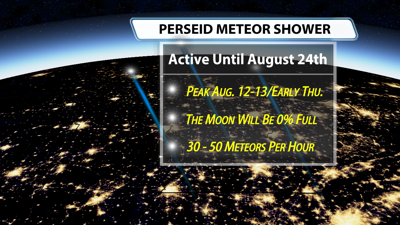

The Perseids are back! One of the year’s brightest and most popular meteor showers has been ramping up since early July and will sparkle in the skies through the end of August. The shower reaches its peak on the night of Aug. 12 into the early morning of Aug. 13, and its visibility should be ideal thanks to the new Moon phase that will keep the skies dark.

The Perseids are among the oldest recorded meteor showers, with observations dating back more than 2,000 years. They are a favorite annual event because they are reliably active and visible, take place in warmer months, and are known for producing fireballs – exceptionally bright meteors that leave a glowing trail as they streak across the sky.
The Perseids are so named because the meteors appear to radiate from the constellation Perseus, which is visible in the northern sky. In Greek mythology, Perseus is the warrior who slayed Medusa and rescued Princess Andromeda, whose namesake constellation shares the sky nearby. But don’t worry too much about finding Perseus to catch a glimpse of shooting stars. Meteors can appear anywhere overhead.
The best way to watch the Perseid meteor shower is to find a location with dark skies, give your eyes 20 to 30 minutes to adjust to the darkness, and simply look up. Then sit back, be patient, and enjoy one of the year’s premier celestial shows.


