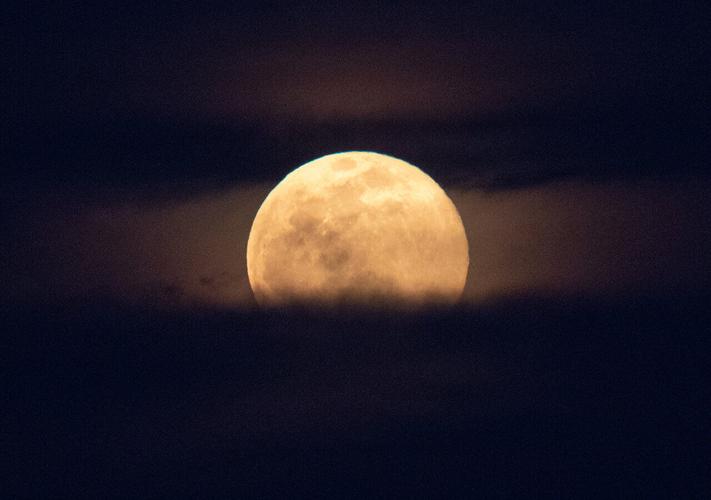

The Next Full Moon is the Pink Moon, the Sprouting Grass Moon, the Egg Moon, the Fish Moon, the Paschal Moon (for Eastern Christianity), Hanuman Jayanti, Bak Poya, and a Supermoon.
The next full Moon will be late Monday night, April 26, 2021, appearing opposite the Sun in Earth-based longitude at 11:32 p.m. EDT. This will be the next day from the Atlantic Daylight Savings timezone eastward across Africa, Europe, Asia, and Australia to the International Date Line. Most commercial calendars are based on Greenwich Mean Time (GMT) or Coordinated Universal Time (UTC) and will show this full Moon occurring on Tuesday, April 27, 2021. The Moon will appear full for about three days around this time, from Sunday night through Wednesday morning.
In the 1930s the Maine Farmer's Almanac began publishing American Indian Moon names for the months of the year. According to this almanac, as the full Moon in April, this is the Pink Moon, named after the herb moss pink, also known as creeping phlox, moss phlox, or mountain phlox. The plant is native to the eastern United States and is one of the earliest widespread flowers of spring.

Other names for this Moon include the Sprouting Grass Moon, the Egg Moon, and among coastal tribes of North America, the Fish Moon, as this was when the shad swam upstream to spawn.
For Eastern Christianity (which bases its calculations on the Julian Calendar) this is the full Moon before Easter, called the Paschal Moon. This is one of the years where the different calendars used by Western and Eastern Christianity make a difference. Eastern Christianity will be celebrating Easter on Sunday, May 2, 2021. Western Christianity celebrated Easter on Sunday, April 4.
For Hindus, this is Hanuman Jayanti, the celebration of the birth of Lord Hanuman, celebrated in most areas on the full Moon day of the Hindu lunar month of Chaitra, which (in India's time zone) is Tuesday, April 27, 2021.
For Buddhists, especially in Sri Lanka, this full Moon corresponds with Bak Poya, commemorating when the Buddha visited Sri Lanka and settled a dispute between chiefs, avoiding a war.

This Full Moon is a Supermoon
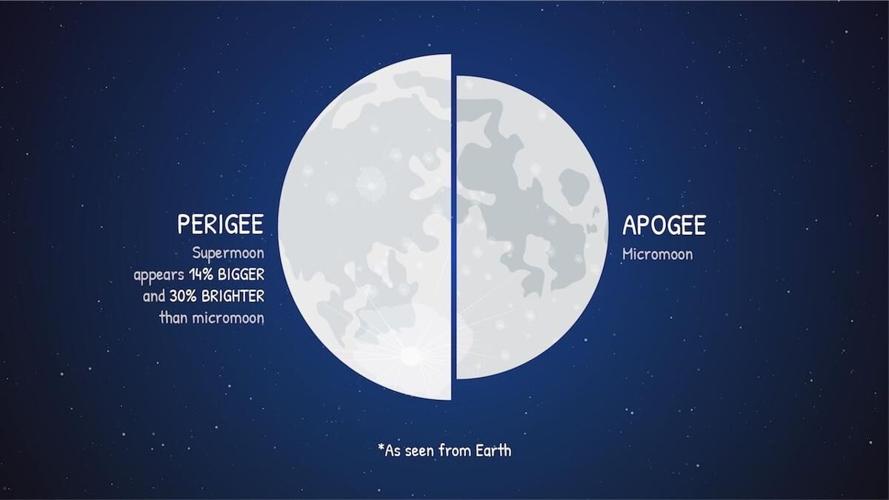
This full Moon is the first of two supermoons for 2021. The term "supermoon" was coined by astrologer Richard Nolle in 1979 and refers to either a new or full Moon that occurs when the Moon is within 90% of perigee, its closest approach to Earth. Since we can't see a new Moon (except when it passes in front of the Sun), what has caught the public's attention in recent decades are full supermoons, as these are the biggest and brightest full Moons for the year.
These two full Moons are virtually tied, with the full Moon on May 26, 2021, slightly closer to the Earth than the full Moon on April 26, 2021, but only by about 98 miles (157 kilometers), or about 0.04% of the distance from the Earth to the Moon at perigee.
Full Moons, New Moons, and Calendars
In many traditional lunisolar calendars, the months change with the new Moon and full Moons fall in the middle of the lunar months. This full Moon is in the middle of the third month of the Chinese calendar and Iyar in the Hebrew calendar. In the Islamic calendar, the months start with the first sighting of the waxing crescent Moon shortly after the New Moon.
This full Moon is near the middle of the holy month of Ramadan. Ramadan is honored as the month in which the Quran was revealed. Observing this annual month of charitable acts, prayer, and fasting from dawn to sunset is one of the Five Pillars of Islam.
As usual, the wearing of suitably celebratory celestial attire is encouraged in honor of the full Moon.


