

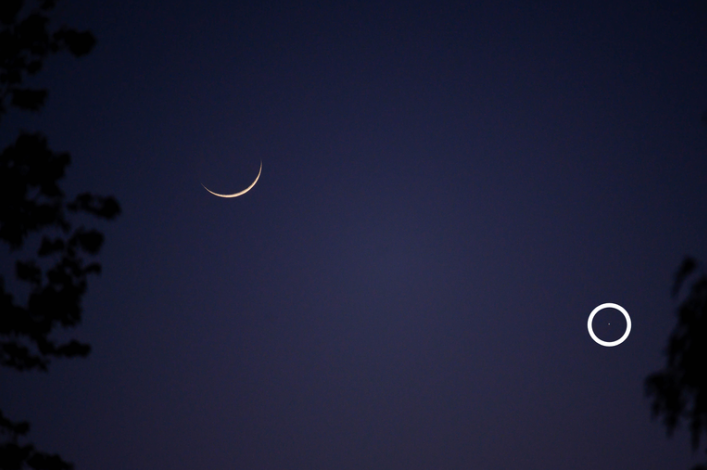
On April 3rd, Mercury will be at its most visible all year. On this date, the planet will be at its greatest elongation, or its furthest distance from the Sun, as we see it from Earth, making it easier to see the often hard-to spot-planet.
Credit: NASA
To find Mercury, look east before the Sun begins to rise. The planet will be very low on the horizon, just above Mars.
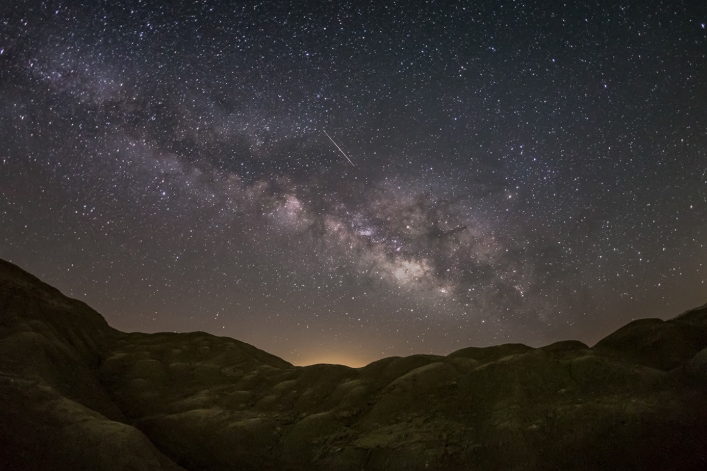
The Lyrid meteor shower peaks April 21st to 22nd. This meteor shower comes from debris left behind by Comet Thatcher.
When this debris hits and then burns up in our atmosphere, we see the "shooting stars" of a meteor shower.
To experience the peak of the April Lyrids, look to the east starting at around 10 p.m. on April 21st and through the night into April 22nd. The meteor shower takes place nearby the star Vega, the fifth brightest star in the night sky, which can be found in the constellation Lyra, the Harp.
Credit: NASA