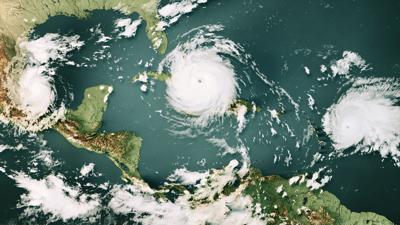
Hurricanes are broken down by their strength into Categories 1-5 with one being the weakest and five being the strongest. There is no "category 6" because the wind speed for Category 5 hurricanes is anything greater than 155 mph. There is no upper limit for wind gusts on that category.
Categories are determined by maximum sustained wind, meaning the strongest gusts measured for one minute at a time. These categories were originally based around the Beaufort Wind Scale used by mariners to describe weather conditions while at sea. Categories three through five are considered "major" hurricanes because of the destruction they can do.
Meteorologist Hannah Strong explains the different hurricane categories and what each means.
Tropical Depression: a tropical cyclone with maximum sustained winds 38 mph or less
Tropical Storm: a tropical cyclone with sustained winds 39-73 mph
Category 1: sustained winds 74-95 mph, will produce some minor damage, power outages may last a few days
Category 2: sustained winds 96-110 mph, will likely produce extensive damage, power outages may last a week
Category 3: sustained winds 111-130 mph, will produce extensive damage, power outages can last a week
Category 4: sustained winds 131-155 mph, will likely produce catastrophic damage, power outages can last a month or more
Category 5: sustained winds stronger than 155 mph, will produce catastrophic damage, power outages can last months
DISCUSSION IDEAS:
What other factors should be considered when determining hurricane strength? Rainfall? Central pressure? How fast it's moving? Tornado potential?
Click here to see the extended Saffir Simpson table with more damage factors discussed. This can help create questions about how strong a storm has to be to do damage like this or if any of these damage indicators seems like it should be in a different category.


