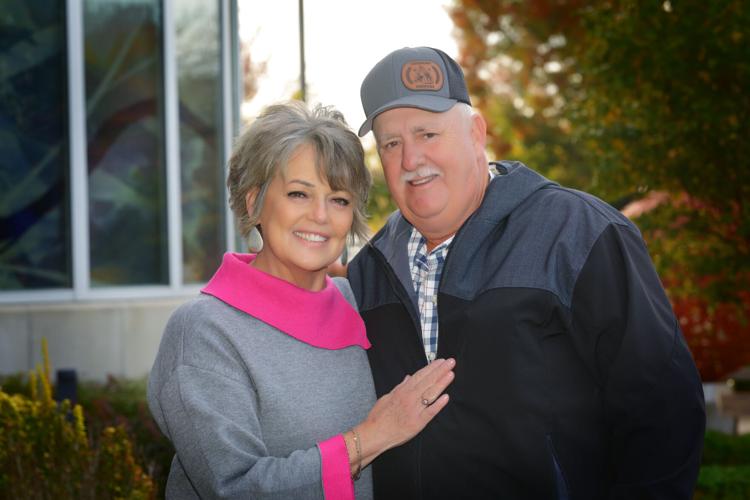
The image means so much to Jackie Taul that she affixed it to her refrigerator and gave out copies to her son, daughter and five grandchildren. It’s not the prettiest picture to look at, but to the 60-year-old retired emergency room nurse, it’s beautiful. Because the image from the clear lung scan Taul received in February of 2023 is a constant reminder of her second chance at life.
The picture had been far bleaker two years earlier, when physicians preparing to treat Taul for a hernia discovered lung cancer. A biopsy of a lymph node in her neck confirmed the diagnosis: Stage 4 metastatic carcinoma. “I was never sick a day,” the Breckinridge County resident recalls. And suddenly, she was facing a disease with very low survival rates.
The recommendation of a friend led Taul to contact Norton Cancer Institute, the leading cancer care center among patients in Louisville and Southern Indiana. There she saw Dr. Adam Lye, thoracic medical oncologist and a Kentucky native working to improve lung cancer survival rates within his home state. And Dr. Lye had surprising news: Taul’s cancer had two biomarkers that were excellent targets for therapy, a treatment which could slow the disease without causing disabling side effects.
But they had to work quickly. “Time is of the essence,” Dr. Lye says. “Especially with lung cancer, we need to begin the correct treatment before the patient gets too sick to be treated. Our multidisciplinary team often gets patients in and going within a few days. I’d put Norton Cancer Institute up against anyone in the country on that.”
Treatment with pinpoint delivery
Taul did not begin her treatment at Norton. After her diagnosis, her physician had recommended her to a well-respected Louisville facility for treatment. Six months later, scans showed the cancer had spread. Doctors advised an option known as TIL therapy, a type of immunotherapy that’s usually only performed once. It required at least a one-month prep period, and a stay in the hospital.
It was on the drive home from that appointment that Taul called a friend who advised her to reach out to Norton. She saw Dr. Lye for the first time that same week. Soon afterward Dr. Lye began a treatment rooted in what’s known as personalized medicine or precision medicine—a well-researched, leading-edge standard of care which is available at Norton Cancer Institute to treat qualifying cancers.
Because of two mutations within her cancer cells, Taul could be treated by a drug called Enhertu which specifically targets the HER2 protein, with direct delivery to those cells. “This drug, and those like it, treat cancers like a sniper with pinpoint delivery, rather than a bomb that causes collateral damage,” Dr. Lye says.
The precision medicine approach at Norton Cancer Institute begins with an analysis of the genetics of the cancer to find the most efficient targets for treatment. While not all cancers have a treatable mutation, those that do offer oncologists a bull’s-eye for precise therapy. “Jackie’s cancer actually has a second mutation that we will treat if for some reason the current therapy stops working,” Dr. Lye says. “Her case is unique in that we have a built-in backup plan.”
Right now the treatment is working, and Taul has the image affixed to her refrigerator to prove it. “I can’t explain how I feel about him,” she said of Dr. Lye. “He is always studying and learning more about lung cancer so he can stay on top of the field. I put my life in God’s hands, and He put it in Dr. Lye’s hands.”
Power of a second opinion
Lung cancer is a chronic problem in Kentucky, which according to the American Lung Association ranks 48th in the nation in the rate of new lung cancer cases—84.8 per 100,000, compared with the national rate of 54.6 per 100,000. Kentucky also ranks 39th in five-year lung cancer survival rate, which is 21.6 percent in the Bluegrass State as opposed to 26.6 percent nationally.
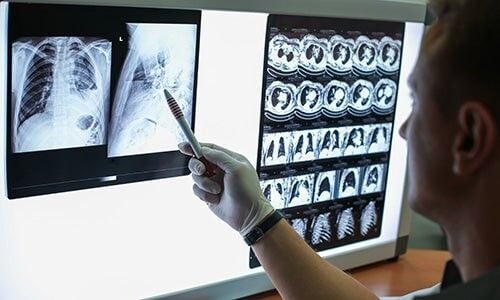
The good news is that Kentucky ranks second nationally in lung cancer screening rates, and cancer treatment breakthroughs are occurring at a faster rate than ever. “There are all kinds of new and exciting treatments coming on that are helping make a difference in people’s lives,” Dr. Lye says. “These new therapies are providing patients with hope.”
Taul can attest to that fact—as well as the power of getting a second opinion. “I always encourage patients to get second opinions,” Dr. Lye says. “They are especially important when a patient is told there is no treatment at all or no treatment left. If that is true, a second opinion can help the patient be more at peace by making sure nothing has been missed.”
That approach is backed by research. A study published in the journal Cancer Medicine found that when patients seek a second opinion, a less intense treatment often is recommended, even when the original diagnosis is confirmed. “Patients need to trust and feel at ease with their oncologist,” Dr. Lye says. “If a patient doesn’t trust me, they need to find someone they do trust. They need to feel comfortable that they are receiving the right treatment from someone who has their best interest at heart.”
Are you or a loved on searching for another opinion on cancer treatment? Contact Norton Cancer Institute at (502) 629-4673 (HOPE), request an appointment via their online form, or visit their website at NortonHealthCare.com


