




LOUISVILLE, Ky. (WDRB) -- The Breeders Cup, the Kentucky Chamber of Commerce and the Kentucky Thoroughbred Association have joined the state horse racing commission and some Kentucky racetracks in urging the state Supreme Court to reconsider its Sept. 24 decision casting doubt on the legality of thousands of slot-like gaming machines.
The outside groups haven’t formally been part of the 10-year legal battle over historical horse racing.
Their intervention in the case shows widespread alarm in the business community and live racing industry over the “devastating impact” of the court’s 7-0 decision.
The justices ruled that the gaming system that determines machine payouts at three of the state’s six historical horse racing venues does not constitute pari-mutuel wagering.
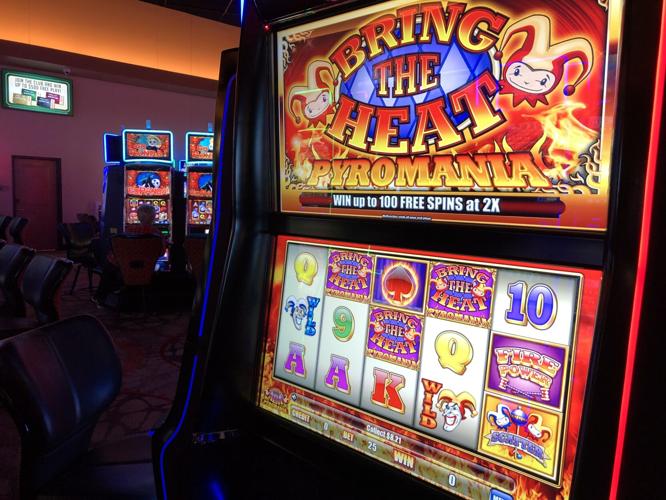
The machines are meant to mimic slots while actually offering an extension of pari-mutuel horse wagering, which is legal in Kentucky while casino gaming is not.
None of the proponents of historical horse racing explicitly say in their briefs that the court’s decision would outlaw the slot-like gaming machines without legislative action, but that is the implication of the ruling.
In fact, the court acknowledged in the opinion that it was pulling the rug from under a $2 billion industry in the state, but only lawmakers can expand the concept of pari-mutuel betting to include the slot-like devices.

“If a change ... in the long-accepted definition of pari-mutuel wagering is to be made, that change must be made by the people of this Commonwealth through their duly-elected legislators, not by an appointed administrative body and not by the judiciary,” the justices said in the opinion.
The court’s ruling isn’t final until it deals with the requests to reconsider the case.
In briefs filed last week, the commission and racetracks say that the Supreme Court, in fact, changed the definition of pari-mutuel wagering in the September opinion by endorsing a narrower conception of the term than the court had promulgated the last time it touched the case in 2014.
Last month’s opinion says that if players are not wagering “on the same discrete, finite events,” the betting isn’t pari-mutuel.
That’s a problem for historical horse racing, where two people sitting side-by-side at the slot-like machines may be playing at the same time, but the results of their spins are based on different sets of previously run horse races.
The industry says the “discrete, finite events” standard wasn’t part of the 2018 trial, in which Franklin Circuit Judge Thomas Wingate found that the Exacta System complied with pari-mutuel standards.
The Family Foundation of Kentucky, which has waged the decade-long legal battle against the gaming industry, said the petitions asking the Supreme Court to revisit the decision are “frivolous and without merit.”
“The petitions were apparently filed to delay the finality of the unanimous Supreme Court Opinion finding the slot-gaming to be unlawful,” Stan Cave, the foundation’s attorney, said in an email.
The state horse racing commission, a group appointed by Kentucky's governor, has declined to comment on the legal beyond saying it respects the court's decision and is "considering its options and will take action as soon as we come to an appropriate resolution."
If the Supreme Court doesn’t change its decision, legislators -- including some social conservatives who don’t want to endorse gambling -- will be pressured to finally vote on legalizing historical horse racing to preserve hundreds of jobs and millions of dollars for the live-racing industry.
But the Family Foundation contends that it would take an amendment to the Kentucky Constitution, which means an even higher threshold of legislative support and the endorsement of voters in a referendum.
Since much of the tax revenue from the slot-like gaming machines is directed to the live-racing industry, proponents worry about losing the financial foundation for horse racing, Kentucky’s “signature industry.”
The Kentucky Thoroughbred Association's court brief paints a grim picture of the ramification of “eliminating” the historical racing industry from Kentucky:
It will result in horses, trainers, jockeys, grooms, owners, racing executives, and other industry participants going to other states to compete. Kentucky will lose tourism dollars. Kentucky will lose revenue from on-track sources and also from off-track (and in many cases out of state) sources. In addition, reducing the (gaming-funded) purse supplements will reduce the purses, which will reduce the amount owners will be willing to pay for Kentucky-bred horses that are eligible to race for these supplements. This will lead to decreased spending on yearlings sold in Kentucky each year. It will lead to decreased spending on mares and stallions sold in Kentucky each year. It will lead to fewer mares being maintained in Kentucky. All of this would lead to decreased tax revenue, decreased employment, decreased tourism spending, and decreased economic impact. In short, Kentucky's signature industry would suffer and Kentucky racing would trend the way racing in other states is trending: downward.


