

LOUISVILLE, Ky. (WDRB) -- A payout of $7.5 million to a man who was falsely charged, convicted and imprisoned for a murder he didn’t commit.
A $1 million payment to the family of a Louisville teenager who died in a fiery crash after police were accused of improperly pursuing a car she was in.
Another $1.25 million settlement to the family of a man shot and killed by police.
Those represent some of the payouts Louisville Metro government has made over the past five years to settle dozens of lawsuits accusing the city’s police department of complaints ranging from wrongful arrests to drivers who were stopped and searched illegally.
The $38 million spent since 2017 dwarfs what neighboring states and other larger cities have paid for police mistakes in recent years, a WDRB News investigation has found.
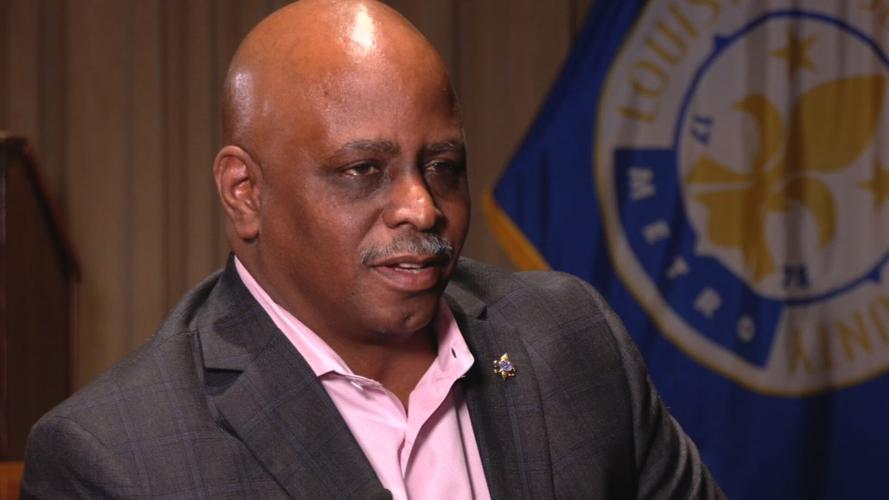
The amount is "astronomical," said Louisville Metro Council President David James, a former police officer. "It frustrates me that we’re spending so much money on civil suits. … Those dollars could be used for other things."
"It’s a shocking number," said Metro Council member Kevin Kramer.
In fact, Louisville has spent three times more than the city itself spent on police complaints in the previous five-year period from 2012-16, according to city records obtained under public records requests.
Louisville also now faces more pressure on public funds that once were insulated from settlement costs.
That’s because the company that provided Metro government's excess insurance dropped the city last July after paying, among other large settlements, $5 million of the total $12 million to the family of Breonna Taylor over a wrongful death lawsuit filed after police shot and killed her.
General Star, the city’s excess insurance carrier, even sued the city in April 2021, arguing it is not responsible for any potential payout in a wrongful conviction lawsuit involving corrupt Louisville police officer Mark Handy from a 1990s murder that is still pending.
The lawsuit argues General Star was not the provider at the time.

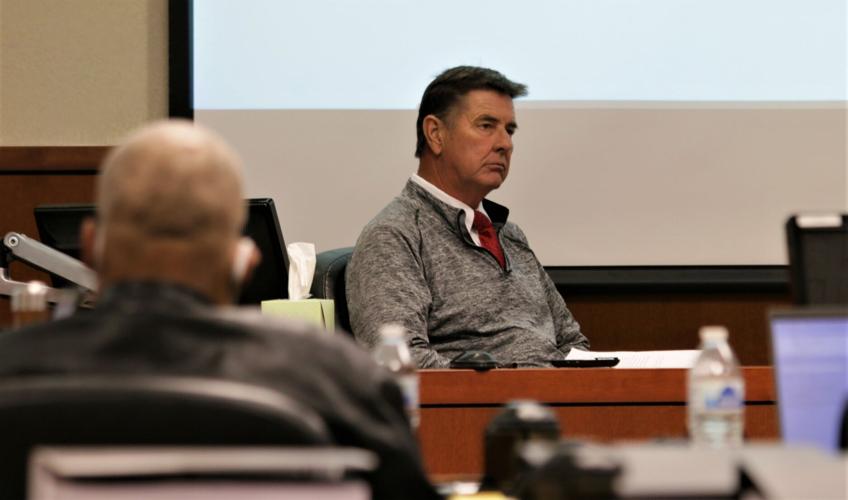
Mark Handy. April 13, 2022. (WDRB Photo)
The city has not been able to find another carrier since.
"I would say because of the large number of payouts that we have, that outside insurance carriers look at the city of Louisville and say, ‘No, I don’t think so,’" James said.
Louisville is self-insured but the city also pays into a trust fund set up for city agencies to pay large legal damages.
For settlements larger than $500,000, the city pulls money from the Louisville Area Governmental Self-Insurance Trust, or LAGIT, which provides up to $2 million in coverage.
Above that, the city would turn to its excess carrier, which covered up to $5 million per incident.
Mayor Greg Fischer’s office refused repeated requests for interviews but answered some questions by email. The Fischer administration said the annual excess insurance renewal process "resulted in no excess insurance market options" beginning July 1, 2021.
"This is not unique to Louisville," said a spokeswoman for the mayor. "The current public entity insurance is very challenging nationwide" and they are continuing to monitor the situation.
On May 9, during a Metro Council Budget Committee meeting, James asked Louisville’s Chief Financial Officer, Monica Harmon, if the city had been able to find another outside insurance company.
She said officials were trying, but "it is doubtful that we are going to, given the nationwide problem with excess coverage, so we are budgeting for paying the higher premium to provide our own excess coverage so to speak."
Harmon estimated that about $9.7 million would now be set aside in the next budget. That is compared to about $3.1 million when Metro Government had an excess carrier.
Essentially, this means less money for other city spending and puts the city at risk financially should it be hit with a big lawsuit.
"Metro Louisville has had to create a very large bank account to pay for civil liabilities," James told WDRB.
LMPD payouts higher than most cities
A look around the nation shows that for the size of its department — and often in comparison with much bigger police agencies — the tab run up by LMPD is unusually high.
Indianapolis paid out about $16 million for police misconduct from 2015-20.
In Cincinnati, the city paid out only $2.5 million over a 10-year period between 2010-20, the Cincinnati Enquirer reported last year.
A story by FiveThirtyEight and the Marshall Project last year looked at settlement amounts from 31 of the 50 cities with the highest police-to-civilian ratios in the country for the last decade or so.
While Louisville was not included, it would have ranked higher than all but a handful of larger cities and departments such as New York, Chicago and Los Angeles.
For example, the Milwaukee Police Department, which has about 700 more police officers than LMPD, has paid about $40 million for police misconduct settlements in the past ten years, according to the story. Milwaukee was one of only seven cities to pay as much as $40 million.
(Louisville's total included about $4 million in lawsuits from police wrecks, which may not have been included in the national numbers.)
WDRB requested records from several cities and found some that have spent far less to settle complaints against all government agencies than Louisville is shelling out just for Louisville Metro Police Department civil cases.
Those include Oklahoma City, which paid $21 million to settle its complaints against all city agencies over the last five years. New Orleans paid $17 million during the same time.
In an email, a spokeswoman for Fischer said the city's legal strategy is "determined by counsel on a case-by-case basis."
Settling lawsuits is often cheaper than dragging them out through a lengthy court process and potentially more costly jury verdicts, city officials have told WDRB.
In a statement, Jefferson County Attorney Mike O'Connell said "the behavior of some sworn officers within Louisville Metro has regrettably caused the city to spend significant resources to resolve legal proceedings. Settlements are case specific and accomplished only after a serious review of evidence by qualified legal counsel and staff of the administration."
The settlement agreements often stipulate that the city does not admit fault and that both sides are settling to "avoid the expense and uncertainty of continued litigation" in a "disputed claim."
In 2018, the Metro Council requested an internal audit of city settlements over the previous five years.
The Fischer administration can currently settle cases without needing Metro Council’s discussion or approval unless it concerns wages or hours.
"We have for a couple of years now been trying to find language that is enforceable that would require the mayor to let us know anytime there is a lawsuit in excess of ($50,000)," said Kramer, a Republican who has served on the council since its inception in 2003.
James, a Democrat, said in an interview that he expects that audit to be completed soon.

Louisville Metro Council (D) David James calls the payouts "astronomical."
Both councilmen said the ultimate responsibility lies with Fischer, who did not replace former LMPD Chief Steve Conrad after several controversial issues, including a sex scandal in the department’s Youth Explorer Program in 2018 that led to criminal convictions of police officers and seven lawsuits.
Conrad was not fired until June 2020 after Fischer learned that police officers did not record body-camera footage of the fatal shooting of David McAtee, a Black man who ran a barbecue stand in west Louisville, during protests over Taylor’s death months earlier.
Asked about what Fischer would say to taxpayers about the amount paid on settlements, the city said "the Mayor is very much aware of managing the risk of a major metropolitan area and continues to pursue best practices in all our work. … The city continues to review performance and continues to review performance and continuously identify ways to make improvements."
LMPD declined to comment for this story.
But the department has taken steps to prevent more lawsuits in the future.
Before his dismissal, Conrad ordered new policies for traffic stops in 2019 that raised the threshold for pulling over drivers and added rules on removing people from vehicles and handcuffing citizens.
LMPD has been sued several times for traffic stops claiming racial bias by officers, including the 2018 viral stop of then 18-year-old Tae-Ahn Lea. Lea, who is Black, was removed from his car and handcuffed for about 20 minutes after police pulled him over for making a wide turn. A lawsuit filed on behalf of Lea is still pending.
In recent months, LMPD Chief Erika Shields changed the department’s policy on when officers can chase a fleeing vehicle, prohibiting officers from pursuing suspects unless they were involved with a violent felony.
The previous policy allowed officers to pursue vehicles that has been confirmed stolen.
And, as part of the plea agreement in the Taylor lawsuit, the city agreed to several reforms in the department, including ensuring that all officers wear body cameras when serving warrants or making seizures and implementing an early action warning system to identify potentially problematic officers.
All of this comes as the U.S. Department of Justice conducts a sweeping federal investigation of LMPD’s policing and practices in the wake of Taylor’s death.
"We have a chief, thankfully, willing to take on running a police department our size for a short period of time with a mayor who is term limited out," Kramer said. "I’ve been impressed that she does seem to be running the department based on what she believes is in the best interest of the police department and the officers and the safety of this community."
"No accountability"
It’s no secret that Louisville police have in recent years been mired in litigation that has cost the city millions.
The 2020 raid and shooting death of Taylor prompted months of protests and national scrutiny.
Kerry Porter was paid $7.5 million (not including another $600,000 the city paid in expenses) in 2018 after spending 11 years incarcerated for a murder he didn’t commit.
Seven former teens who claimed they were sexually abused or harassed by officers in the Louisville Youth Explorer program were paid $3.65 million last year.
But dozens of other cases have been settled that don’t make headlines.
And they can be just as egregious.
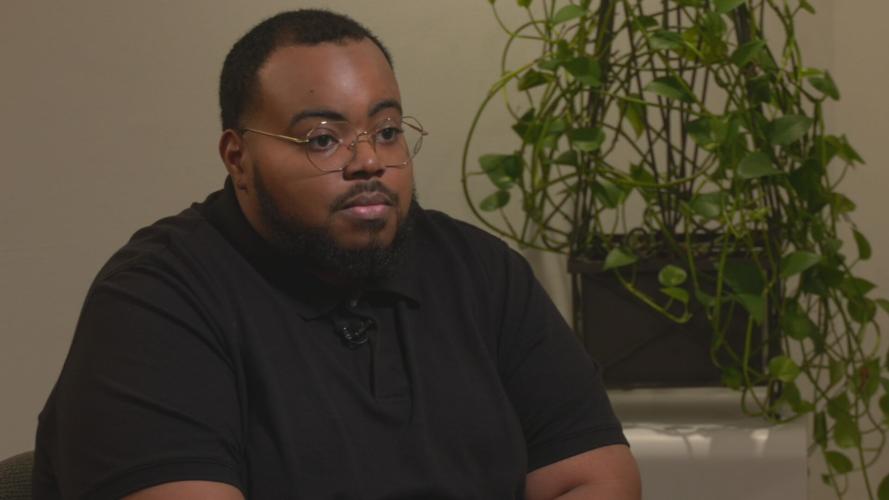
Ta’John Ferguson spent 10 months in Metro Corrections in 2017 after being wrongly charged with robbery for allegedly stealing an Xbox.
In fact, he owned the Xbox and was simply trying to sell it to someone he met online at the Walgreens off Third Street

Ta'John Ferguson was wrongly arrested by LMPD in May 2017.
Police believed Ferguson was involved with an earlier armed robbery of an Xbox at Broadway and 28th Street. An image of an Xbox Ferguson found online to post on Facebook was tied to the Xbox that was stolen earlier in the day, according to his lawsuit against police.
So, on May 28, 2017, when Ferguson showed up to sell his gaming device, police swarmed him with guns out, screaming for him to put his hands up.
"And at this point, I’m literally froze in shock because I’m thinking I’m about to be the next Trayvon Martin and all I want to do is sell my Xbox," Ferguson said in an interview.
The person that had been robbed on Broadway identified Ferguson as the suspect from across the parking lot in a police car with tinted windows, a violation of identification policies, according to the lawsuit.
Unable to afford to pay a $5,000 bail, Ferguson remained at Metro Corrections for months.
"Regardless of if the person misidentified me, it’s the officers’ job to do their due diligence," he said in an interview. "It’s the officers’ job to investigate the case. It’s the officers’ job to find the proper evidence. The officers didn’t do any of that."
According to police body cam footage obtained by WDRB, an officer at the scene said Ferguson had a receipt for the Xbox and it was not the one stolen.
"It’s his," the officer said. But police still believed Ferguson was involved in the previous robbery.
The case dragged on until prosecutors finally dismissed it in March 2018.
Ultimately, the city paid Ferguson $176,000 to settle his wrongful arrest lawsuit. But Ferguson said the arrest and incarceration still haunt him and he’s lost hope that justice in Louisville is fair.
"It changes you and makes you look at life completely different," he said. "The fact that they can do that and they don’t have to answer for it. No accountability, as if they’re immune.
"Like, I don’t think the officers understand they get to go home, and they get to go to bed tonight peacefully. Those people, you changed their whole lives."
You can submit story ideas to the WDRB Investigates team by clicking here.
Copyright 2022 WDRB Media. All Rights Reserved.


