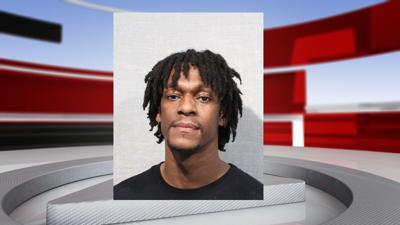
LOUISVILLE, Ky. (WDRB) – Former University of Kentucky basketball and NBA star Rajon Rondo’s June trial date has been postponed. A case pending before the U.S. Supreme Court could resolve the main charge he is facing, unlawful possession of a gun.
The question facing the high court deals directly with Rondo’s situation: Does a person’s 2nd Amendment rights outweigh a law disqualifying the person from carrying a gun because of a domestic violence protective order against them?
The issue has raised concerns for victim’s advocates who believe domestic violence cases would become even more dangerous if alleged attackers are allowed to own guns. But gun rights groups argue the ruling could square modern gun standards with the more historical tradition of firearm regulations.
The Supreme Court case, United States vs Zackey Rahimi, is expected to resolve and provide legal precedent for Rondo’s case by July 1, according to the motion filed last week to delay Rondo’s trial, which was supported by both the prosecution and defense.
Jackson Superior Court Judge AmyMarie Travis agreed and postponed Rondo’s trial until Aug.1.
Rondo was stopped for a traffic violation in Jackson County on Jan. 28 after a caller reported a black 2022 Tesla weaving in and out of traffic and driving more than 100-miles-per-hour on Interstate 65 South.
Rondo did not have a license plate and, when pulled over, a trooper smelled marijuana, leading to a search that found a 9mm gun, a "personal use" amount of marijuana and drug paraphernalia, according to court records.
The 9mm was loaded with a bullet in the chamber, prompting troopers to handcuff Rondo's hands behind his back "for scene safety," according to an affidavit of arrest filed by an Indiana State Police trooper.
Rondo was not supposed to have a firearm because he had a no-contact order taken out against him in court. The charges are all misdemeanors.
A juvenile in Rondo’s vehicle at the time was released to a family member.
But attorney Patrick Renn, who is representing Rondo, filed a motion arguing the gun charge is "unconstitutional" and the 2nd Amendment "protects Rondo’s right to bear arms."
Renn noted that recent rulings have "changed the landscape" for challenges on gun possession, including an appeals court ruling in Mississippi which found that "laws prohibiting firearm possession on the basis of a prior felony conviction are unconstitutional."
The gun charge against Rondo "fails to be consistent with the Nation’s historical tradition of firearm regulation," Renn wrote.
Prosecutors responded by arguing Supreme Court and appeals court rulings have for years taken weapons from people deemed a danger.
“By far the most consistent theme that emerges from history is that the Government could disarm those who were violent or a threat to the peace,” according to a court motion. History establishes that “the Framers denied firearms to groups they thought to be particularly dangerous (or unvirtuous, or irresponsible.)"
Oral arguments about the issue in the case have been cancelled given the looming ruling from the high court.
On November 7, the U.S. Supreme Court heard arguments in the Zackey Rahimi case on whether the law prohibiting possession of firearms by people subject to domestic-violence restraining orders violates the Second Amendment.
The Fifth Circuit Court of Appeals had ruled in March 2022 that the domestic violence statute violated the Second Amendment rights of the Rahimi, according to media reports.
Rahimi allegedly attacked his partner in a car park, after telling her he wanted to take away their child, and dragged her into a vehicle before threatening her with a gun, according to a BBC story.
When he noticed a bystander had witnessed the attack, Rahimi grabbed a firearm from his car and opened fire, according to the story.
His partner, who remains unnamed in court documents, obtained a restraining order against him.
The case before the Supreme Court could also affect a similar argument in Louisville where Jefferson Circuit Court Judge Melissa Logan Bellows ruled on March 15 that it is unconstitutional for prosecutors to move forward with a case against Jecory Lamont Frazier under a state law prohibiting felons from owning a gun because it doesn’t outweigh the Second Amendment right that belongs to “all Americans.”
State and local prosecutors have appealed the Louisville judge's ruling. The prosecution has argued before Bellows that the U.S. justice system has consistently disarmed people "who it deems to be unvirtuous, such as felons" and that the Kentucky Supreme Court has supported this argument.
This is not Rondo's first brush with legal trouble.
In 2022, a Louisville woman asked for an emergency protective order after she said Rondo "became enraged" and threatened her life. According to the EPO, the woman said Rondo was playing video games with a child when she asked the child to finish separating his laundry so she could wash the family's clothes.
When the child got up to do so, she said Rondo ripped the video game console out of the wall, went downstairs, smashed a tea cup plate, knocked over several water bottles and began yelling and cursing. According to the EPO, Rondo then went outside and knocked over the trash cans, stomped on the landscaping lights and drove his car onto the lawn.
The EPO goes on to say that when she confronted Rondo, he said "You're dead."
After briefly leaving the house, the woman said Rondo came back and beat on a window with a gun.
Rondo, who played high school basketball in Louisville at Eastern before transferring to Oak Hill Academy in Virginia, was a standout point guard for Kentucky before being drafted with the 21st pick of the first round of the 2006 NBA draft by the Phoenix Suns.
Rondo played 16 seasons in the NBA and won two NBA championships. He last played in the NBA in 2022 for the Cleveland Cavaliers.
Earlier this year, the Greater Louisville Pride Foundation announced Rondo was one of six people in their Class of 2024 "hometown heroes" to get a banner to hang in the city.
Copyright 2024 WDRB Media. All Rights Reserved.


