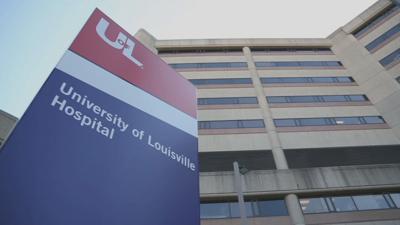
LOUISVILLE, Ky. (WDRB) -- As the number of COVID-19 cases in the Louisville area go up and testing gets harder to find, doctors are warning people to celebrate safely while ringing in the new year.
UofL Health has 78 patients hospitalized with COVID right now, 70 of whom are unvaccinated.
Doctors expect those numbers to double in the next six weeks as the omicron variant becomes the dominant strain in the area.
"The omicron variant, we think, produces a slightly less severe disease. I know it's still early to say that, and I think the bigger concern is that it tends to produce disease in those who have already had a vaccine, so that disease may be more mild," Dr. Jason Smith, chief medical officer for UofL Health, said. "And we know that to be the case because hospitalizations are still way down in those that are vaccinated."
Smith said his biggest concern is health care workers getting sick, even though they're vaccinated, which could mean less help for patients if there is a shortage during a surge in the virus.
"Your staff gets sick and if your staff is out, we don't have people to care for the patients," Smith said. "And so that's the biggest worry we have and it's not something we can easily control."
Demand for testing has also gone up, but they're becoming harder to find. Smith suggests trying to find an at-home option or a church or community organization that is offering testing.
"Use a little bit of common sense, same as you would if you had the flu," Smith told WDRB News on Monday. "Isolate yourself from your family and friends. Treat yourself as if you are infected and, in general, you want to do that for seven days. That's the typical response. How long you need to be out if you can't get tested, if you're symptomatic or have a positive test."
As for why testing is becoming an issue, Smith said it's because resources are being moved around the country to support surges when and where they happen.
"Testing resources have really been a national resource or at least a broader regional resource," he said. "As the surges have taken hold, larger corporations (such as) CVS, Walgreens, have moved the testing into areas where there is the highest demand for that."
Smith said shortages in testing availability will happen, especially around the holidays.
"There will be shortages, simply because we're running through them," he said. "I know a lot of people bought a lot (and) have been using a lot through the holidays. That is a simple fact of the matter, is that these are still finite resources."
Smith also said people with mild symptoms should avoid going to emergency rooms and urgent care centers so those who are seriously ill can get the medical attention they need.
As the Christmas holiday wraps up and New Year's celebrations come into focus, Smith said changing the location of gatherings, if possible, to something outdoors can "make a huge difference in the transmissibility" of COVID.
"The best advice I can give people is wear a mask, make sure you're vaccinated and, if you can, stay away from large gatherings," he said. "If you can't, take precautions to protect yourself during that time as best you can."
Copyright 2021 WDRB Media. All Rights Reserved.