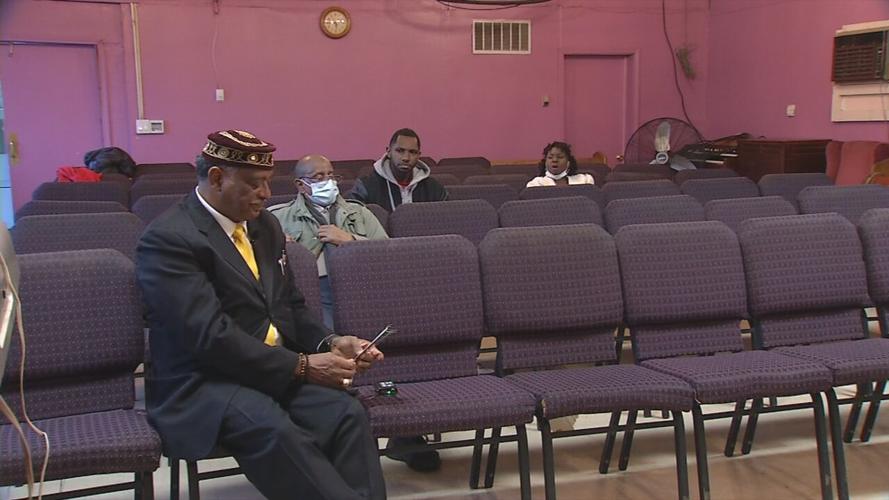




LOUISVILLE, Ky. (WDRB) -- At Gospel Missionary Church in west Louisville, Bishop Dennis Lyons concluded a Facebook Live worship session Friday night with an optimistic song.
"There's a bright side, somewhere," he sang to the virtual audience and the few people gathered in the sanctuary.
The song seemed appropriate. Lyons had just wrapped up a short sermon that acknowledged the newly-released top-to-bottom review of the Louisville Metro Police Department, which concluded that the department is in crisis.
Among other findings, the audit found that 48% of the Black residents polled have no trust in LMPD.
After the song concluded, Bishop turned the focus to those in sanctuary — a collection of African Americans, both young and old — to gauge their feelings on the current strained relationship with LMPD.
"With the current LMPD, do you trust it?" WDRB News asked Frank Anderson, who's in his 70s.
"I do and I don't," he replied.
Anderson, born and raised in Louisville, may have some trust, but acknowledged that others he knows have no trust at all.
"When it comes down to the Black neighborhoods, it's like a heavy hand. I still find in America, even though we are supposed to be one nation under God, that it's still a two-tiered system," he said. "We keep tip-toeing around the tulips thinking everything is nice, but it's not nice."
Pastor Edith Jones, of the Sanction House Missionary Church, said the trust issue runs so deep, some people in her community won’t even call the police to report a crime or emergency.
"If you don't know, you're hesitant to trust someone," Jones said. "I think some people have had some bad experiences and have not healed."
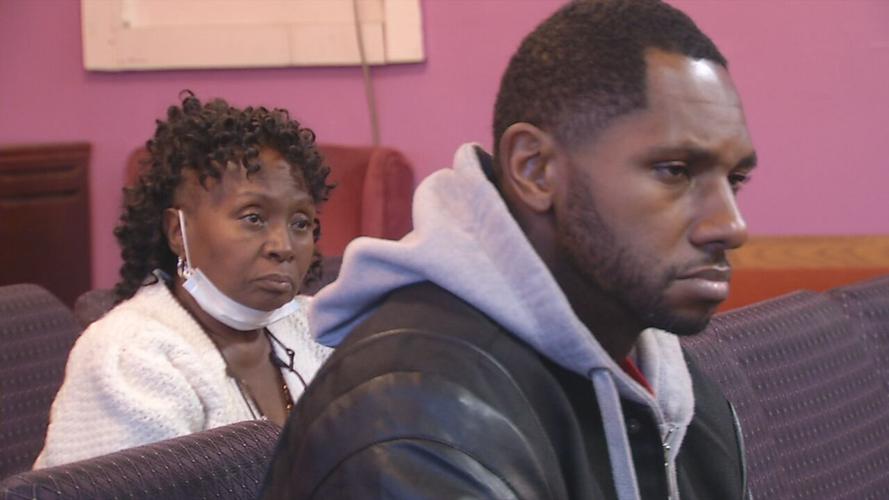
While he trusts LMPD, Brian Cunningham, the youngest of the group, knows other people his age don’t.
"We already got a stigmatism with the officer before the officer even presents himself to us," Cunningham said.
But they say all hope is not lost. All three hope newly-sworn LMPD Chief Erika Shields will use the audit as a roadmap to guide changes, and the chief said she'll do just that after the audit was released on Thursday.
Firstly, they want more respect and fairness from LMPD officers.
"When (an officer) presents himself, and he shows his character to us, then that lets us know who he is, and then we can make our decision," Cunningham explained.
They also want to build better relationships with the officers assigned to police their neighborhoods. Right now, they say those relationships are lacking.
"I'm a teacher in the classroom, and I'm available to my students 24/7. I mean, they can reach me, communicate with me. I've built that trust. I don't know my police officers. Only when I call them," said Jones.
They said better relationships — combined with other community policing strategies — will increase trust. The three said, once COVID-19 allows, officers could also visit Black churches and hold more frequent community events to start building those relationships.
The audit also showed the department’s diversity is lacking, and the three said that has to change too.
"If you see more diversity in the cop division, then we're more inclined to, you know, humble ourselves and we're more inclined to listen," Cunningham said.
Lyons, meanwhile, boiled the current problem with trust down to a lack of communication and education between both LMPD and the Black community.
However, Lyons said he is encouraged after a recent meeting with Chief Shields. He said, because of Shields' appointment, he can now say he has trust in LMPD and adds he couldn't say that just last month.
While Lyons says it's imperative for LMPD to foster that trust by making needed changes, he said the Black community also shares in the responsibility.
He said respect is a two-way street and is encouraging his followers to work to regain the trust of officers as he hopes they reciprocate.
"Speak to a police when you see them. 'Hello. How you doing? Thank you for your service,'" he said.
Related Stories:
Copyright 2021 WDRB Media. All Rights Reserved.