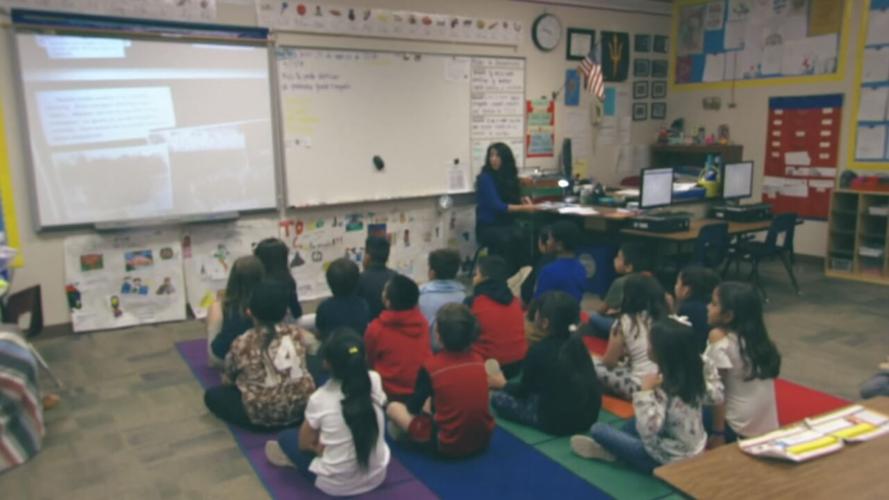


LOUISVILLE, Ky. (WDRB) -- Universal pre-Kindergarten education is "essential" to Kentucky's economy, according to a study conducted by economics and finance students at Centre College.
Drake Kawa, a student who worked on the project told LEX 18 that the students' research suggests that, "early childhood care and education leads to both immediate and long-term benefits."
The report itself states that, "many of these benefits go to the child in terms of higher future earnings, but some benefits also go to businesses and community members through increased workforce participation or lower social costs."
But the idea if universal pre-K isn't catching on. To explain why, students point to policy difficulties.
"Policy-makers, I think, are having a hard time seeing too far out," said Kawa. "I think a lot of times in our society, we look at the short term: what are we going to get in the short term? Well, early childhood education, we've come to find out, is not something we're going to see the value or gain from right now. It's something that we see long-term, down the road."
Those aren't the only drawbacks to universal pre-K. Critics in the past have pointed to funding difficulties, a bigger workload and increased pressure on teachers, as well as challenges for traditional home childcare providers, who rely on the care of preschool children to keep their programs profitable.
But Kentucky Representative Josie Raymond, a Democrat, is a strong supporter of universal pre-K and watched the Centre College presentation on Wednesday and says she believes support for the concept is growing in Kentucky.
"I think it's something we're going to keep pursuing in the coming years," Raymond said. "It's going to take a little bit of time to figure out the finances and the model that's going to work. But we've got momentum."
Raymond also emphasized a mixed delivery model working best for Kentucky -- something the report also supported. Such a model "involves blending funding from multiple sources."
As an example of a mixed delivery model, the report describes, "a publicly employed preschool teacher working in a childcare center that serves kids who are eligible for childcare subsidies."
Raymond said this allows working parents to choose the type of program that best fits their needs.
"Kids can access pre-K not just in public schools, but in private child care centers, faith-based centers, home-based centers," she said. "We really need to meet families where they are."
Copyright 2023 by WDRB Media. All rights reserved.


