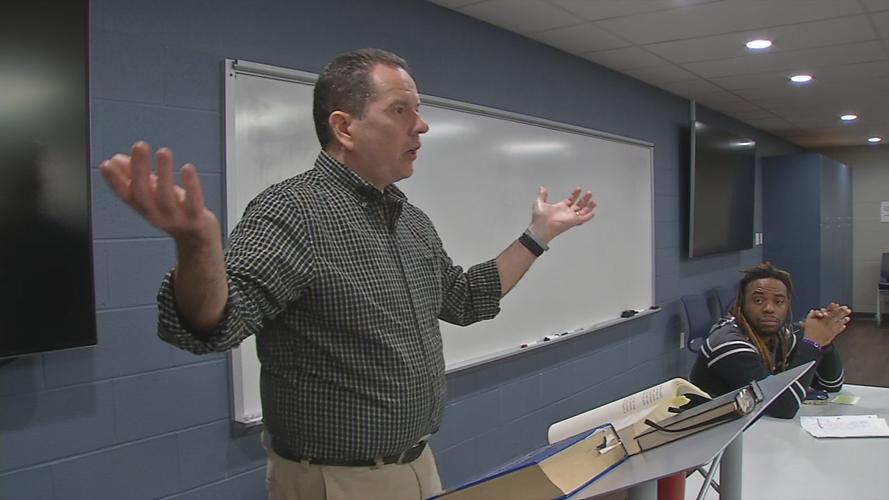

LOUISVILLE, Ky. (WDRB) -- Army veteran Mark Riordan teaches a sober living class every week at the Healing Place in downtown Louisville
"I understand your feeling of not wanting to be here," he said, speaking from the front of the room Wednesday. "Trust me: it does get better."
As he offers words of encouragement, wisdom and mentoring to addicts in recovery, Riordan said he also sees the nerves and withdrawal in the room with his student's fidgety and restless actions.
"I used to shake right along with them," Rirodan said.
But his tremors are much different. They're the signs of a 55-year-old man who's battled Parkinson's disease since 2015. The disease forced him to retire from Fort Knox.
"My hand would be all over the place," Riordan said while demonstrating the violent shaking motion on his left hand. "(Parkinson's) made it so it was hard for me to walk, and I lost my balance."

Mark Riordan teaches sober living at The Healing Place.
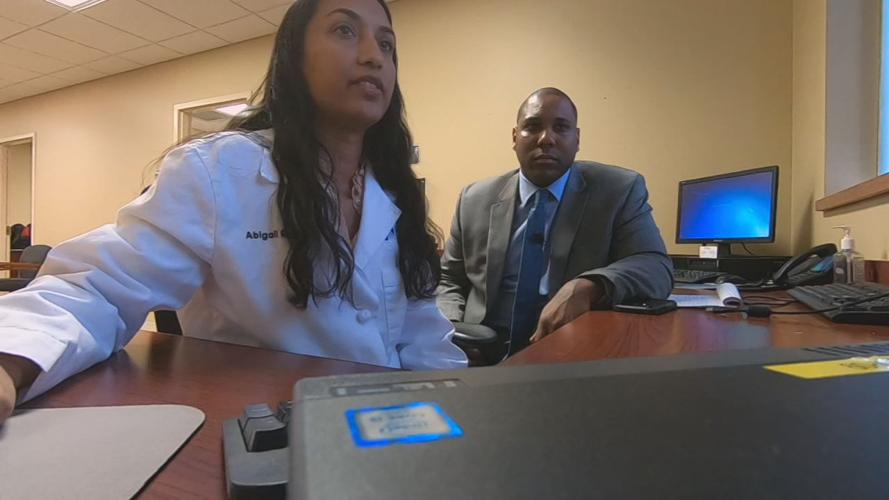
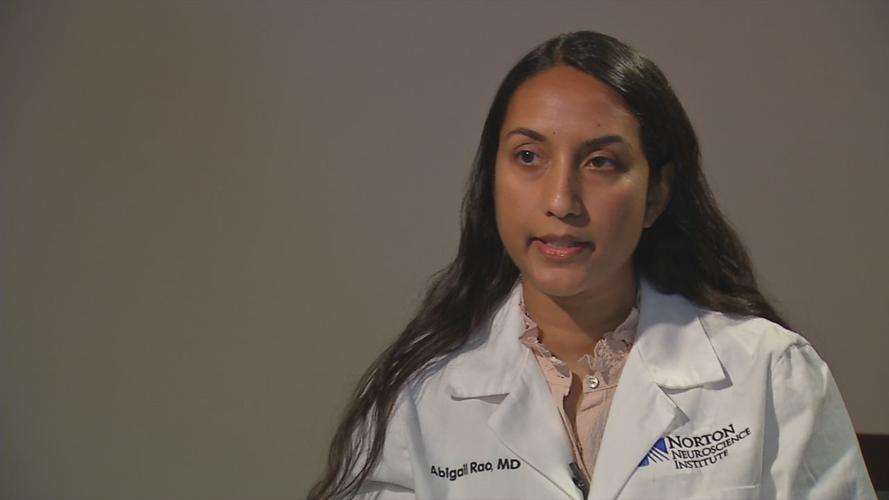
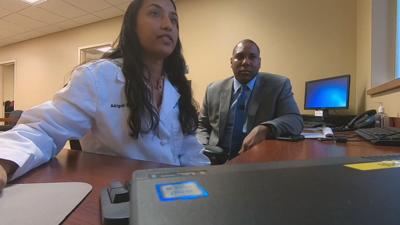
In September, Dr. Abigail Rao entered the picture with the deep brain stimulation technique.

"Electrodes are placed deep inside the brain," Rao said. "They're connected to extension wires that go under the skin, and the extension wires take us to — a simple way to put it is a battery, but really it's a computer that controls electric stimulation."
It's like a pacemaker for the brain, and the pulse it sends slows those uncontrollable tremors for Parkinson's patients.

"I lost all my rigidity," Riordan said. "My gait went back to normal. My left hand quit fussing, and I saw what I could become again. And it felt really good."
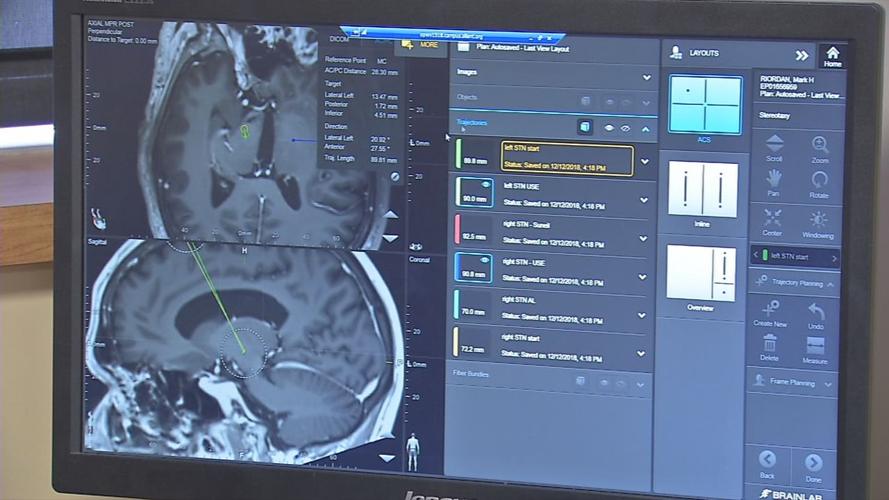
Deep brain stimulation, or DBS, has been around for years, but Rao said her technique is not often used in Louisville. Instead of keeping patients awake and using their responses to navigate through the brain, she put Riordan to sleep and used high-resolution imaging on a CAT scan and MRI to make sure the electrodes went to the right place during surgery.
"This decreases the bleeding risk for patients," Rao said. "It generally makes the surgery quicker and safer, and I was lucky enough to train with the pioneers of this technique."
Rao did her residency in Portland, Oregon, and her fellowship at UCLA in California. In Kentucky, she's a part of the Norton Neuroscience Institute, and Riordan was her first DBS patient. His surgery was in December. Rao has since done two others and said she has two more scheduled.
"When I went into surgery, I was taking nine pills a day and a patch. I wore a patch," Riordan said. "At the end of this month, guess what: I will be off all my medicines."
Researchers have weighed the cost and benefit of awake versus asleep DBS procedures, and studies showed the surgeries produce similar results.
Experts say more than 100,000 patients in Kentucky will be living with Parkinson's disease by the year 2020, and this is one more tool in the fight.
Riordan uses his battle with Parkinson's disease in class each week, comparing the journey to that of sobriety.
"I can show them the light at the end of the tunnel, and it's not a train," he said. "You know we can get through this together."
DBS is being tested for treating depression, obesity, high blood pressure and Alzheimer's disease.
Copyright 2019 WDRB Media. All Rights Reserved.


