


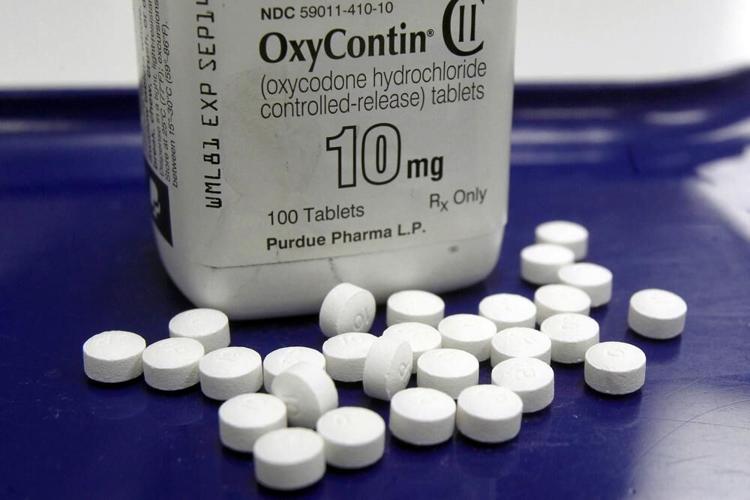
LOUISVILLE, Ky. (WDRB) -- More than a dozen pharmacies in southern Indiana said this week they aren't accepting new prescriptions for Oxycodone due to supply issues. Most said they don't even have enough medication to fill the prescriptions that have already been written, an issue leaving patients scrambling and in pain.
The cause, pharmacists said, is unclear. Some outright said it isn't a manufacturer issue but rather a problem with "doctors over-prescribing it". Others said it's not a shortage of Oxycodone itself, instead blaming the caps put in place to limit how many Oxycodone pills pharmacies can give out due to its addictive nature.
Deborah Wininger, who takes 11 medications per day after breaking her back and suffering disc and nerve damage, is running out of what she desperately needs.
"I can barely walk without pain medication," Wininger, who lives in southern Indiana, said. "I've got a lot of reasons to hurt."
Shortages of several prescription drugs are growing in the United States, and experts see no clear path to resolving them. For patients, that can mean treatment delays, medication switches and other hassles filling a prescription.
"I was really frustrated," Wininger said. "This isn't fair."
In recent months, unexpected demand spikes, manufacturing problems and tight ingredient supplies have contributed to shortages that stress patients, parents and doctors. For some drugs, such as stimulants that treat ADHD, several factors fueled a shortage and make it hard to predict when it will end.
"I called about every pharmacy in southern Indiana, and nobody had (oxycodone)," Wininger said. "I started getting worried because I thought 'This is gonna affect a lot of people.'"
Norton Pharmacy said it hasn't experienced a shortage yet.
Shortages, particularly of generic drugs, have been a longstanding problem. The industry has consolidated and some manufacturers have little incentive to solve shortages because cheap generics generate thin profits.
Factories in China and India supply most of the raw materials used in American medicines. Early in the COVID-19 pandemic, India restricted exports of 13 active pharmaceutical ingredients and finished drugs made from those chemicals, to protect its domestic drug supply.
And during the pandemic, prescriptions climbed as regulators started allowing doctors to prescribe the drug without first seeing a patient in person. For example, prescriptions for Adderall and its generic equivalents jumped 20% between February 2020 and the end of last year, according to IQVIA.
Wininger is still trying to make sure she's covered, and she fears what's next.
"If I can't find it anywhere, I'm going to see withdrawals," Wininger said. "I'm going to be really sick, and I'm going to be in a lot of pain."
Once shortages develop, they can last years. And it can be tough for patients to get reliable information. University of Utah Health researcher Erin Fox said there is no legal requirement for drugmakers to update the public.
Copyright 2023 WDRB Media. The Associated Press contributed to this report. All Rights Reserved.