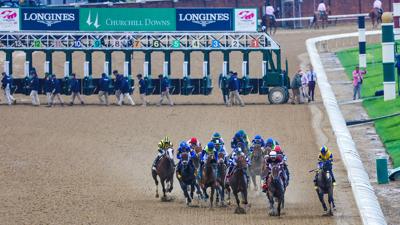



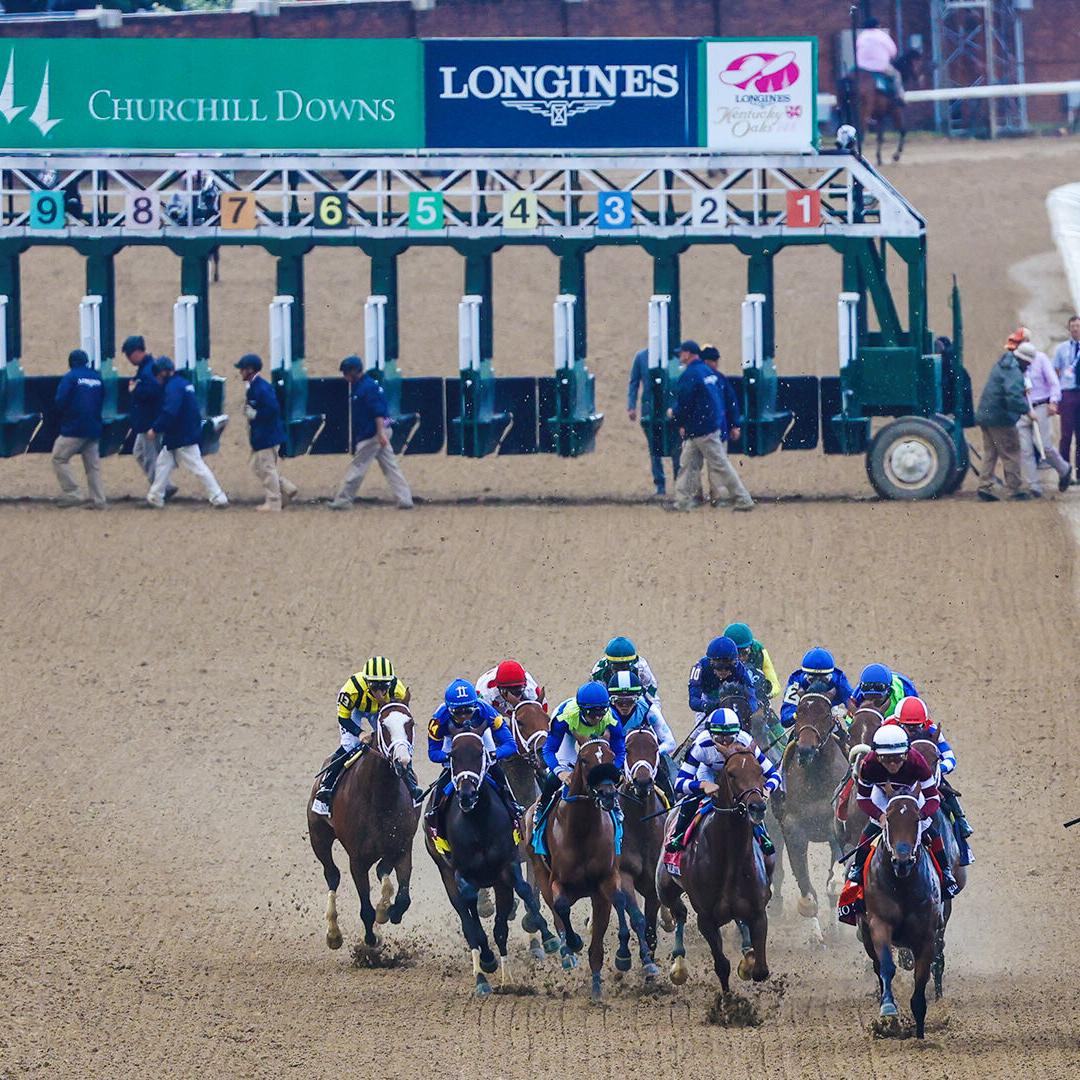
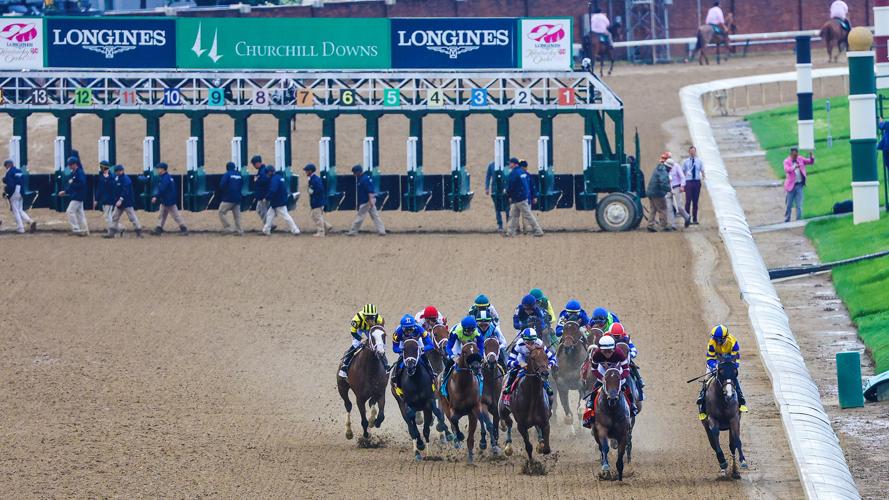
LOUISVILLE, Ky. (WDRB) – A panel of veterinarians from Churchill Downs, the national Horseracing Integrity and Safety Authority (HISA) and the Kentucky Horse Racing Commission convened a meeting on Tuesday in Lexington to discuss the recent spate of horse deaths at Churchill over the past month.
The panel is expected to aid HISA officials in making recommendations before live racing resumes at the track on Thursday.
It's the first crisis test for HISA, formed in 2020 by an act of Congress, and represents a first for thoroughbred racing – a national authority exercising oversight over a local track, albeit one with a high national profile. Churchill added two more fatalities to its total over the holiday weekend, when horses broke down on Friday and Saturday, bringing the track’s total to 12 since April 27.
Lisa Lazarus, CEO of HISA, spoke with reporters on Monday in advance of the “emergency summit,” which was held behind closed doors at a location in Lexington, Ky., that was not disclosed to the public. The meetings are expected to last into the day on Wednesday, after which Lazarus said she would expect to make a statement to update the public on the group’s findings and any recommendations.
Among the key members present are HISA equine health and welfare advisor Dr. Jennifer Durenberger, a former chief vet for the New York Racing Association, Dr. Will Farmer, equine medical director for Churchill Downs, and KHRC vets Dr. Bruce Howard and Dr. Nick Smith.
Churchill Downs’ regular live racing cards are scheduled to resume on Thursday. While Lazarus acknowledged that all of the necropsies for the 12 deceased horses are not yet available, she said the group should be able to come to some conclusions.
Over the past month, KHRC has been compiling information on the fatalities, the types of injuries and manner of breakdown, where appropriate. It has interviewed people involved in the care and training of the horses.
Lazarus said that the group meeting on Tuesday will look over that information for each horse, and “they will look for any patterns and discuss any potential changes in procedures that they might want to implement going forward.”
HISA does not have the authority, by statute, to halt racing at Churchill Downs, Lazarus said. It can stop Churchill’s signal from being distributed to other racing facilities. And it can make a wide range of other regulatory actions. To this point, however, she said that no fault has been found with the track, and no problem with its racing surfaces.
The latter is of particular importance. Beyond physical problems the animals themselves may have had going into the race, the makeup and condition of the racing surface is a primary target of concern. Churchill Downs has had regular examinations conducted by Mick Peterson of the University of Kentucky. HISA has retained Dennis Moore, a longtime track superintendent in California, to perform an independent evaluation of the surface.
“We have been talking extensively to jockeys and trainers, to try to determine whether or not they're feeling anything different (on the track),” Lazarus said. “And you know, what's been challenging is that I have not had a single jockey or trainer tell me that they believe that the track is a factor in these in these fatalities. So, that's why we really have to approach us in so many different angles and perspectives.”
Asked why the meeting would be closed to the public, Lazarus said that HISA officials wanted veterinarians to be able to hold frank discussions without fear of public reaction.
“I think that it's very legitimate and fair to make findings public,” she said. “I think if you were to make a meeting like this public, the candor or the ability to really discuss things openly to get to solutions would potentially be impacted. We wanted to make sure that this group had the ability to talk through every possibility, every permutation to make sure that they're coming out with the best recommendations that they can. And so that was why the decision was made for it not to be made public, or at least the meeting not to be public.”
Churchill Downs has said that a number of factors have contributed to the deaths, and Lazarus acknowledged that, given that, coming to an effective set of changes may be difficult. Many times, like several years back in California, an outbreak of racing and training deaths occurs without any single main factor being identified as the cause.
Still, HISA exists to examine such situations and try to find solutions.
“What I'm confident in is that we have the best people to look at this and to make recommendations,” Lazarus said. “The one thing I'll say is, if you look at the California experience, and the breakdowns that were never really quite explained at Santa Anita, it was very different in how they presented the situation. California did put in place quite a number of different rule changes and processes that vastly improved their record, at least as I as I analyze it. So I'm really hopeful and confident that the team we have in place now will -- if there is genuinely a pattern or something that brings all of these cases together, or at least the majority of them -- that they'll be able to see that and figure that out. . . . Some of it may be impossible to ultimately know, what the reasons were that so many happened at one time, and we have this cluster. But hopefully, we'll be able to really come up with processes or different approaches to make everyone feel confident to continue racing, and that this is not going to recur."
Copyright 2023 WDRB Media. All Rights Reserved.


