

LOUISVILLE, Ky. (WDRB) -- A local professor is taking his research outside the classroom and all the way to the tropical rainforest.
A University of Louisville professor is studying the effects of lighting on trees.
"We've been working in the rainforest for about 30 years now," Steve Yanoviak said.
And for more than decade Yanoviak has spent a lot time focusing on trees and lighting.

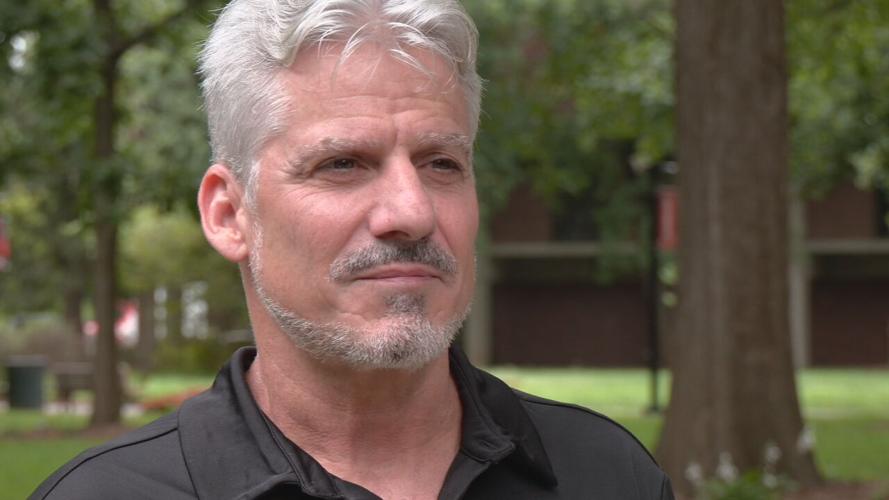
University of Louisville professor Steve Yanoviak is studying the effects of lighting striking trees in the rainforest. (WDRB photo)
He's taken students along on these trips and captured images while trying to learn more and more.
"About 12-13 years ago we started thinking about what are the ecological effects of lightning in a rainforest and how can we measure them," Yanoviak said.
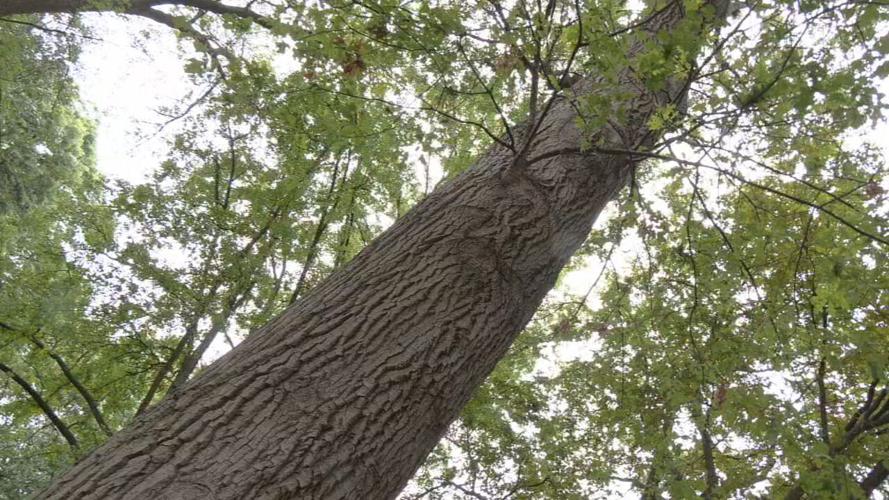
He said when trees like the ones in Kentucky are hit with lightning, there's a distinct mark showing the damage.
But that's not what he's seen where he's doing research in the forests of Panama.
"It takes like a month before even the leaves start to wilt and fall off the trees," Yanoviak said. "It takes from 2-4 months before you can do a survey on tree death because it takes forever out there for trees to die."
He said where a lightning strike in Kentucky will kill a single tree, in the rainforest a single strike will kill a cluster of five or six over time.
"A lot of that has to do with connections created by vines between the trees themselves, maybe the humidity in the atmosphere, and other conditions in the soil that we really haven't scratched the surface on yet," Yanoviak said.
According to Yanoviak, not all trees respond the same to lightning and ultimately over decades or centuries, if some trees are more likely to survive and the expectation is change in the composition of the rainforest.
He said the work he's doing there matters here.
"Once you get into hardwood forests like we have here, where oak is such an important resource for the state economically and biologically, understanding the effects of lightning on trees here is the critical next step we hope to take with this project," Yanoviak said.
This research he said has become a never-ending project and Yanoviak plans to continue as long as possible.
His next trip back to the rain forest will either be in December or May.
More STEAM Stories:
- Portable and Affordable | A Louisville teen's mission to improve healthcare access
- Safe Room Program can help Indiana residents who need extra protection from strong storms
- Cruise into Learning | S.T.E.A.M. adventures for children on the Ohio River
- Free summer program in Louisville teaching architecture, engineering and construction
Copyright 2024 WDRB Media. All Rights Reserved.


