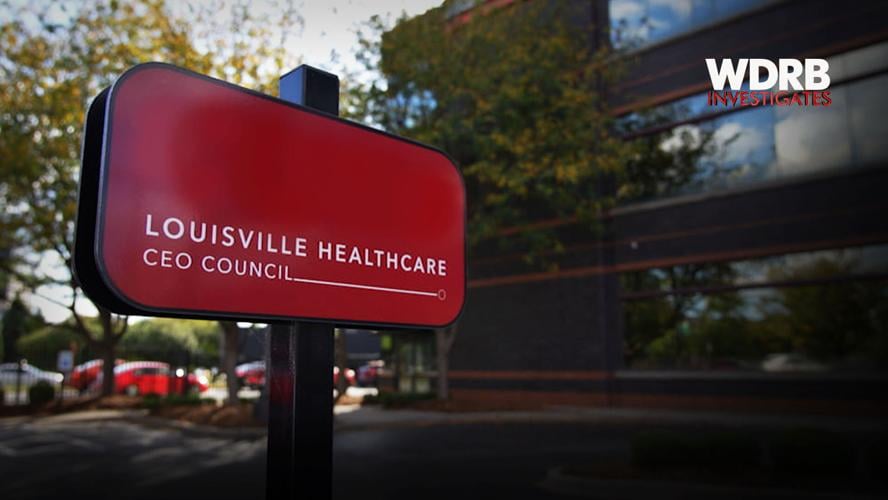

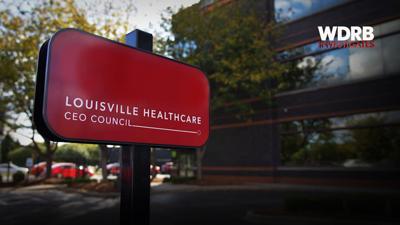
LOUISVILLE, Ky. (WDRB) -- The Louisville Healthcare CEO Council set a number of goals in its bid last year to secure a blockbuster allocation of $40 million from Metro government's COVID-19 relief funds.
By now, for instance, the nonprofit organization envisioned placing 125 people into entry-level health care jobs with average annual pay of $31,200. But so far, only five people have moved into such positions.
In fact, the group known as CEOc and its partners have fallen short of initial goals in nine of 11 performance yardsticks associated with the high-profile award from Louisville Metro's share of federal American Rescue Plan dollars.
That's according to CEOc's own reporting to Metro government, which WDRB News obtained in an open records request.
While it's not unusual for government grantees to lag behind early goals, the performance issues come as a controversy surrounding the $40 million appropriation heads toward a resolution.
The grants are at the center of an ethics investigation of Metro Council member Anthony Piagentini, who championed the ordinance directing the funds to CEOc before removing his name as sponsor only minutes before the final vote. He took a $240,000, one-year consulting job with CEOc the day after the measure passed.
RELATED: Connections | Louisville Healthcare Council has history of spending with CEO's family members
The Louisville Metro Ethics Commission is set to render a verdict Thursday as to whether Piagentini, a Republican who represents eastern Jefferson County, violated conflict-of-interest and other rules.

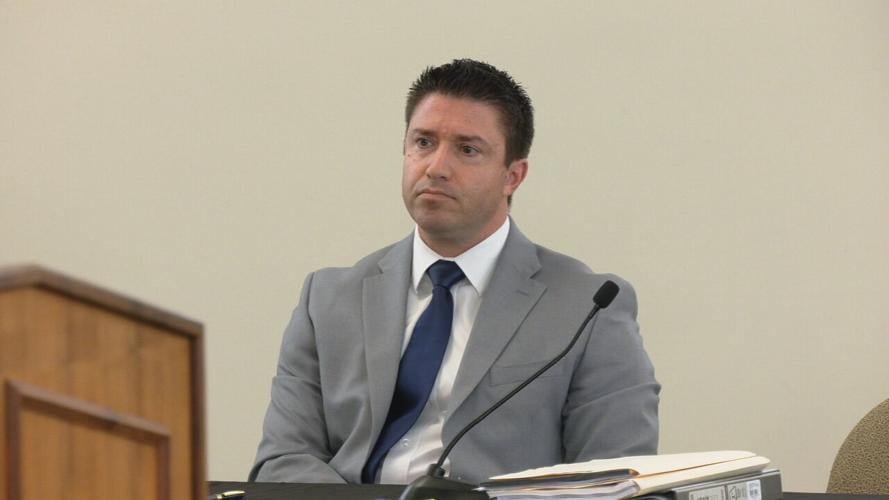
Anthony Piagentini watches proceedings during his ethics trial in downtown Louisville, Aug. 2023 (WDRB photo)
Metro Council President Markus Winkler, who with Piagentini and David James, the former council president, was the primary advocate of the $40 million award, told WDRB last week that the grants could be revisited once the ethics case is over.
"Depending on the outcome of that trial, I would speculate that we will look at that grant," he said.
Winkler, a Democrat who represents the Middletown area and other parts of eastern Louisville, said he hasn't followed how the CEOc projects have fared because the ethics trial isn't over.
"I think with all of that going on, myself, and I'm guessing most other council people, have just sort of steered clear of communicating with the CEOc," he said.
But he said he's hopeful that there will be "some performance relative to those goals, if not at this point, certainly within the next couple of months."
Grant leaders anticipated they would place 125 workers in those starting-level positions by the end of September, but only five have secured work, according to the report submitted to city officials this month. The overall goal is for 225 people to start new jobs by the end of 2023.
Another aim by October was to get jobs for 45 students who signed up for health technology certification. But data provided to Metro government show no one has been hired.
CEOc did not answer questions about the delay in filling the entry-level jobs.
Meanwhile, there are signs that some progress is being made. The Metro United Way, part of the CEOc-led coalition, offered financial coaching to 69 health care workers between July and October, exceeding a goal of 55. That came after just three people received coaching during the previous three months. The goal for that period was 35.
And two training programs meant to help participants get higher-paying jobs also have been completed, exceeding a goal of one such program.
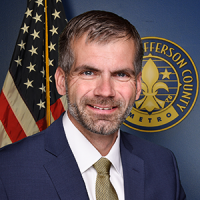
Metro Council President Markus Winkler. He co-sponsored an ordinance directing $40 million in American Rescue Plan funds to the Louisville Healthcare CEO Council (Metro Council photo).
CEOc warned Metro officials in June that it might take longer to achieve some milestones this year due to a delayed start to the grant agreements, which were expected to take effect Jan. 1 after the Metro Council approved the money last December. However, the contracts with city government weren't signed until March 30.
CEOc declined to explain the holdup in approving the contracts.
In an interview, Winkler reaffirmed his support for the ultimate purpose of the grants.
"Specifically targeting people that are unemployed or underemployed and getting them into the workforce is a goal we should all be focused on," he said. "And I'm hopeful that these groups can execute on that vision."
He said council members expect to get an update on the grants' progress from Mayor Craig Greenberg's administration early next month. Greenberg, a Democrat who took office in January, inherited the oversight of the American Rescue Plan projects from his predecessor, Greg Fischer.
CEOc: 'We are on target'
After initially agreeing to speak with WDRB, CEOc canceled the interview the day before because its president and CEO, Tammy York Day, was said to be traveling. It gave written responses to questions instead and directed a reporter to other information online.
"The healthcare industry is a major economic driver for Louisville and is experiencing a workforce shortage which could lead to care gaps for Louisville's most vulnerable populations," CEOc spokeswoman Caitlin Greenwell said in a statement. "There are Louisvillians who experience substantial barriers related to the social determinants of work."
CEOc is led by a board of directors made up of the top executives of Louisville's health care and medical companies, including Humana, Anthem, Norton Healthcare, Baptist Health and others.
The coalition that CEOc is leading is "committed to addressing inequity and the healthcare workforce crisis, in turn transforming Louisville's economy toward a better future for all," Greenwell said.
CEOc cites three main accomplishments of its partners over the past six months, including starting training programs with more than 75 people. Those include the two training courses: one on leadership for current health industry workers and one aimed at reducing barriers to getting jobs.
The latter classes are intended to be the springboard for people who eventually will find the entry-level employment.

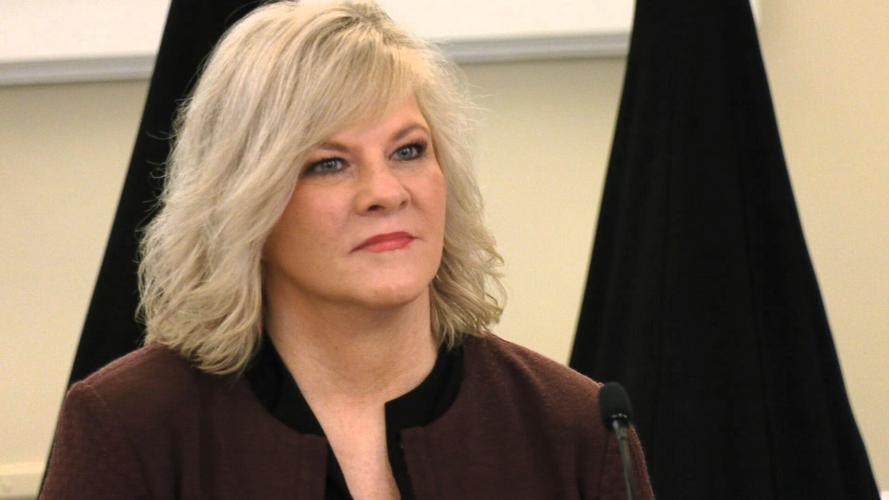
Tammy York Day, CEO of CEOc, testified Aug. 22, 2023 in the ethics trial of Louisville Metro Council member Anthony Piagentini. (WDRB News)
CEOc also has highlighted work with the AMPED nonprofit to start a 12-week health care technology training course that has had 61 participants, and a University of Louisville-led program for trainers of digital health care topics such as data analytics, ChatGPT and artificial intelligence.
In all, according to CEOc, 67 people have enrolled in two sessions of the UofL training.
CEOc declined to answer a number of questions, including when it expects to place the first 50 people in the entry-level health care jobs and when it expects to catch up on the timeline for the goals outlined in the grant agreements.
Even though the 2023 job placement goals appear unlikely to be met this year, the organization insisted it will accomplish everything it set out to do.
"We are on target to meet and even exceed all milestones and success metrics," Greenwell said.
Job goals to be reassessed
The Metro Council allocated $40 million in federal grants late last year as part of the final batch of American Rescue Plan money under its control. The city received $388 million overall from the stimulus bill approved by Congress in 2021.
Winkler and Piagentini oversaw a workgroup that scrutinized proposals for workforce initiatives before settling on the CEOc-led plan. Winkler testified during the ethics trial that their group and others wanted a "larger scale project."
The funding ultimately approved by the council covers three different projects overseen by CEOc under an initiative known as the Healthcare Workforce Innovation Coalition. Besides CEOc, that coalition included AMPED, Metro Government, the Louisville Urban League, Metro United Way and UofL.
The projects are:
Health Career Lab, $19.4 million: It involves filling the 1,500 entry-level health care jobs, developing 10 "pathway" programs that include training and enrolling 2,000 people in those training efforts. The Louisville Urban League stands to get $2 million to address barriers to job placement faced by people seeking work, such as family care and transportation. Metro United Way is to use $3 million for its work providing financial coaching, helping entrepreneurs raise capital and working with employers to help hire, keep and promote historically marginalized workers.
Venture Studio, $11.3 million: It involves a startup "studio" to help seven paid entrepreneurial businesses that will address existing health care gaps, along with "data projects" in the CEOc Data Hub.
Russell Station Tech & Training Center, $9.3 million: It involves building a technology training center in the west Louisville's Russell neighborhood, prioritizing its residents for coursework in training meant to ultimately lead to jobs. AMPED is leading this project.

A rendering of the Russell Station Tech & Training Center planned for the city's Russell neighborhood. It is one of three projects backed by a $40 million grant overseen by the Louisville Healthcare CEO Council (AMPED photo).
AMPED and the Urban League did not respond to requests for comment for this story. The Metro United Way was not able to provide "detailed answers" to questions sent by email, spokeswoman Laurel Mallory said.
The Greenberg administration declined to make anyone available for an interview.
Kevin Trager, a Greenberg spokesman, said in an emailed response to written questions that it is "unsurprising that the implementation of these grant funds may take longer than originally anticipated. We are planning to hold a strategy session after the first of the year to reassess job placement goals in the first six months of 2024."
He said six classes of a skills training program expect to graduate by the end of the year.
"We know that many of the graduates from the first cohort are still in the interviewing process and expect to see increases in hiring with the subsequent cohort graduations," he said.
Asked to characterize how the grants are being enacted, Trager said: "With the unprecedented influx of federal dollars to Louisville, our team, along with outside consultants, are closely monitoring this and other projects being funded with federal ARP funds for compliance. We continue to work with CEOc on this project and expect to see significant progress in the next 6 to 9 months."
'Changed my view of leadership'
One of the career pathway courses began in May and 24 people graduated in August, according to CEOc. It focused on leadership and management tools for current health care employees.
Among the graduates was Sky Kevyn Yeasayer, volunteer manager at Hosparus Health. Yeasayer, who recruits and trains volunteers who work with patients undergoing end-of-life care, said he was asked by his supervisor to participate.
The work involved online assignments on topics such as ethics, leadership skills, how to run effective meetings and resolving conflict. While he acknowledged some of the lessons weren't "anything groundbreaking," they did reinforce things he said he already knew and "elevated" them.

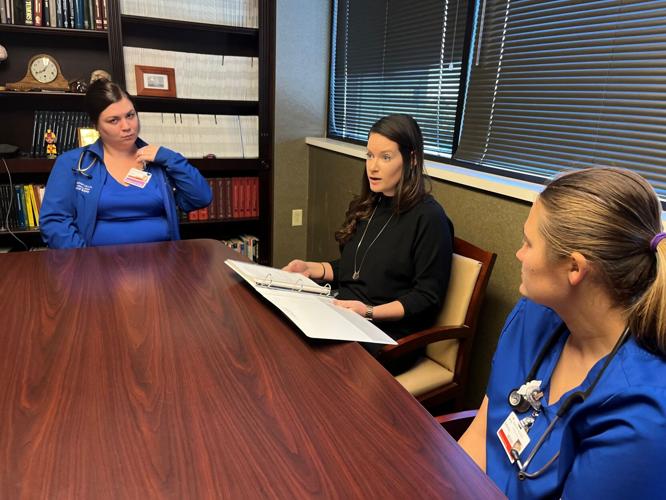
Neurosurgery practice manager Sidney Sumpter, center, speaks with employees at Baptist Health, October 12, 2023. Sumpter completed a leadership course funded by a grant overseen by the Louisville Healthcare CEO Council (WDRB photo).
There also were in-person gatherings, which Yeasayer said allowed him to listen to other healthcare leaders in Louisville.
"I don't really have the opportunity to network with people I would consider my peers, you know," he said. "So to just be able to get in a room full of people who were as curious as I was and motivated to advance in their leadership — I found to be pretty inspiring."
Sidney Sumpter, practice manager for Baptist Health Medical Group, also graduated from the class. She manages the daily operations of a neurosurgery unit, organizing tasks like surgery schedules and appointments.
Sumpter said the program taught her how to run meetings more effectively — "No one wants to be in a meeting," she noted — and have difficult conversations at work. Ultimately, she said, she'd like to move into a director role.
"The further you move, the more you have to manage physicians, not just staff. Those can be very complicated situations to handle," she said. "So they've really prepared me for more senior-level issues that might have to be addressed and managed."
After finishing the course, Sumpter said she would recommend it to others.
"It has completely changed my view of leadership," she said, "and really makes you feel that you can achieve more and have those aspirations."

A nonprofit group chosen for $40 million in federal pandemic is lagging behind on job creation goals for aspiring health care workers, a focus of the funding now at the center of a city ethics case.
Reporter Chris Otts contributed to this story. Copyright 2023 WDRB Media. All Rights Reserved.


