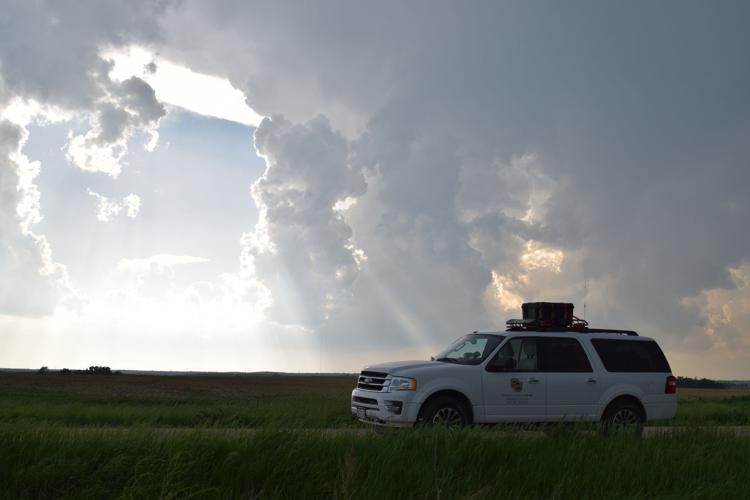
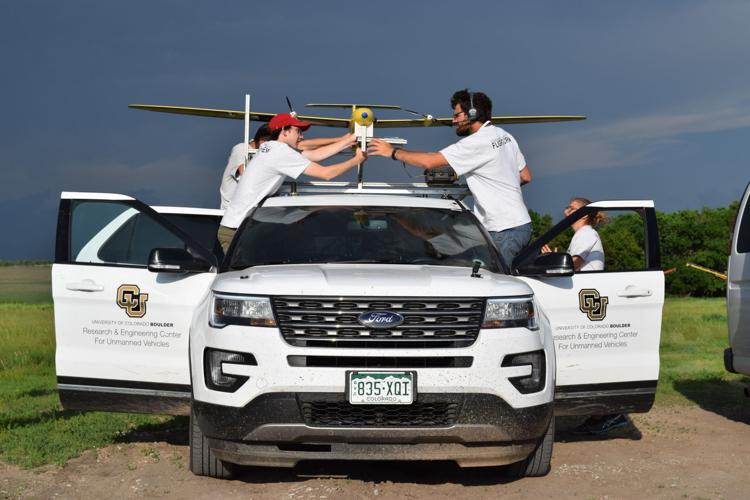
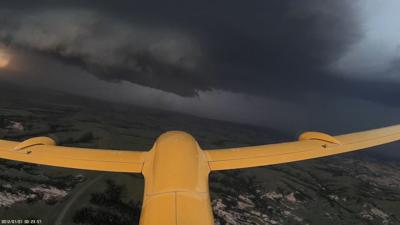
Students at the University of Colorado Boulder are doing ground-breaking tornado research using drones. They are gathering information to understand why some supercells produce tornadoes but not all do. According to a press release from the University of Colorado Boulder, "Project TORUS – or Targeted Observation by Radars and UAS of Supercells – is a partnership between CU Boulder, the University of Nebraska-Lincoln (which is leading the work), Texas Tech University, the University of Oklahoma and the National Severe Storms Laboratory. Funding comes from the National Science Foundation and the National Oceanic and Atmospheric Administration. Support also comes from the CU Grand Challenge program and the Integrated Remote and In Situ Sensing initiative." All together that's more than 50 scientists working with state of the art technology to safely chase and study these storms.

This is not the first time the professors with this project have used drones to study tornadoes. Last time around they flew the drones at the right flank of supercells, hoping to get a good look at tornadoes. That provided good information, but they were only looking at one part of the storm. This time around they will use a team of three drones to monitor the storm at the same time: one at the right flank, one at the left flank, and one many miles ahead of the storm. The drones are measuring temperature, pressure, humidity, and wind direction and speed constantly as they follow these storms.

In addition to a new approach to how they look at the storms, the team also worked to redesign the drones. RAAVEN (Robust Autonomous Aerial Vehicle – Endurant and Nimble) drones were built by the aerospace team with interchangeable parts. The drones do take a beating in the air, but the worst part is the landing. In an effort to minimize weight, there is no landing gear on these drones, and they are landing on hard surfaces like pavement, gravel, or dirt. They have spare parts and backup drones for the parts that get damaged during the mission.
This spring was only the beginning of the project; the drones will fly again in the spring of 2020. Using drones to get close to tornadoes will revolutionize the study of these deadly enigmas. The drones have a range of 100+ miles and an endurance of 3 hours at their cruise speed of 38 mph. That keeps the people studying the tornadoes out of harms way will being able to collect better data than they ever could have from the ground. The video at the top of the page is put together by the CU Boulder team explaining the project and you can click here to see more information about the drones. All pictures used here are with permission from University Colorado Boulder.