
In the October 1921 issue of the Quarterly Journal of the Royal Meteorological Society, Sakuhei Fujiwhara, of the Central Meteorological Observatory of Tokyo, published an article on theoretical considerations of the interactions of a vortex in a fluid, in particular between two vortices. He described how when two vortices approached each other they would tend to orbit around a common center point. This interaction came to be known as the “Fujiwhara Effect”.

Credit: NOAA Sakuhei Fujiwhara (c.1920)

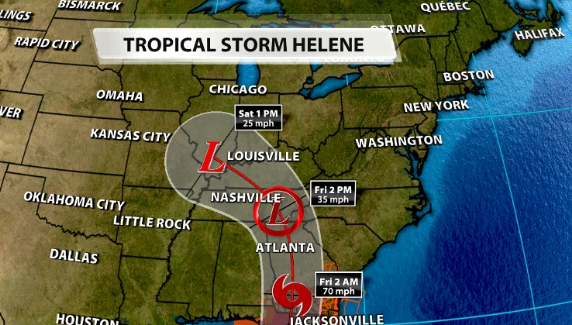
Now let me show you how the Fujiwhara effect will take what's left of Helene and slingshot it in our direction. You can see Helene over Georgia on Friday and upper-level steering would typically push a storm off to the east. Not this time. A larger low positioned to the west will begin to interact and dance with Helene. Let's call it a "tropical tango" if you will. It happens when two cyclones get close enough to each other to create a shared center. At that point, the two storms orbit around a common central point before one moves away, or they ultimately merge together. The forecast cone from the National Hurricane Center shows that hard turn to the left/west sending Helene into the Ohio Valley on Friday. Tropical downpours and gusty winds will cause problems for outdoor plans later this week. Make sure you turn on WDRB News at 10 and 11 for the latest timing and totals.