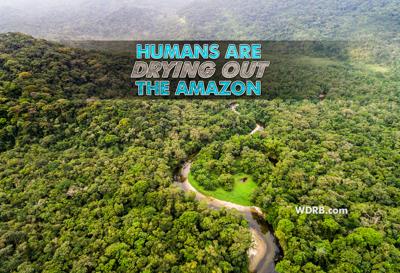
The Amazon rainforest is drying out and a new NASA study says humans are to blame. To be more specific, the atmosphere above the Amazon is drier making the rainforest more susceptible to drought and fires.
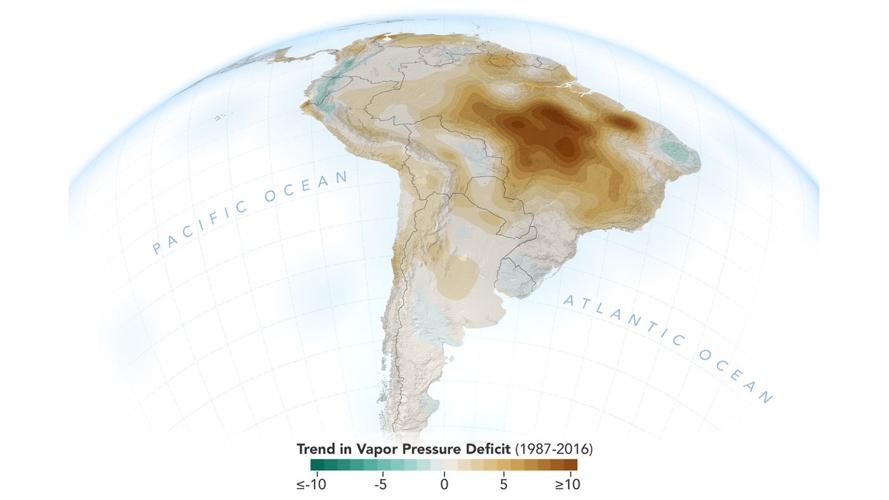
Scientists from NASA's Jet Propulsion Laboratory (JPL) have been tracking moisture in the atmosphere over the Amazon rainforest using decades of satellite data and ground information and are studying how much moisture is needed to maintain the ecosystem there. They found over the last two decades increased dryness and demand for water in the atmosphere above the Amazon (below image credit: NASA/JPL-Caltech, NASA Earth Observatory).
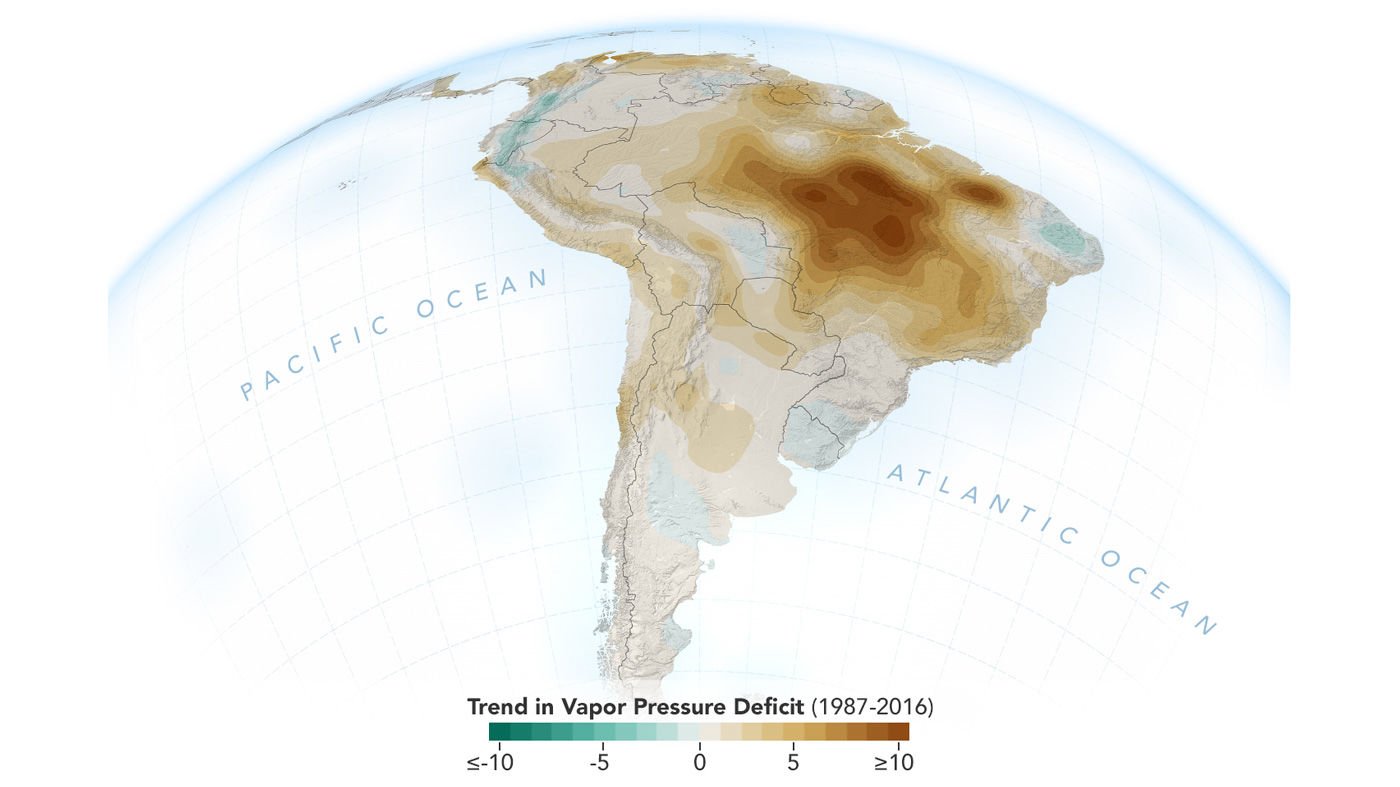
Then they asked: is that a natural variation in the atmosphere or is it influenced by mankind? JPL's Armineh Barkhordarian, lead author of the study, said, "in comparing this trend to data from models that estimate climate variability over thousands of years, we determined that the change in atmospheric aridity is well beyond what would be expected from natural climate variability." Part of that is the elevated levels of greenhouse gas; to be specific, about half of the drying can be attributed to that. "The rest is the result of ongoing human activity, most significantly, the burning of forests to clear land for agriculture and grazing. The combination of these activities is causing the Amazon's climate to warm," Barkhordarian said.
This study also clarified some of the regions of the rainforest most at risk. The southeast region, where the majority of deforestation is happening is experiencing the most significant drying. Another alarming location is the northwest region, which normally doesn't have a dry season. It's always wet, but over the past two decades there has been "episodic drying" in the form of severe droughts in that region. It's not just the drier areas that are drying more.
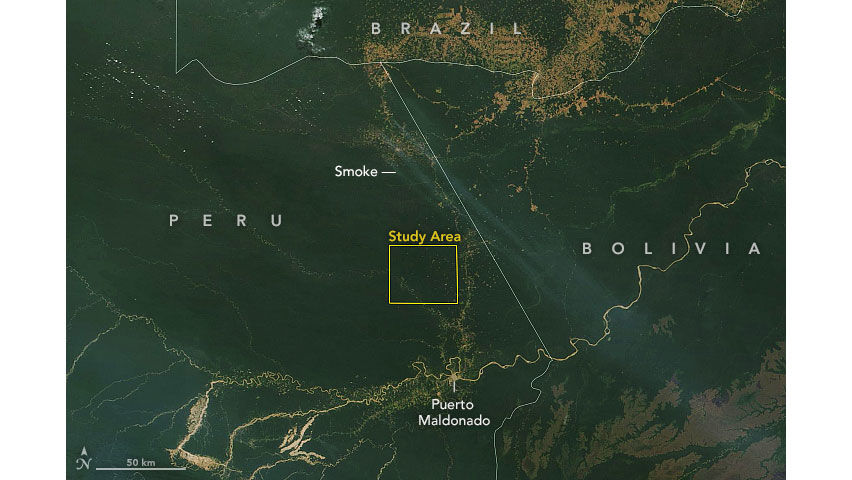
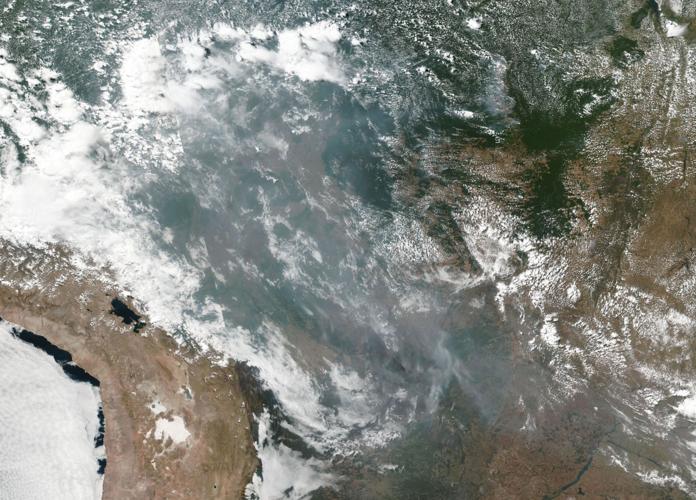
Here's why this matters: in early November 2019, NASA released satellite data (image above credit: NASA/JPL-Caltech/Earth Observatory) showing that "at least some of the massive fires burning there this past summer were concentrated in water-stressed areas of the rainforest." The statement went on to say, "the stressed plants released measurably less water vapor into the air than unstressed plants; in other words, they were struggling to stay cool and conserve water, leaving them more vulnerable to the fires."

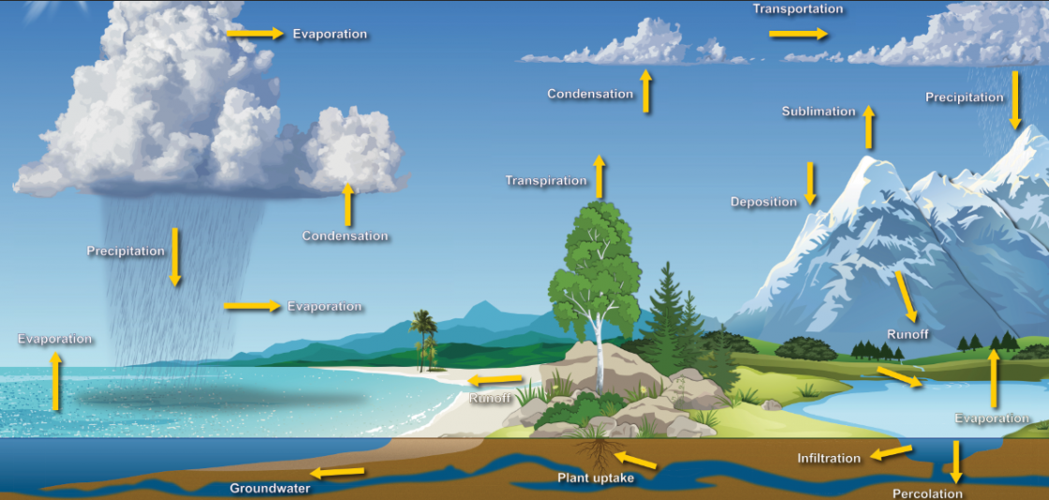
The image above (courtesy: NASA Worldview, Earth Observing System Data and Information System (EOSDIS)) shows smoke from fires burning in this region in August of 2019. It's a chain reaction: as the forest burns, soot (black carbon) is created from the burned objects. That soot is released into the atmosphere where it absorbs radiation. Light-colored objects reflect radiation, while dark-colored objects absorb it. Think about the difference between snow on the ground and black-top pavement. The snow reflects the sunlight blinding you as you drive, but the black-top absorbs it. That's why the pavement gets so hot in the summer that it can melt the rubber on your shoes in extreme cases. The same thing is happening on the particle level in the atmosphere above the Amazon rainforest. Because of burning (controlled and wildfires) black carbon is released into the atmosphere where it absorbs radiation and traps that heat. That causes the atmosphere to warm which changes how and where clouds form and consequently where and how much rain falls. The warming leads to drying. The image below from NOAA shows how plant life is a critical part of the global water cycle.

The health of this particular rainforest is critical to the health of our planet. Through photosynthesis this rainforest absorbs billions of tons of carbon dioxide from the air each year. Absorbing that carbon dioxide helps regulate our changing climate and keeps temperatures from climbing too high. Again, it's all connected. Water is necessary for that process of photosynthesis to take place and is a byproduct of the system. According to NASA, "Rainforests generate as much as 80% of their own rain, especially during the dry season." Without extra water in the soil the plants can pull from, they simply can't get enough water. JPL's Sassan Saatchi, co-author of the study, said, "our study shows that the demand is increasing, the supply is decreasing and if this continues, the forest may no longer be able to sustain itself."
But wait - the impacts go even farther. If plants can't cool themselves and there's not enough water, they will start to die. When the largest and oldest trees die, they will release more carbon dioxide into the atmosphere. If the system isn't working properly it can't eliminate that carbon dioxide, so it will continue build up and warm the atmosphere.