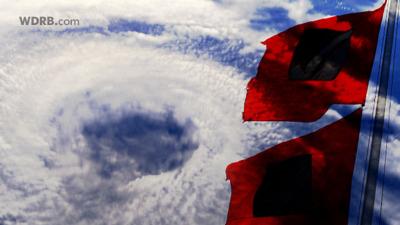
It is easy to take for granted all the updated data we get about hurricanes while they are still far out in the ocean, but that does not magically appear. The men and women of the Hurricane Hunters have revolutionized how we see hurricanes. Below is the plot of one of their flights through Tropical Storm Barry this morning.
Our #WC130J and crew flying along the coast in Tropical Storm #Barry.Keep track of our #HurricaneHunters on https://t.co/D4edb2kl1u.#ReserveCitizenAirmen #ReserveReady #ReserveResilient #403WG #SuperHercules #WeatherReady #NOAA #NWSNHC pic.twitter.com/jVjPWUPGmr
— Hurricane Hunters (@53rdWRS) July 13, 2019
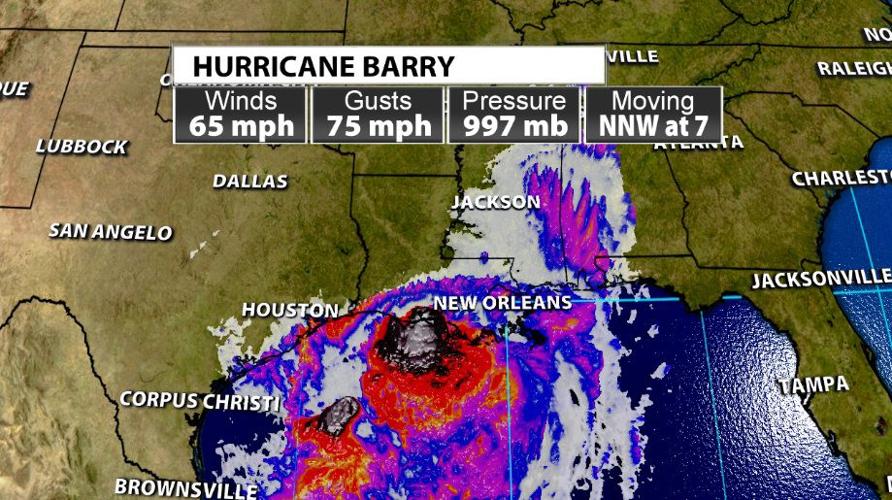
The information we share with on you TV and online in graphics like the one shown below comes from data provided by the National Hurricane Center, NOAA, and Hurricane Hunters research.

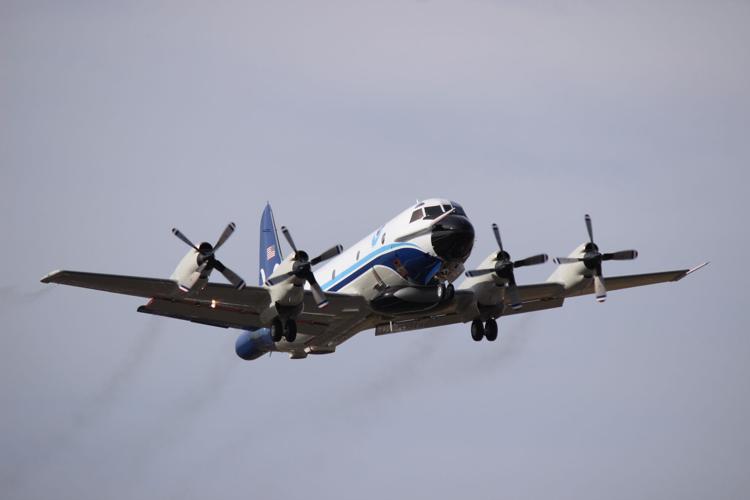
The Air Force Reserve 53rd Reconnaissance Squadron flies specially equipped USAF weather reconnaissance planes, WC-130J Super Hercules aircraft. These planes are also equipped with radar underneath to measure how the wind within the storm is moving. That can help scientists better understand the motion of the storm and the smaller threats embedded within it.

Scientists on these planes launch dropsondes to measure meteorological data inside the storm that otherwise could not be measured, as it falls to the surface. It transmits the data in real time. The animation below shows how this works.
Animation depicting launch of dropsonde sensor probe into a hurricane
Another critical mission of the Hurricane Hunters is to measure the location of the eye of a hurricane and the center of lowest pressure to provide updates about location as it approaches the continent. The video below gives you an idea of some of the equipment used for observation and research on board the Hurricane Hunters planes and the view flying over a hurricane. This is the view over Hurricane Hermine in 2016.
NOAA Hurricane Hunter flight into Hurricane Hermine on Sept 1, 2016
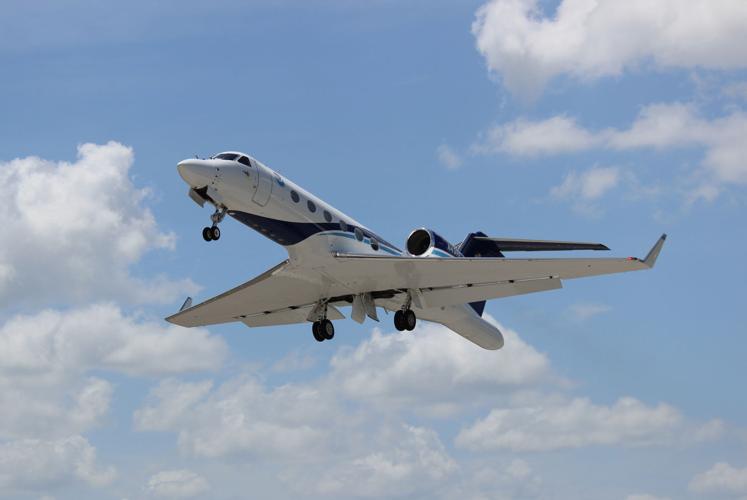
NOAA also has a Gulfstream IV-SP (G-IV) nicknamed Gonzo (another reference to the Muppets) that can fly higher, faster, and farther to support the missions of Kermit and Miss Piggy. Gonzo is shown below in a picture from Lt. Kevin Doremus/NOAA.

Without the Hurricane Hunters flying planes into the storm, the only information we have to go on is satellite imagery and weather buoys sparsely placed in the ocean. The Hurricane Hunters program is supported by both military personnel and civilians. Pilots, meteorologists, engineers, and other scientists are all part of the team necessary to study hurricanes.