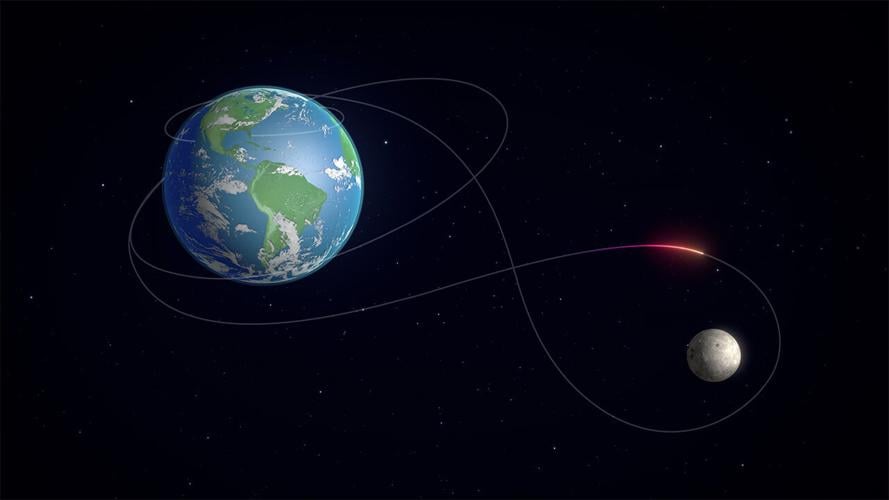
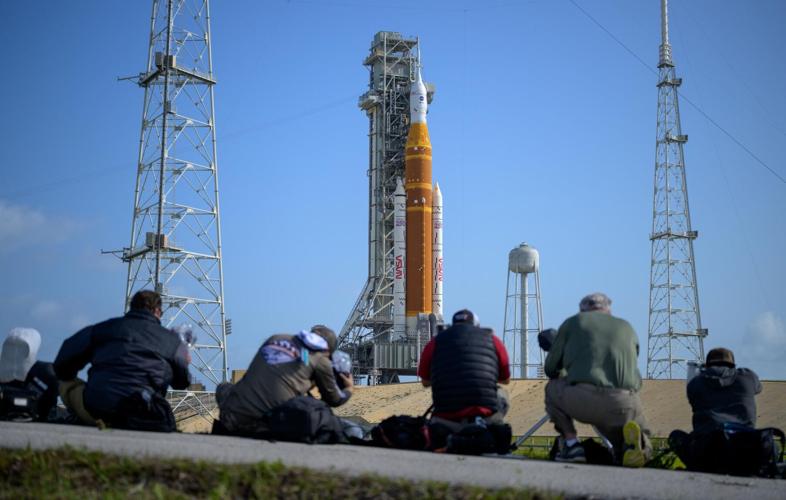


NASA is set to launch the Artemis II rocket tomorrow, April 1st! The 10-day, crewed test flight will send four astronauts around the Moon and back, marking the first human mission to the Moon since 1972! The launch is scheduled to happen around 6:24pm on Wednesday. Here is the 10-day path for their around 685,000 mile trip:

Image: NASA
The weather forecast shows an 80% chance of favorable weather conditions, with cloud coverage and potential for high winds on the ground as primary weather concerns.
With countdown officially underway, engineers are powering up flight hardware, checking communication links, and preparing the rocket’s cryogenic systems for the precise fueling sequence required to load hundreds of thousands of gallons of super-cooled liquid hydrogen and liquid oxygen. At Launch Pad 39B, teams will begin filling the sound suppression system’s massive tank with water, which will unleash a protective deluge at liftoff to shield the vehicle from the roar of its own engines.
The Artemis II crew, NASA astronauts Reid Wiseman, Victor Glover, and Christina Koch, and CSA (Canadian Space Agency) astronaut Jeremy Hansen, remains in Astronaut Crew Quarters inside NASA Kennedy’s Neil A. Armstrong Operations and Checkout Building. The crewmates have spent the final countdown phase focused on readiness and technical verification, remaining in quarantine under strict health monitoring and completing medical checks to ensure fitness for launch. They have been following a controlled sleep schedule and nutrition plan to maintain energy and hydration for launch, while continuing to receive regular updates on the rocket’s configuration and weather conditions from crew quarters.
NASA and weather officers with the U.S. Space Force’s Space Launch Delta 45 continue to pay close attention to weather conditions ahead of tanking operations. The weather forecast for launch day shows an 80% chance of favorable weather conditions with primary concerns being cloud coverage and the potential for high winds in the area. Teams will continue to monitor the weather in the coming days.
Broadcast coverage begins with live views and audio commentary of tanking operations beginning at 7:45 a.m. on April 1, on NASA’s YouTube channel, as teams load propellant into the SLS rocket. Full coverage on NASA+ begins at 12:50 p.m. Learn how to watch NASA content through a variety of online platforms, including social media.
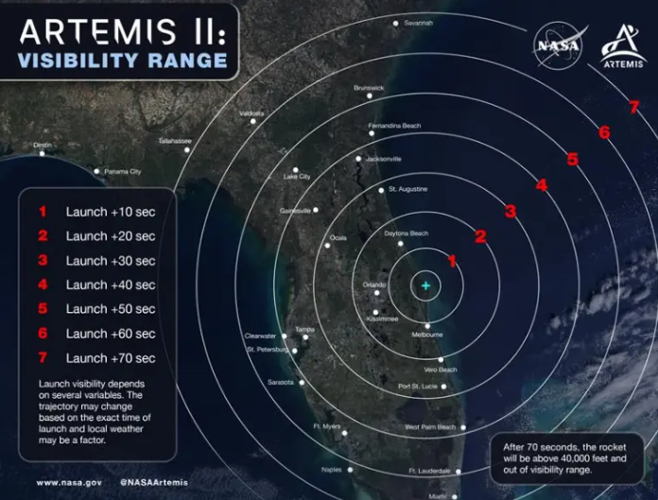
Unfortunately, we won't be able to see the launch all the way here in the Ohio Valley, but if you know anyone in Florida or Georgia, they might be able to!

Image: NASA
What We’ll Learn
Artemis II science operations will lay the foundation for safe and efficient human exploration of the Moon and Mars.
The Artemis II mission will carry astronauts farther from Earth and closer to the Moon than any human has been in over half a century. From this unique vantage point and environment, the Artemis II crew will work with scientists on Earth to facilitate science investigations to inform future human spaceflight missions.


