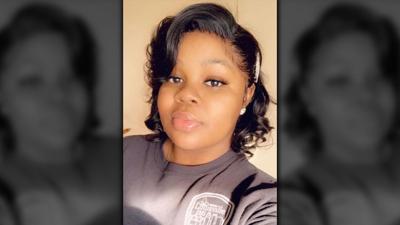


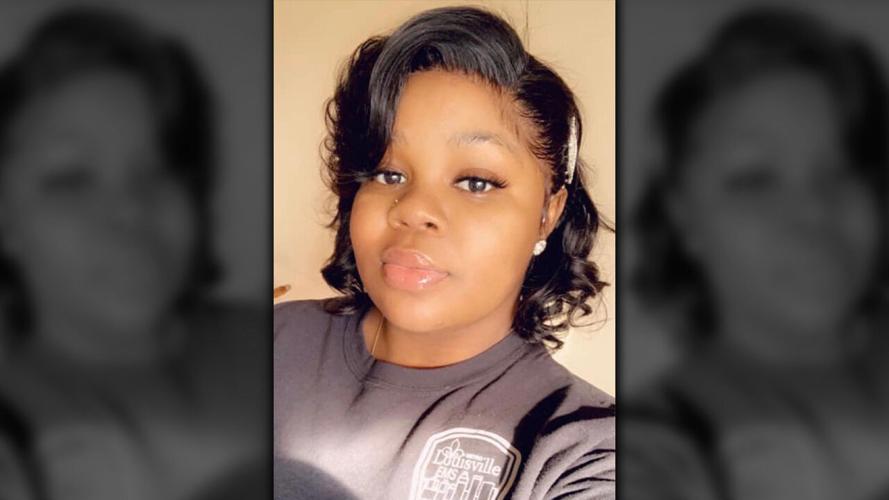
LOUISVILLE, Ky. (WDRB) -- Attorneys for former Louisville police Detective Brett Hankison allege that law enforcement at the scene of the March 13, 2020, raid in which officers killed Breonna Taylor disabled her cellphone by repeatedly entering incorrect passwords.
The attorneys filed court documents Wednesday alleging that the government has failed to produce requested information on who, when and how Taylor's phone was tampered with and why information on the phone is no longer accessible.
Taylor's phone has become a focal point for defense attorneys in recent months as they have asked a judge to force prosecutors to turn over the cellphone to their expert, arguing it may contain evidence favorable to their client.
Prosecutors have responded that the phone has been examined by state forensic examiners who were unsuccessful in their attempts to extract data from the phone and remove the SIM card, according to court documents.
They have asked a judge to deny a request to turn over Taylor's cellphone, arguing the FBI says information in the phone is not accessible and available evidence shows her phone wasn't used around the time of the raid.
Defense attorneys now claim police continued to enter wrong passcodes into the phone the night of the raid as an "intentional act" until it was disabled and the data possibly lost forever.
“Defense counsel was completely unaware that B.T.'s phone was compromised by law enforcement's deliberate actions until June of 2024,” Hankison's attorneys wrote. “In fact, counsel was erroneously led to believe that the FBI lacked the tools to extract data, when all along, the Government knew that the phone itself was compromised by law enforcement.”
Prosecutors have also said that Taylor's phone does not contain important evidence as records show there were no incoming or outgoing phone calls or text messages in the four hours before the shooting or in the 15 minutes after.
Attorneys for Hankison argued they want their own expert to determine if messages were sent another way, such as through FaceTime, Facebook messenger, Instagram, Snapchat, Tik Tok, Twitter or other social media platforms.
Their argument to look for information on the phone centers around whether Taylor knew about an ongoing series of raids that targeted narcotics trafficking on the night she was killed.
Hankison's attorneys claim that about 15 minutes elapsed between the first searches and that of Taylor's apartment, meaning there was "more than enough time" for others to notify her, including the main target of the investigation and her former boyfriend, Jamarcus Glover.
This is important, the defense argues, in determining whether Taylor and her then-boyfriend, Kenneth Walker, knew police might be coming or were surprised when police burst in, prompting Walker to fire a shot that led to officers firing back and killing Taylor, 26.
The defense also wants access to the phone to determine whether Taylor was involved in any way with dealing drugs or holding drug money. Prosecutors have said Taylor had no ties to drug dealing. No drugs or money were found at her home.
In 2020, police sought out a search warrant for Taylor's home as part of a broader investigation that focused on Glover. Police believed Glover may have been using Taylor's apartment to receive drugs and store money.
Kenneth Walker admitted to firing at police as they entered the apartment but claimed he believed the officers were intruders. He hit former officer Jonathan Mattingly.
Multiple Louisville Metro Police officers returned fire, killing Taylor.
Hankison's attorneys want to know if anyone notified Taylor around the time of the raids.
In addition, evidence shows Walker had access to the phone and "called multiple individuals in the 10 to 12 minutes" between police arriving at Taylor's home and his surrender, according to the motion.
One of the key disputes in the case is whether police burst in, surprising Taylor and Walker, or whether they knocked and announced their presence repeatedly.
While police had a "no-knock" warrant signed by a judge, meaning they were not required to knock or announce themselves before entering the apartment, officers claim they did both multiple times.
But Walker and several neighbors said they never heard police knock or announce their presence, prompting the shooting.
Hankison's attorneys have asked the judge to allow their expert one hour to "independently verify that the iPhone is compromised," according to the motion. "Given what is at stake, this is a very reasonable and appropriate request."
This will be Hankison's third trial related to his actions the night of the raid. A federal jury in November 2023 deadlocked on two counts of civil rights violations and using excessive force.
A state Jefferson Circuit Court jury in March 2022 found Hankison not guilty on three counts of wanton endangerment.
The federal case is about Hankison firing 10 times from outside Taylor's apartment through a covered sliding glass door and blinded windows in Taylor's bedroom window, with three bullets flying into an adjacent apartment where Cody Etherton, Chelsey Napper and her 5-year-old child lived.
During the federal trial, LMPD officers testified that Hankison's actions on the night of the Taylor raid were "shocking," unfathomably dangerous" and "stomach churning," the prosecution said in closing arguments.
He fired "blindly, spraying bullets through two covered windows, ripping through walls into a neighboring apartment" where a family and a child were sleeping, said prosecutor Michael Songer, with the U.S. Department of Justice, in his closing arguments.
Hankison failed to isolate a target and acknowledged not being able to see who he was firing at or where exactly the person was, putting multiple lives in danger, Songer said.
Former defense attorney Stew Mathews told jurors have to put themselves in Hankison's shoes at the time, think about what he was seeing and experiencing as an officer was shot and dozens of bullets were fired after they burst into Taylor's home.
"If someone fires at the police, the police are going to fire back at you, and that's exactly what happened here," Mathews said.
Hankison testified he wasn't part of the investigation leading up to the raid and didn't even know the adjacent apartment was there. All Hankison knew was that fellow officers were under fire, he believed from an assault rifle, and that one officer had been shot.
He admitted he was mistaken, and the muzzle flashes were actually coming from Mattingly and Det. Myles Cosgrove, and that Walker only fired one shot from a handgun at police.
"Was I wrong that Mr. Walker shot more than one shot? I know that now," Hankison testified. "I fired to stop the threat, sir."
"It's a tragedy for a lot of people and a lot of families and I feel bad about it," Hankison said of the shooting, adding that he believed officers should never have been serving a warrant at Taylor's home to begin with.
But he said if given a chance for a do-over, he "would do the exact same thing" because he was trying to save the lives of his fellow officers.
Related Stories:
- Former Louisville police detective Brett Hankison seeks order for access to Breonna Taylor's phone
- Ky. Court of Appeals upholds termination of Louisville detective who fired fatal shot in Breonna Taylor raid
- Call for change | Louisville activists reflect on death of Breonna Taylor 4 years later
- 'Breonna Taylor Act' for US ban on no-knock warrants reintroduced on Capitol Hill
Copyright 2024 WDRB Media. All Rights Reserved.


