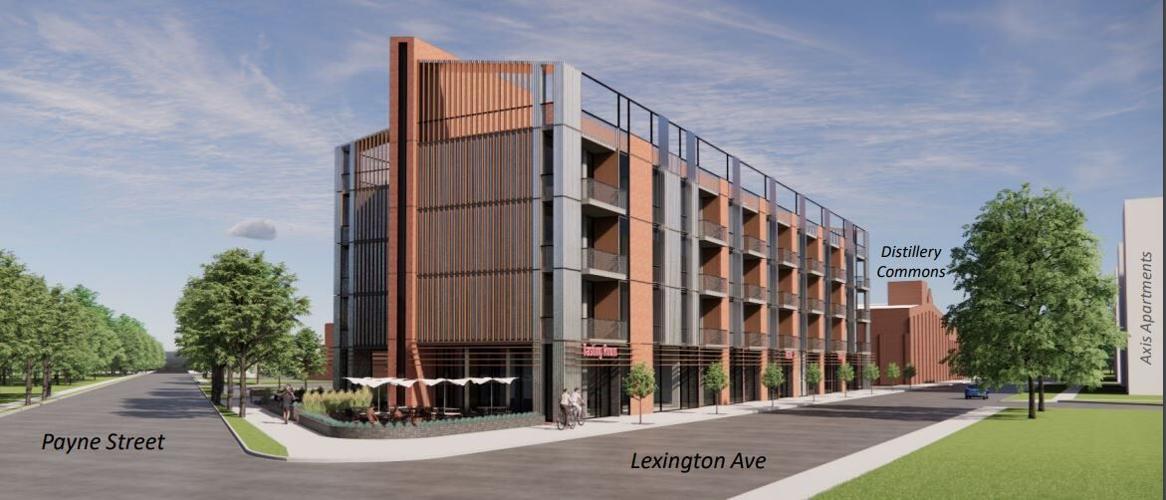
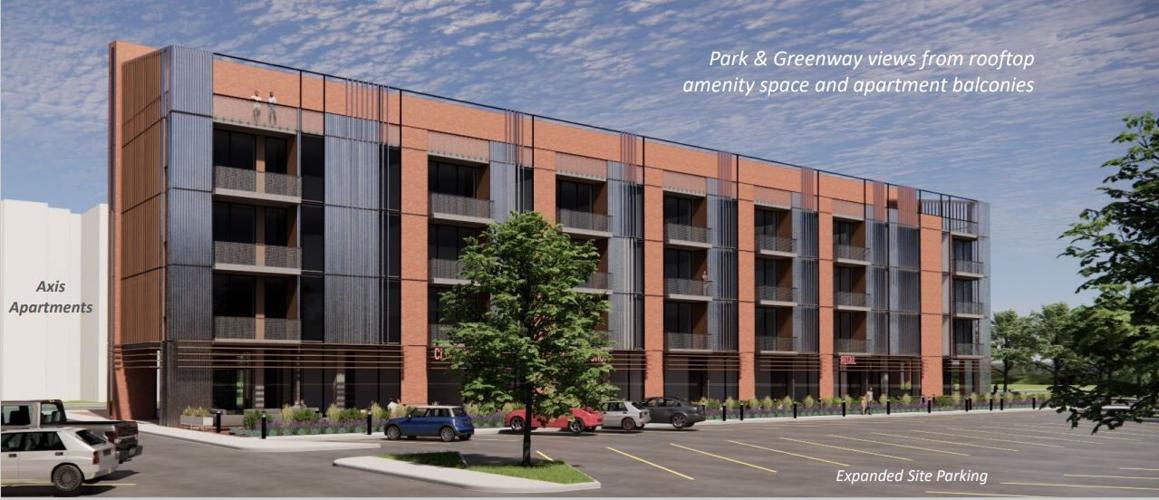
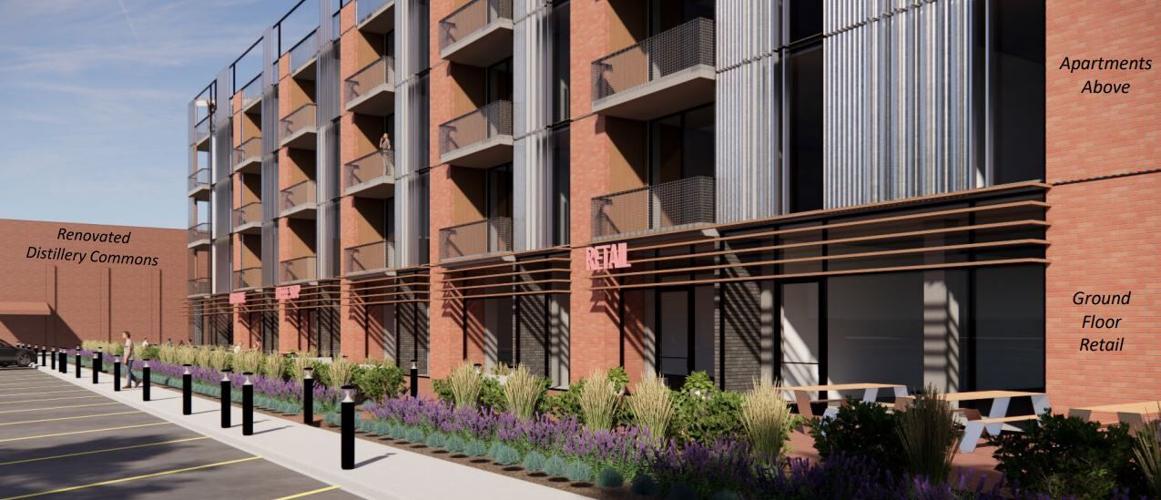
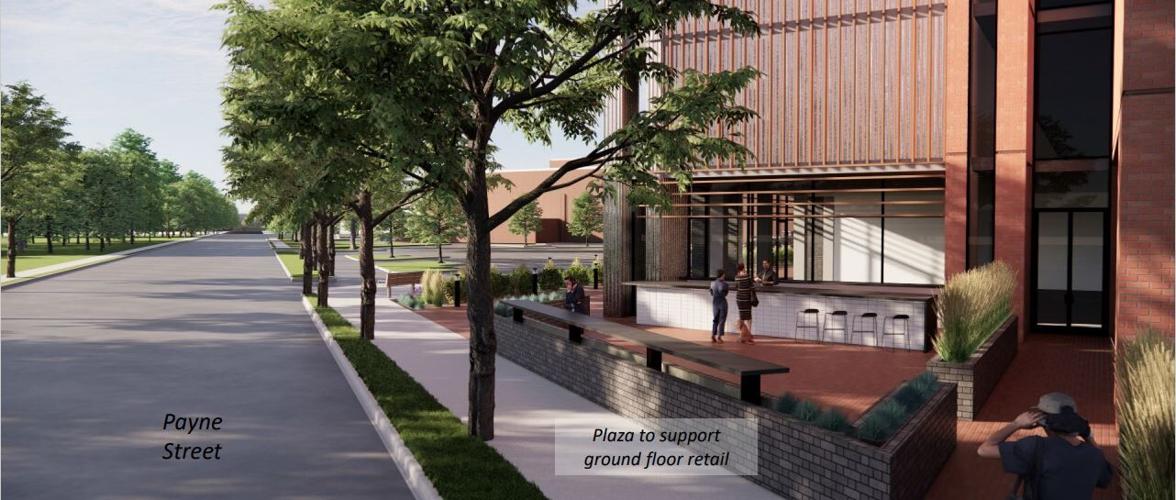


LOUISVILLE, Ky. (WDRB) -- A Missouri-based developer wants to give Distillery Commons a multimillion-dollar facelift, bringing apartments, retail and restaurant space to the Lexington Road property.
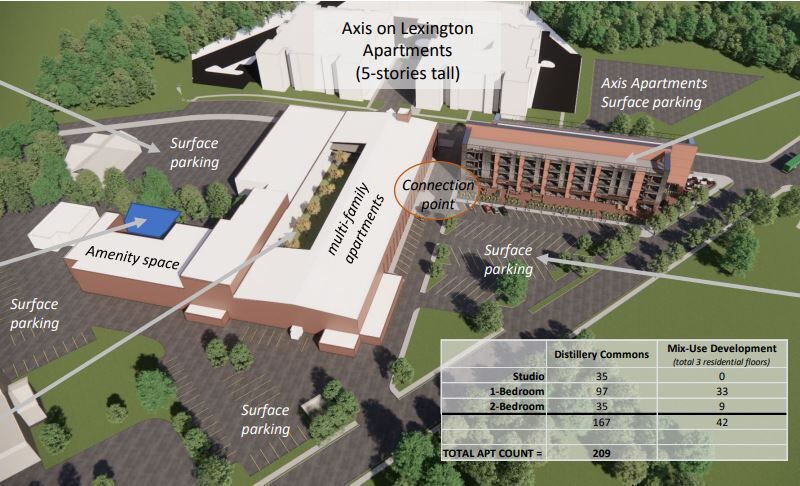
The main Distillery Commons building that now includes self-storage units and other businesses would be renovated into 85 apartments surrounding an open-air courtyard, according to plans submitted earlier this year.
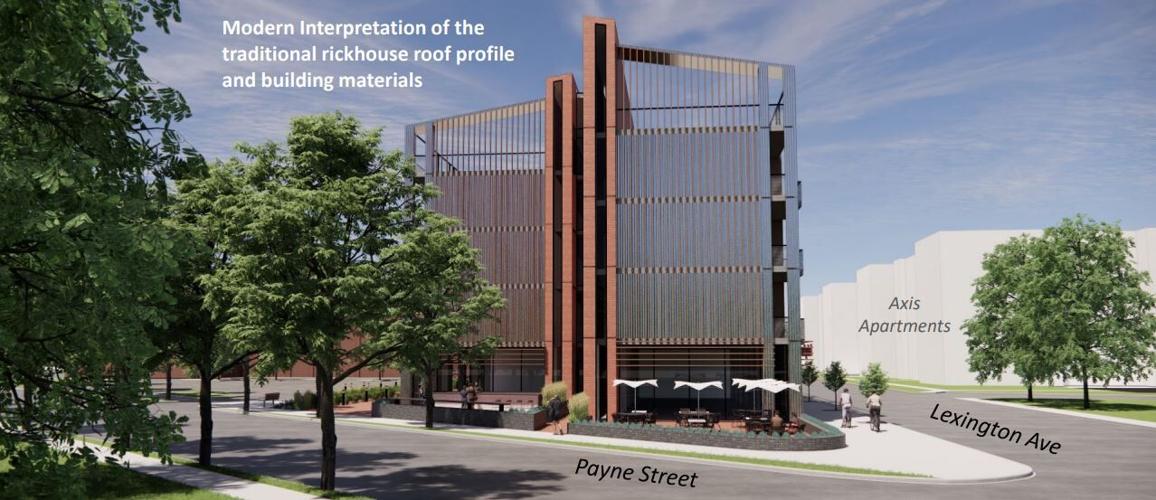
A key part of the proposal by Bamboo Equity Partners of Creve Coeur, Mo., calls for razing the adjacent 19th-century Nelson Distillery Rickhouse and erecting a new four-story building with ground-level commercial space and 39 rental units above. Demolition would require city approval, since the rickhouse was designated a landmark in 2020.
The entire project is expected to cost $65-$75 million, said Dan Dokovic, managing principal and founder of Bamboo Equity.
"We are typically not in the business of tearing down buildings," he told WDRB News in an interview last week. "We love old buildings and anytime one is able to be saved, we do so."
But Dokovic said the condition of the rickhouse has worsened over time, doesn’t fit the needs of companies wanting a modern warehouse and would be unrecognizable even if it was renovated.
"All of the interesting parts of the building would have to be replaced, right, because they're so badly damaged," he said. "So then you really end up with a building that's not historic anymore."
Built in 1896 to house aging bourbon barrels, the rickhouse has been vacant since at least 1979, city records show.
It was added to the National Register of Historic Places in 2014 and later granted local landmark status after the Irish Hill Neighborhood Association pushed to protect it after a previous effort to demolish the building.
In its heydey, the warehouse was part of a complex owned by the Anderson-Nelson Distilling Co. that was the largest bourbon distilling operation in Kentucky, according to its National Register registration form.
The rickhouse was significant as an example of a bourbon aging warehouse in Louisville and "remains as a rare example of its form, retaining a high degree of integrity of original design which grew out of an evolution of construction within the industry."
Bamboo Equity formally asked Metro government in late July for permission to tear down the rickhouse as part of its development plan. The company is asking city officials to reevaluate the building’s historic status; if that fails, it argues the demolition also could be covered through an "economic hardship exemption."
Bamboo Equity retained experts who reviewed the rickhouse, with structural engineering firm KPFF’s Louisville office documenting a rack system that supports the roof with "significant rot," missing walkboards and "large, full-height cracks" at exterior walls.
The building "cannot be used for the purpose it was built for, cannot be used in its current state for any use, and cannot be used as a warehouse and produce any return," according to documents Bamboo Equity filed with Metro planners.
The city’s Individual Landmarks Architectural Review Committee is scheduled to consider the request at a meeting on August 24, said Caitlin Bowling, spokeswoman for the Louisville Forward economic development and planning agency.
Lisa Santos, a longtime Irish Hill Neighborhood Association board member and resident, said the whole situation is "disappointing."
"It’s a systemic problem in Louisville that people buy these buildings and then don't take care of them," she said.
Santos said neighbors likely will testify during the upcoming public meeting, but "I don't know if it's really in our hands at this point."
Bamboo Equity has been working on its plans for about a year, Dokovic said, and is ready to "start moving and working on it."
He said the purchase agreement for the adjacent Distillery Commons building is contingent on the company getting the approval needed to tear down the rickhouse.
Bamboo Equity would seek historic preservation tax credits for the renovation of the Distillery Commons building, Dokovic said, but he ruled out any other public incentives for the work, such as tax increment financing.
This story may be updated.
Copyright 2022 WDRB Media. All Rights Reserved.


