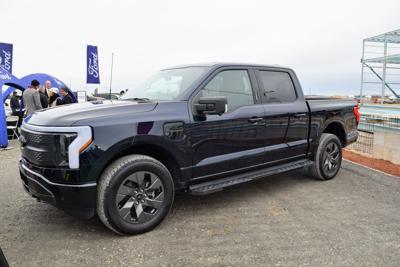


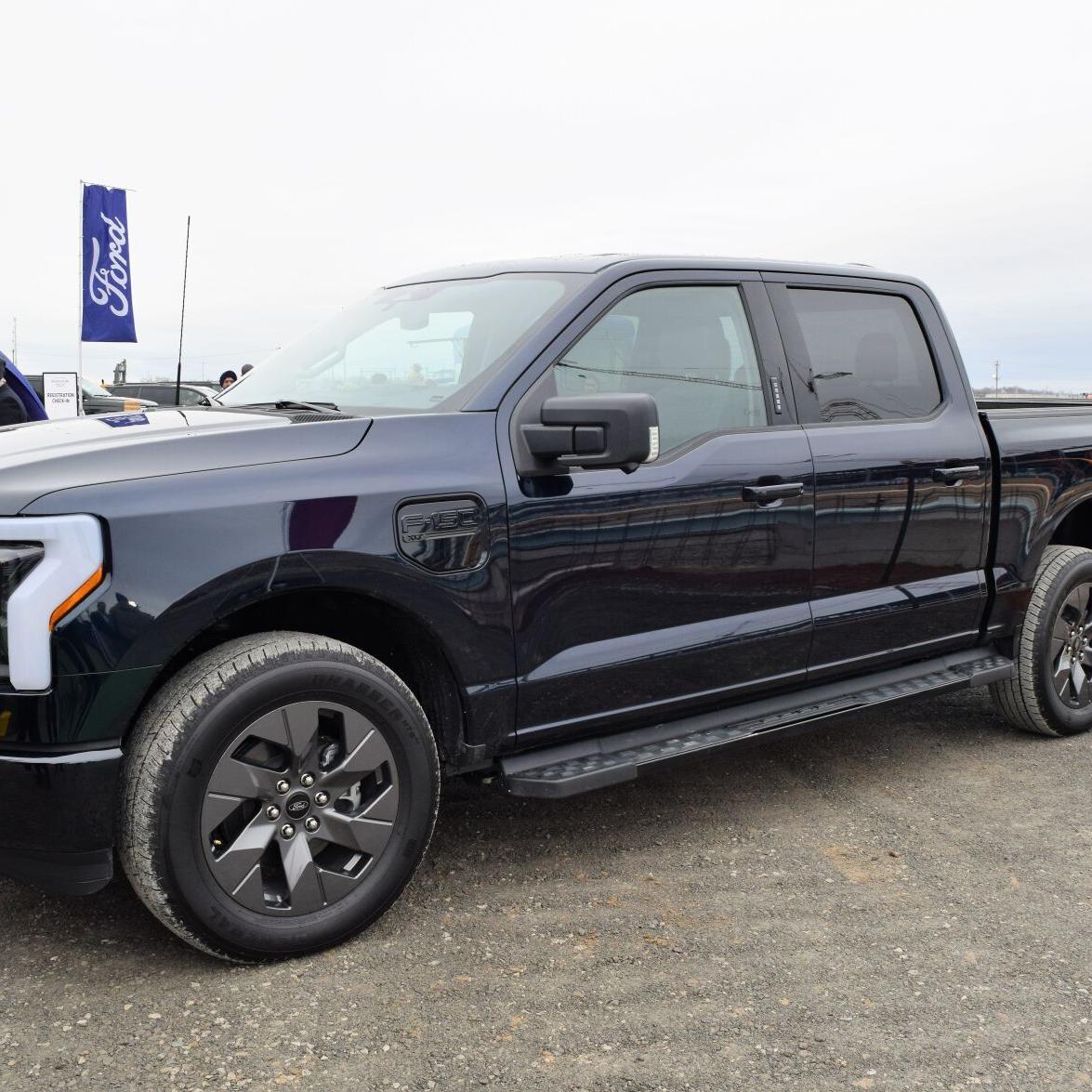

LOUISVILLE, Ky. (WDRB) -- Ford's announcement Friday that it's dialing down production of its premier electric vehicle, the F-150 Lightning pickup, doesn't have a direct impact on the automaker's operations here in Louisville.
But it's the latest in a long list of signs that the automotive industry's shift to EVs — much of which is slated to unfold in Kentucky — won't happen as fast as car companies like Ford once planned.
Only six months ago, Ford touted that it had tripled its capacity to produce the EV version of its flagship F-Series franchise.
But Friday, the company announced it would scale back the Dearborn, Michigan factory where the Lightning is made to one shift, saying it was matching the number of EV trucks it would make to "customer demand."
At the current pace of sales, it would take car dealers 203 days to sell off all the F-150 EVs in inventory, compared to 76 days for gas-powered F-150 trucks, according to Dealer Trade Network, a Louisville-based business that facilitates car swaps among dealers.

While demand for EVs is growing faster than the auto industry as a whole, the EV growth rate is slowing, and traditional carmakers such as Ford and General Motors have backed off their aggressive targets.
Ford didn't disclose how many EV trucks it plans to make this year, but industry consultancy AutoForecast Solutions LLC predicts only 54,000, about a third of the 150,000-truck capacity Ford announced last year.
"Ford upgraded their plants in Michigan and Mexico to produce EVs more quickly and efficiently, but the market just hasn't reached the point where it needs this additional capacity yet," AutoForecast's Sam Fiorani said.
The F-150 Lightning was Ford's fastest-growing model in 2023 (55%) but still made up only 3% of the F-Series trucks the automaker sold last year.
Ford's disclosure Friday comes after the automaker said in October that it was delaying $12 billion of EV investments.
Most notably, Ford and its Korean partner SK On said they weren't sure when they would start production at one of two massive EV battery factories the companies are building side-by-side in Glendale, Kentucky.
The first of the two factories is still slated to start work in 2025, but it's unclear when the second BlueOval SK plant will kick into gear. Each plant is expected to employ about 2,500 people.
Louisville also has a big stake in the EV transition, as Ford is planning to retool Louisville Assembly Plant to make an "all new" (and still undisclosed) EV after 2025.
Louisville Assembly, which employs about 3,200 hourly workers, has made the Escape compact SUV for the last decade. Its sales peaked in 2017, and Ford's plans for the model are unclear after 2025.
Securing a new product for Louisville Assembly — and preserving those jobs — was a top priority for the United Auto Workers union when they negotiated a new labor deal with Ford last year.
Ford said Friday that it still expects EV sales to grow in 2024 even if "less than anticipated."
"We see a bright future for electric vehicles for specific consumers, especially with our upcoming digitally advanced EVs and access to Tesla's charging network beginning this quarter," CEO Jim Farley said.


