

LOUISVILLE, Ky. (WDRB) -- Louisville is helping lead the way on an experimental brain cancer treatment aimed at giving Glioblastoma patients longer lives and brighter hope.
Norton Cancer Institute neuro-oncologist Dr. Kaylyn Sinicrope said glioblastoma is a bleak diagnosis with patients hearing they only have a few months before the cancer takes over. But Dr. Sinicrope said participating in the SurVaxM clinical trial could be a huge medical breakthrough for the terminal cancer.
"When someone hears a cancer diagnosis in general, to hear 'oh, we have a treatment, but it's only going to add a couple more months to your life,' I want to be able to change that, I want to leave that mark on the world and help people," Dr. Sinicrope said.
SurVaxM is a new immunotherapy that can't cure glioblastoma, but it helps the body attack cancer cells and hopefully slow the spread. It was developed in Buffalo, New York by Dr. Robert Fenstermaker, MD, Chair of Neurosurgery at Roswell Park, and Michael Ciesielski, PhD, Assistant Professor of Neurosurgery.
The hope is to combine SurVaxM with chemo and radiation to extend the life expectancy for glioblastoma patients from months to years.
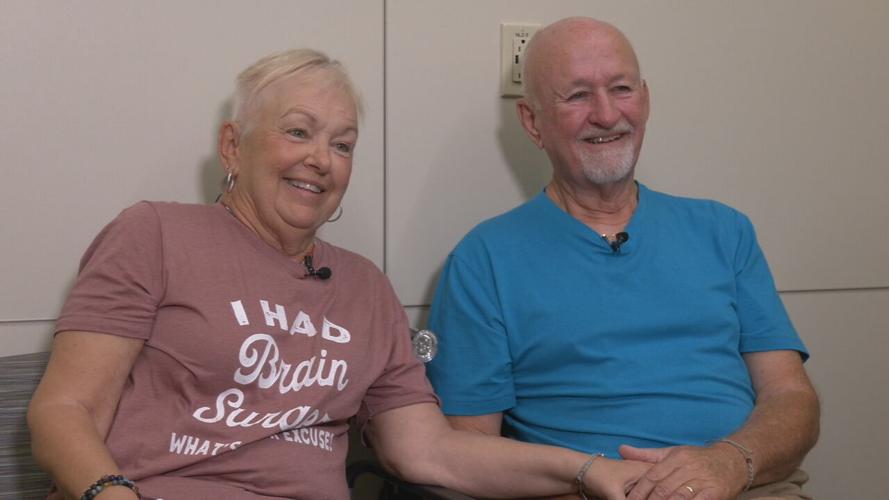
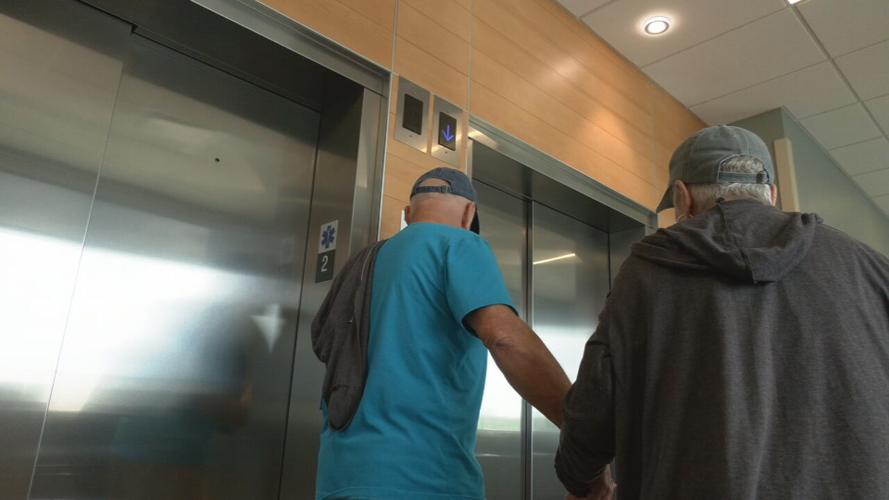
It has patients like Peggy Evans loading up in the car with her husband Bob for a nearly nine-hour road trip from Union Hill, Virginia to Louisville to participate.

Outside the Norton Cancer Institute. (WDRB photo)
"Nothing to lose, and a lot to gain," Bob said.
A journey to beat brain cancer.
The Diagnosis
Peggy said when she was diagnosed with glioblastoma in May after having seizures, "It scared the dickens" out of her.
In a matter of days, an MRI revealed she had a mass on her brain, that brain surgery confirmed was brain cancer.
"I, of course, was sitting there with her in a room about this size," Bob said. "Peggy said, 'Is this gonna kill me?' And [her doctor] said 'yes, it is.' You know, it's like all the air went out of the room, where's the oxygen?"
With 72 years to her name, more than 50 spent with Bob by her side, Peggy decided if she only had a few months left she wanted to enjoy them with her family, without the harsh side effects of chemo and radiation.
"She didn't want to do it," Bob said. "And then, SurVaxM."
Bob was watching the news in June and heard a report about the promising early results in trials with SurVaxM. With the encouragement from their son who works in healthcare, Peggy had a change of heart.
"I looked at Bob and I said, 'I'm going to do it, I'm going to do this,'" Peggy said.
Peggy reached out to Rosewell Park, but wasn't accepted to the flagship location.
The next closest option was Louisville's Norton Cancer Institute.
Leap of faith: a new car, for a new type of cancer care
As Norton considered Peggy for the double blind trial, some get a placebo, some get SurVaxM, Bob considered how they'd make the trips to Louisville.
"We bought the car on the faith that we were going to need it," Bob said.
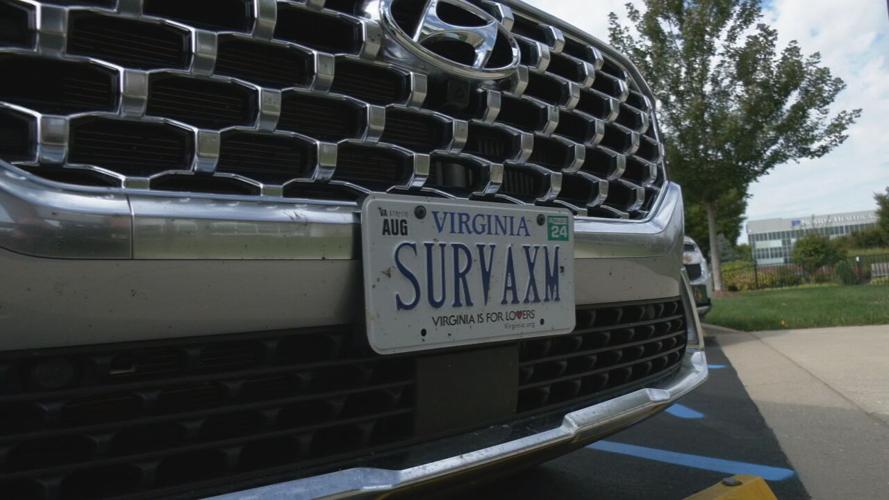
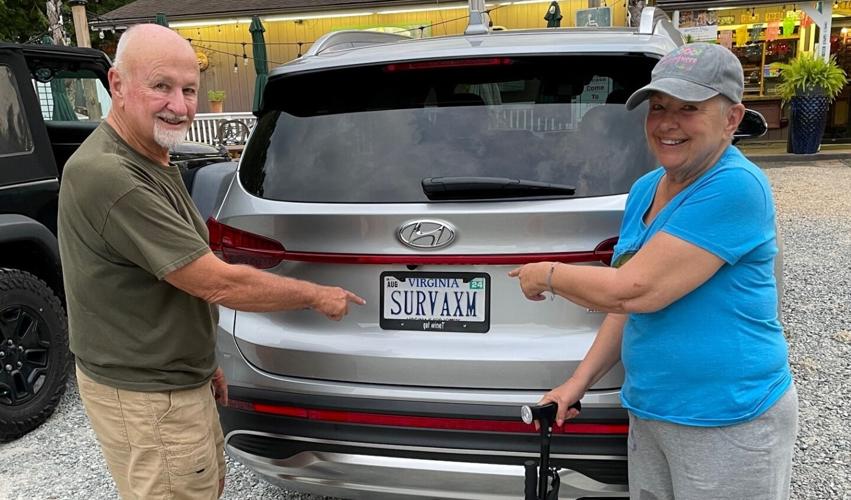
And in his mind, why not get the license plate to match. The license plate labeled with their Hail Mary: SurVaxM.
"And then she was accepted," Bob said. "When we got home the new license plates were in the mailbox."

Peggy and Bob Evans hope SurVaxM can help Peggy's body attack cancer cells and slow the spread. (WDRB photo)
Bob said fortuitous timing became a theme for them.
Part of the requirements to participate in the trial, the patient has to be within 16 weeks of their glioblastoma diagnosis. Peggy got her first injection in August, one day before she would have hit her 16-week mark.
"Things happen for a reason," Peggy said. "We have a lot of faith for this."
Bob said from that moment on he saw a new side to his wife.
"Once she made her decision to be a fighter, which is something I've never really seen her do before, she's fighting," he said.
Team Beat Cancer: Norton's promise to research and innovation
At Norton Cancer Institute, Dr. Sinicrope said she is always looking to trials her team can be involved in. In the case of SurVaxM, those on the original team at Rosewell reached out to Norton to participate and it started up at the Norton Cancer Institute about six months ago.
"To be able to extend the survival is huge for me and part of why I do all of this is to try to bring hope, hope for a cure or hope for lengthen of life and good life," Dr. Sinicrope said.
As for how the trial is going, she said it's hard to tell since the trial has only been going on at Norton for a few months and it's a small group of patients. But she said she can see some positives.
"Patients seem to be tolerating it exceptionally well, which is the other side to any advancement you're trying to make in treatment is 'yes, of course we want to prolong life,' but what is that time look like while they're getting their treatment," she said. "If they're really sick, or we have tons of side effects, that's not really helping people. So this seems to be very well tolerated, at least in the patients we've seen so far. And I think that's really important as well."

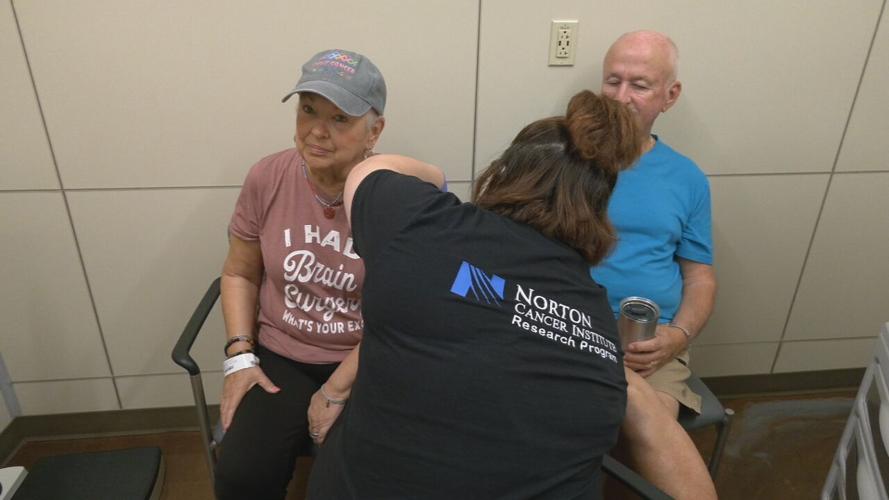
Registered Nurse Shannon McKenna giving Peggy Evans a shot. (WDRB photo)
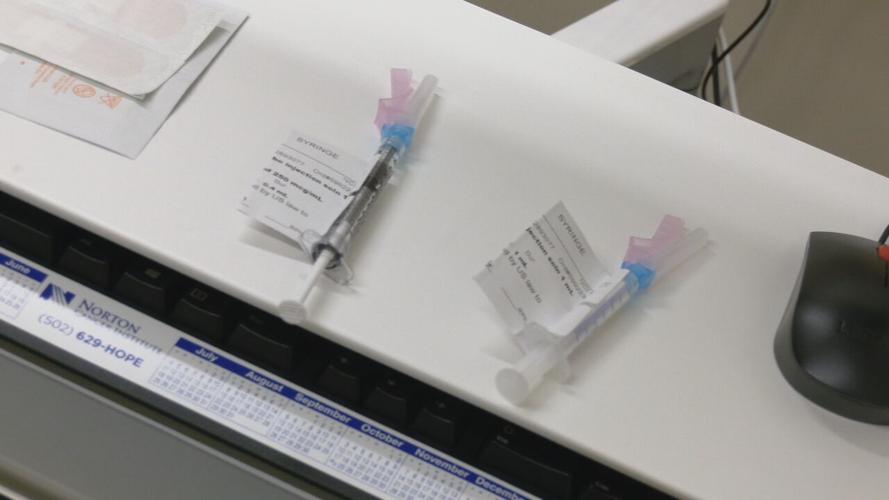
Dr. Sinicrope can't try and find a cure to cancer alone. Registered Nurse Shannon McKenna with the oncology research department administers the injection to patients like Peggy and then helps monitor how things are going in the days after.
The Evans said they're grateful for Dr. Sinicrope's interest in clinical trials and McKenna's dedication to helping them find some comfort during the process.
"And we understand that the people who work in places like this, like Shannon, they do it for a lot more than it being a job with a paycheck," Bob said. "So whether we get the drug or not, we understand that just the science of it will help."
SurVaxM is classified as a Phase Two trial and would still need a third phase with a larger patient group before it's more likely the FDA could approve the treatment.
When WDRB News caught up with Peggy during the last week of September she was on her third of four injections over a six-week period. After the fourth she is required to do a follow up MRI to see if her cancer has grown. If it has, she will no longer be eligible to continue the trial. If it hasn't, she will continue injections every three months for as long as SurVaxM helps limit the spread of the cancer.
"We have a lot of faith in this."
The couple said they're sticking to what has worked so far, messages of faith, rather faith in perseverance.
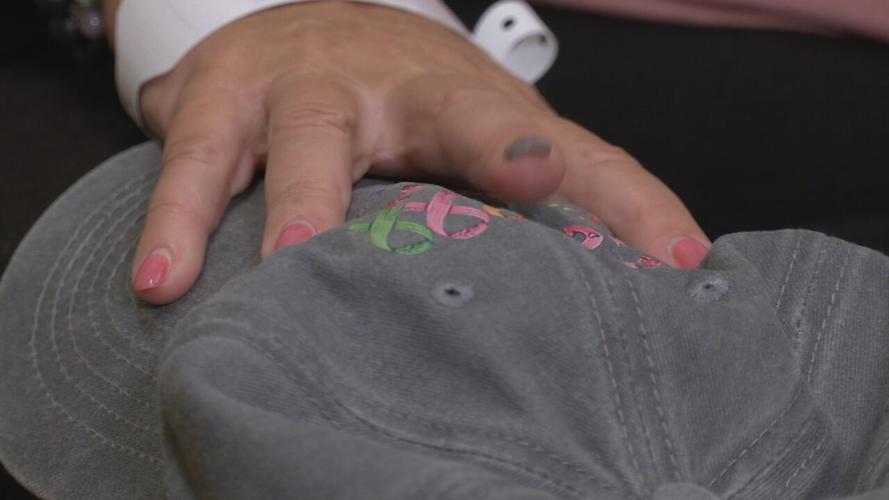
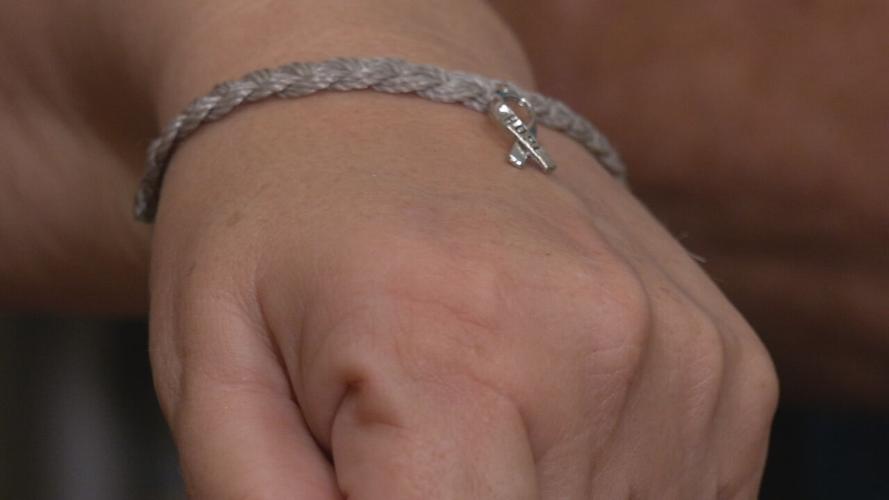
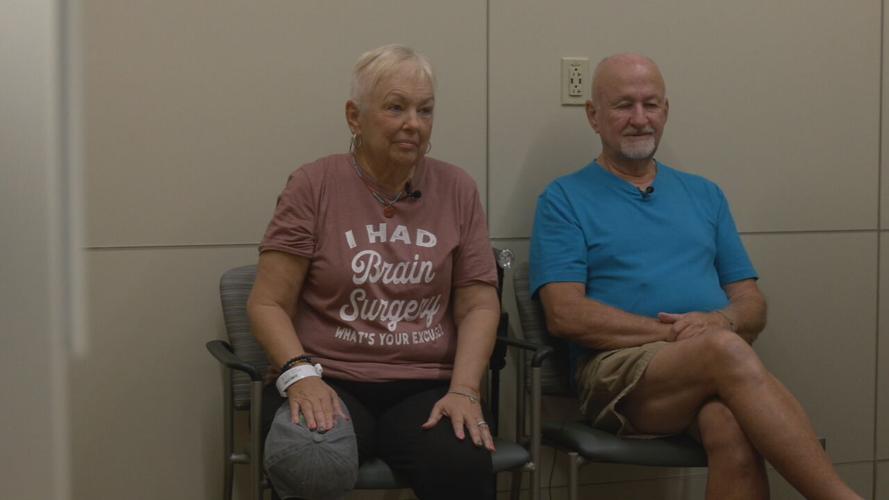
Peggy showing off her "I had brain surgery what's your excuse" T-shirt and the nails on both her middle fingers painted grey, the color signifying brain cancer.
"That's how I feel about brain cancer," Peggy said about her middle finger nail polish.

Peggy and Bob Evans with their new license plate.
But on a more serious note, the couple said it's the vows they exchanged more than 50 years ago that hold them up.
"Now we understand that," Bob said. "Sickness and health 'til death us do part, we understand that now."
The two leaning into and loving each other even more than they thought possible, as they put their faith in SurVaxM.
"You got to believe in something," Bob said.
"I believe we've been together 50 years, over 50 years, and we still have a long life ahead of us," Peggy said.
If you, or someone you know, has Glioblastoma, Norton is still accepting trail patients. Even if a patient might not fit for this trial, Norton said to contact RN Shannon McKenna via email to learn more about eligibility for SurVaxM and other trials.
Copyright 2023 WDRB Media. All Rights Reserved.