

LOUISVILLE, Ky. (WDRB) — The number of people who can't afford to eat is growing across the U.S., including in the Louisville and southern Indiana areas.
New data from Feeding America shows more than 200,000 residents across Kentuckiana face food insecurity. The group's "Map the Meal Gap" study shows 1 in 6 people are food insecure (15.4%) and 1 in 5 children are food insecure (21.9%).
Dare to Care said these numbers mark "a significant increase from 186,250 food-insecure individuals" reported last year, representing a 62% increase since 2021.
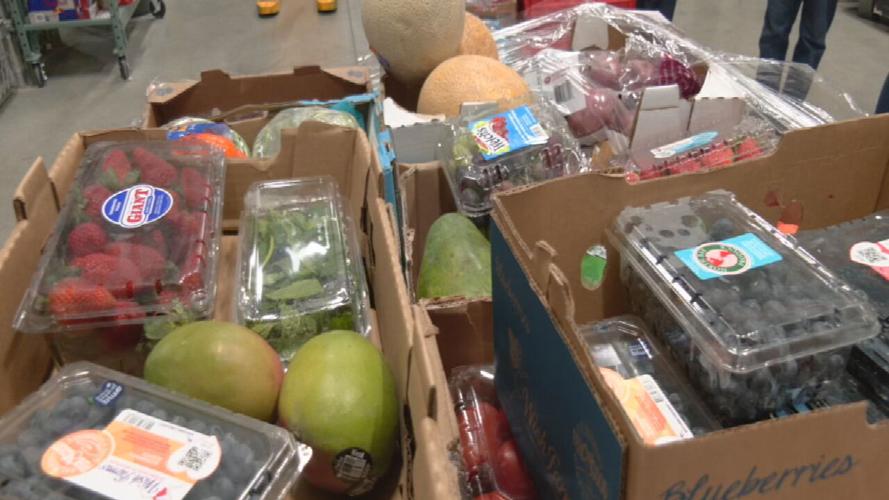
While the food bank has items stacked to the ceiling, the organization said Wednesday this is the highest amount of food insecurity ever recorded in it's history.
"The findings underscore a growing crisis affecting families, children, seniors, and working adults throughout Kentuckiana," Dare to Care said in a news release Wednesday.
Twelve-year Army veteran Albert Neighbors spent years supporting his family on his own, but now says he can barely afford to feed himself and his loved ones in the same country he fought for.
"How in the world is anybody going to eat if the prices keep going up? This is the United States of America, we supposed to be the most powerful country on earth," said Neighbors. "We fighting wars, but we can't even fight the war at home, and that's hunger."
Neighbors is one of some 203,000 or more people across Dare to Care's service area in Kentucky and southern Indiana who is experiencing food insecurity.
"One of the things those numbers tell me is that something is going on in our economy much more significant than what people realize," said Vincent James, president and CEO of Dare to Care Food Bank.
The organization said these findings underscore a growing crisis throughout Kentuckiana.
"What we're finding is that hunger is increasingly no longer the only crisis," said Shane Schlatter, chair of Dare to Care's agency partner advisory council. "We're walking into homes that have no electricity that have no running water because they can't afford their utility bill."
Leaders said food insecurity rates are startling, and are even higher than rates during COVID and the 2008 recession.
"We've seen a 38% reduction in federal commodities," James said.
Between this year and last year, James said Dare to Care received 2 million pounds less in food supply after reductions in support from the USDA.
"That's less food going to our partners," he said. "In turn, that's less food going to our neighbors."
With more working families turning to food pantries and less funding available, James said they're asking the community to get involved and donate where they can. For every $1 donated, he said Dare to Care can provide two meals.
"There's something much deeper that's happening in our economy that we're not paying attention to, when we have working families who work every day budget, but still have to go to a food pantry," he said.
Dare to Care noted that the data released in Feeding America's study was collected before new SNAP reductions were approved.
"The numbers we're sharing today don't yet capture the impact of recent and upcoming SNAP changes," James said Wednesday in a news release.
The organization said this new data shows a "historic need" as additional federal reductions to the Supplemental Nutrition Assistance Program are expected to "further strain families."
President Donald Trump's Big Beautiful Bill cuts $186 billion to SNAP over the course of 10 years. The federal legislation also made changes to SNAP eligibility requirements. It was passed in 2025.
The Trump administration said these changes were made to encourage states to be less reliant on the federal government and to eliminate unnecessary government spending.
"States were already struggling with tight budgets, and now you're adding the addition of millions of dollars that states were not prepared to be able to handle," James said.
James said the changes have a direct impact on the support that food banks are able to provide to Kentucky and southern Indiana families. He also said more and more people in Kentuckiana will be forced to rely on food pantries as SNAP continues to lose funding.
"For every dollar that is given as a snap dollar, that's nine meals that are being provided for each family," he said. "When you give a dollar to Dare to Care, that's two meals. We can't compete with snap benefits, and when that's reduced, we can't make up that gap."
To learn more about Dare to Care or to donate, click here.
Copyright 2026 WDRB Media. All Rights Reserved.


