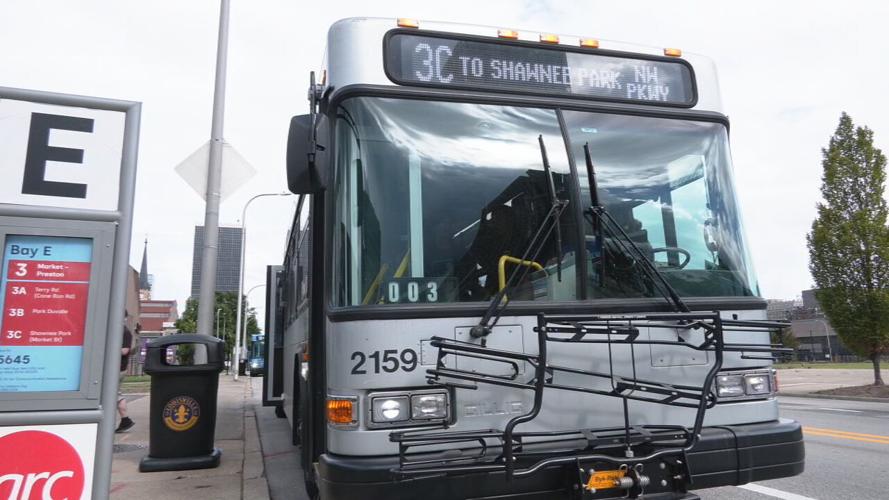
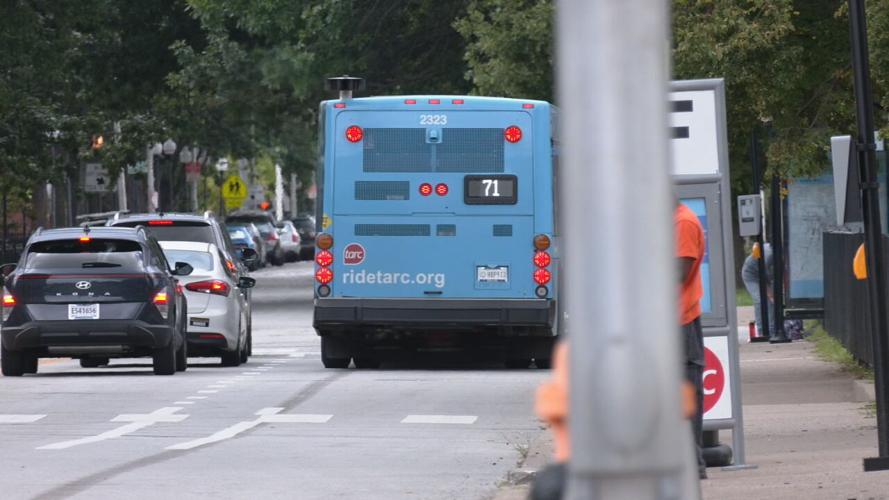


LOUISVILLE, Ky. (WDRB) — Many riders said they are having a hard time adjusting to changes after a new route system began Sunday for the Transit Authority of River City.
TARC said the new system includes fewer stops, but buses will run more frequently. The new network will run most routes every 15 to 30 minutes.
TARC Director Ozzy Gibson said in June that the new network will consolidate the current 24 routes into 15. Buses at the time made 3,341 stops throughout the day. Starting Sunday, TARC will make only 1,430 stops.

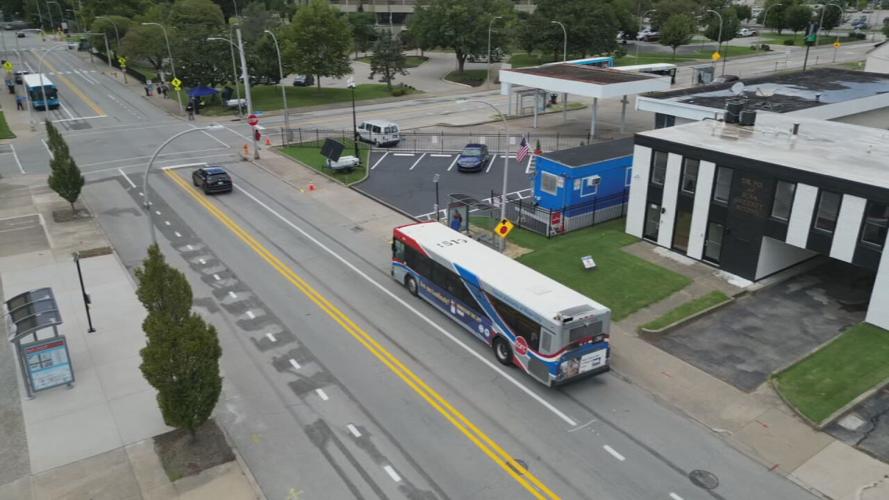
Overview of TARC's new downtown Louisville transportation hub on Aug. 2, 2026. (WDRB photo)
"We know there's going to be people that's left out there that they don't have service in their area no more," Gibson said Wednesday. "I'm sorry, but we can't put a stop at every corner, or we can't be on time."
Another big change is the bus signs themselves, which will be double-sided and color-coded to show the most popular routes.
The network also implements a new "pulse" system aimed at providing faster, smoother service for downtown Louisville transfers. TARC said the system includes a new downtown timed-transfer hub, a first in the public transit system's history.
Other changes in the new network include:
- Increasing the number of accessible jobs via public transportation by 5%.
- Serving all JCPS magnet high school locations.
- Providing more useful and frequent service on key corridors, including Broadway/Bardstown, Preston Highway, 4th Street, Dixie Highway and Market/Frankfort.
Some people like Mark Anthony Bramel aren't fazed by TARC's new transit system. He's seeing the positives.
"The buses are coming faster and more on time," he said.
But other riders, like KeKe, said the first day was rough.
"On my way to work, I had to do a 26-minute walk just to get on the first bus when I'm used to being able to walk five minutes straight to Market Street to get on a bus and transfer where I need to," KeKe said.
Many riders at the bus transfer center said the changes and the new transfer center have created confusion.
"Everybody on the bus is like, 'what is going on' and then we get off the bus where all the buses are gathered and nobody knows where to go, nobody knows what bus to get on," KeKe said. "It's just too difficult."
KeKe also takes issue with the fact that 1,911 stops were eliminated.
"Most of the people that need the buses are in the West End, and they have cut all of those bus routes. It's crazy," she said.
William Mays has been using TARC for the past 18 years. He said these aren't the changes he wants to see.
"Metro Council either needs to start funding TARC or they need to do an occupational tax increase," Mays said.
At the beginning of 2024, TARC projected a $30 million deficit by the fiscal year 2027 if action wasn't taken before then. Because of the financial challenges, the agency launched TARC 2025 to ensure long-term sustainability for Louisville transit. TARC is striving to restore its pre-2020 service levels, but with federal funding no longer available and not enough existing local and state funding for transit to cover current service levels, leadership spent months gathering rider feedback to shape the future of public transportation in the region.
Maps for the new network are already available on TARC's website. To look at the countywide map, click here. To look at the "Inside the Watterson" map, click here. To look at the downtown Louisville routing map, click here.
Copyright 2026 WDRB Media. All Rights Reserved.


