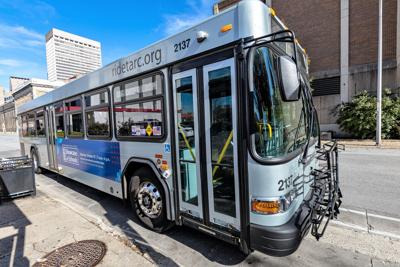


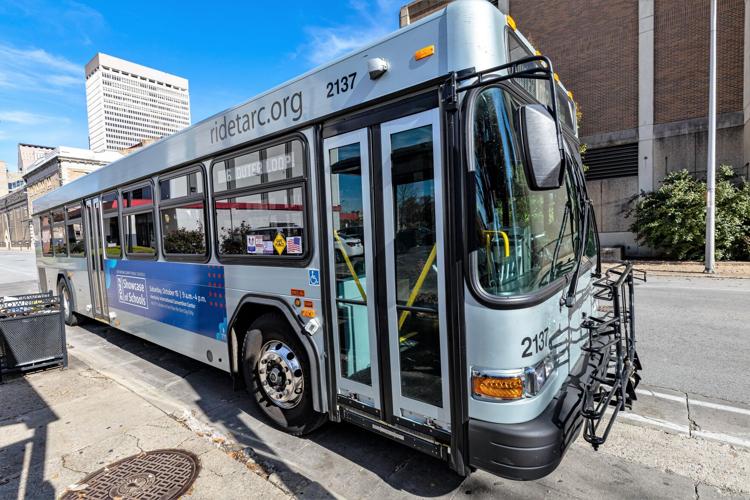
LOUISVILLE, Ky. (WDRB) — The Transit Authority of River City will launch its long-planned new network of routes Aug. 2, a response to decreasing ridership and increasing costs that led the agency to a "financial cliff."
The new network will run most of its routes every 15-30 minutes, but a significant number of stops were eliminated. TARC Director Ozzy Gibson said Wednesday during a ride-a-long on the new routes that the changes had to be made.
"Well, I'm just going to be honest: This should've been done years ago, and nobody likes things taken away," Gibson said. "But we can't afford to go to every stop and run this network the way it is."
Gibson said the new network will consolidate the current 24 routes to 15. Buses currently make 3,341 stops throughout the day. Once Aug. 2 comes, TARC will only make 1,430 stops.
At the beginning of 2024, TARC projected a $30 million deficit by the fiscal year 2027 if action wasn't taken before then. Because of the financial challenges, the agency launched TARC 2025 to ensure long-term sustainability for Louisville transit. TARC is striving to restore its pre-2020 service levels, but with federal funding no longer available and not enough existing local and state funding for transit to cover current service levels, leadership spent months gathering rider feedback to shape the future of public transportation in the region.
Click here to see the new route maps and schedules.
The network implements a new "pulse" system it will rely on, aimed at providing service for downtown Louisville transfers that is both faster and smoother. TARC said that system is a new downtown timed-transfer hub that will be a first in the public transit system's history. Other changes in the new network include:
- Increasing the number of accessible jobs via public transportation by 5%
- Service all JCPS magnet high school locations
- Provide more useful and more frequent service on key corridors, such as Broadway/Bardstown, Preston Highway, 4th Street, Dixie Highway and Market/Frankfort
"We used to have 1 million boardings a month," Gibson said. "Now, we're down to 500,000. It's gone gradually down since 2012 and it hit a cliff during COVID."
Along with those changes, TARC said some customers may have to walk "a little bit further" to get to a stop. Additionally, some will see reduced service, and "a few" will no longer have service altogether. Officials said that includes "lower ridership corridors" in Middletown, Jeffersontown, parts of south and southwest Jefferson County and "other areas.
The agency said riders will need to familiarize themselves with the plan's new route-numbering system and map, which it said will be "different, but much simpler and more useful for the average rider."
As of March 2025, TARC's system was about 50% smaller than its pre-pandemic service after a number of service cuts. TARC leaders said those cuts, combined with the new network and "other changes in the organization," mean the agency "pushed out the fiscal cliff to the FY (fiscal year) 29 or FY 30 budget years."
Earlier this year, TARC increased fares, the first change since 2012. A seven-day pass went from $15 to $25, and a 30-day pass went from $50 to $75. The adult fare increased from $1.75 to $2.25.
Maps for the new network are already available on TARC's website. To look at the countywide map, click here. To look at the "Inside the Watterson" map, click here. To look at the downtown Louisville routing map, click here.
Copyright 2026 WDRB Media. All Rights Reserved.


