


CINCINNATI (WDRB) -- A high stakes federal court case could determine the future of abortion in Kentucky.
The Sixth Circuit Court of Appeals in Cincinnati held a hearing Wednesday to determine whether a law restricting the most common method of abortion is legal.
“This is the next human right that we've fought for, and that is the human right of the unborn child,” said Addia Wuchner, spokesperson for the pro-life group I’m Alive Kentucky.
Wuchner, who is a former state representative, led a rally outside the courthouse in support of the law, HB 454, which she helped pass in 2018.
“It was the ending of a very cruel and brutal procedure,” said Wuchner.
The law prohibits the use of the most common method of abortion, called dilation and evacuation, or D&E, after 11 weeks of pregnancy.
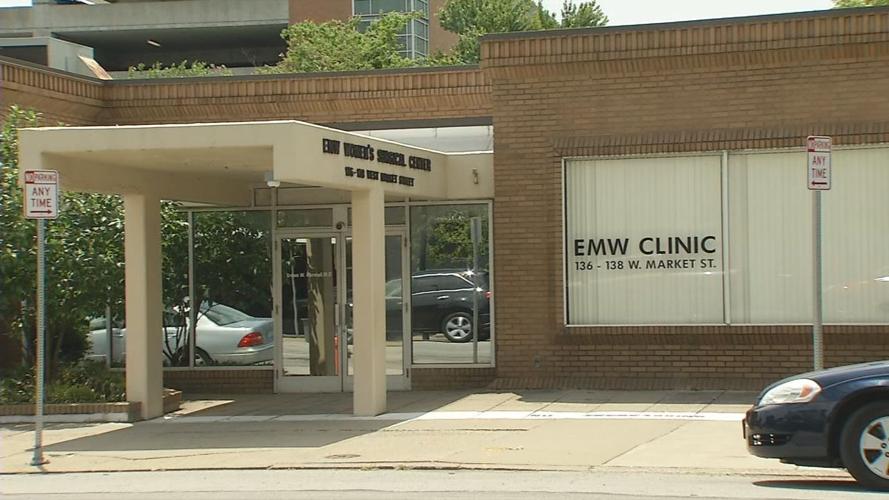
The American Civil Liberties Union and the EMW Women’s Surgical Clinic filed suit to block implementation, and a federal judge in Louisville threw out the law, calling it unconstitutional.
“The impact would be devastating for abortion access for women in Kentucky,” said ACLU attorney Andrew King, who asked the appeals court to uphold the lower court ruling.
“Politicians shouldn't be interfering with the practice of medicine,” Beck told reporters.
Former Governor Matt Bevin originally appealed the ruling, but with pro-choice Governor Andy Beshear now in office, new Attorney General Daniel Cameron took over the case.
“We are going to, to the extent we can, limit a live dismemberment of a child in a womb,” said Cameron. “I think Kentucky has a right to do that. I think it says a lot about the values of the Commonwealth of Kentucky.”
Just sat in on a hearing at the 6th Circuit Court of Appeals in Cincinnatti. The case involves a 2018 KY law that limits the use of the most common method of abortion - dilation and extraction. pic.twitter.com/OErTRsgkdx
— Lawrence Smith (@LASmithReports) January 29, 2020
Cameron's office argued before the three judge panel that abortion providers should use alternative procedures that kill the fetus in the womb before it's removed.
“We, Kentucky, can change how abortion procedures are performed to make them more humane,” said state Deputy Solicitor General Matthew Kuhn.
But the ACLU called such procedures “junk medicine.”
“The point is those procedures carry significant risk, and are dangerous. That's why major medical associations have weighed in against their use,” said Beck.
Ohio already has a similar law on the books.
“If doctors in Ohio are already doing it, why can't doctors in Kentucky do it?” said Kuhn.
A decision could take months, but Cameron said he will appeal to the U.S. Supreme Court if necessary.
Copyright 2020 WDRB Media. All Rights Reserved.


