


LOUISVILLE, Ky. (WDRB) — A planned large-scale data center in Louisville being labeled a "telecommunications hotel" got the green light to advance Thursday despite hours of protest from neighbors.
"Telecommunications hotel" is the term data centers fall under in Louisville's Land Development Code.
The project has faced opposition since it became public, with opponents raising concerns over energy, the environmental impact, noise and other issues that have gained traction as the tech warehouses have expanded in the U.S.
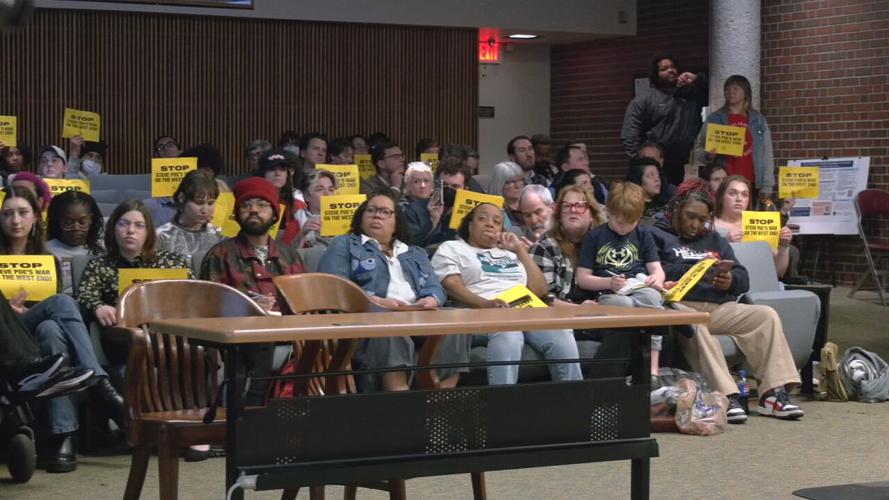
A sea of people holding yellow signs in protest packed the seats at Thursday's Metro Council Planning Commission meeting.
The proposed project is a partnership between Louisville real estate firm Poe Companies and Virginia-based PowerHouse Data Centers, announced in January 2025. The plans call for seven two-story data center buildings spanning about 1.6 million square feet, marking Kentucky's first large-scale data center. It's a project meant to handle massive amounts of data from cloud computing, artificial intelligence and other demands of the digital world.
The group of prospective tenants includes "hyperscalers" — tech giants like Google, Amazon and Microsoft that need thousands of servers, routers, cables and other components in order to store and process troves of information streaming from cellphones, computers and other gadgets.
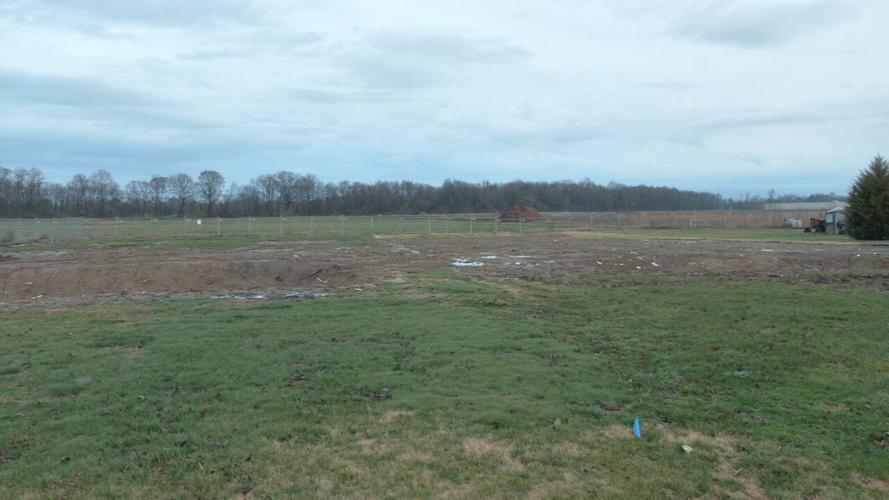
Seven homes have already been purchased to clear the site near the Rubbertown area already teeming with industrial operations.
"It's been kind of a culture shock," said Arnie Youngblood Jr. "These are our neighbors. We've known them for so many years and now they're gone."
A city panel approved development plans in June 2025 for the hyperscale data center. The 4-0 vote by the Development Review Committee was the only vote needed for the project, which didn't need new land-use approvals. The development committee simply needed to decide if the proposal met the city's land code.
Thursday's vote by the Planning Commission determined whether new design changes, such as reducing the footprint and making the buildings two stories tall, still comply with Louisville Code.
No zoning change was required. The development is envisioned on 150 acres on Camp Ground Road in Rubbertown that already is zoned for the industrial use, allowing "telecommunications hotels" — a term critics say is outdated.
"That's talking about a southern bell switchboard in a house," Jeff Cavalcante said. "I feel Poe Companies and PowerHouse Data Centers are taking advantage of outdated and vague regulation in Louisville's Land Development Code."
Metro Council has already acknowledged the issue. In October, councilmembers passed a resolution calling for updates to the city's code to address modern data centers. But the 120-day deadline to make those changes passed, and the code remains unchanged.
Residents spoke for hours Thursday, begging the commission to vote "no."
"Average data centers use two million liters of water daily," one resident said. "They have a tendency to overheat and catch fire, releasing toxic chemicals into the environment."
One of the biggest concerns with data centers is electricity demand. The data center is expected to eventually use roughly 400 megawatts, which is enough to power about 400,000 homes per month.
"The costs don't disappear when they show up on our LG&E bills," a neighbor said.
Louisville Gas & Electric and Kentucky Utilities recently imposed a rate increase for Kentucky customers, saying the money is needed to expand infrastructure for new and existing users. The company insists the hike isn’t specifically for data centers, however, the timing has many skeptical.
In the end, the commission voted to approve the development plan.
"You sold your kids out, you sold your grandkids out," said one person after the commission voted.
In January, Metro Council weighed an ordinance to protect taxpayers as more data centers move into the area.
These facilities require huge amounts of electricity, water, and infrastructure. And while they promise jobs and tax revenue, communities in Meade and Oldham counties have already pushed back hard — saying the costs and risks outweigh the benefits.
Copyright 2026 WDRB Media. All Rights Reserved.


