
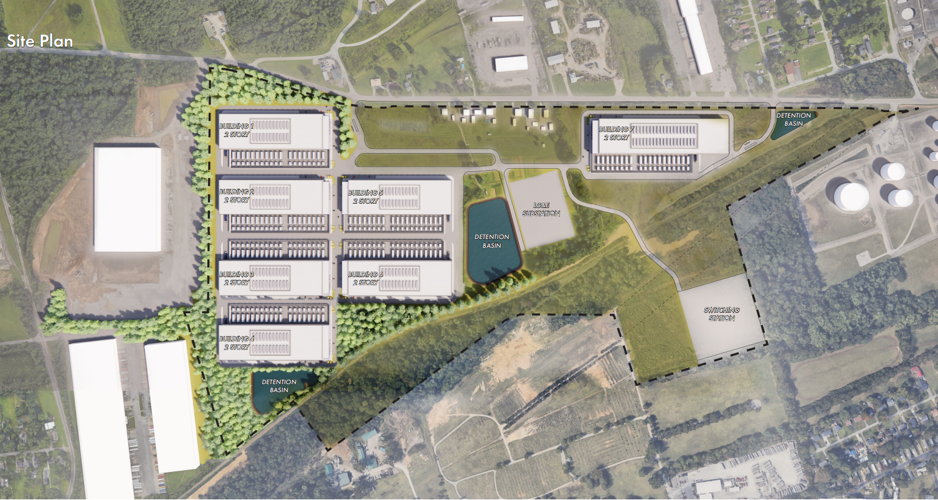



LOUISVILLE, Ky. (WDRB) — As massive hyper-data centers begin popping up across the region from Jeffersonville to the south end of Louisville, local leaders are asking a critical question: Will Louisville’s checkbook be protected?
These facilities require huge amounts of electricity, water, and infrastructure. And while they promise jobs and tax revenue, communities in Meade and Oldham counties have already pushed back hard — saying the costs and risks outweigh the benefits.
Now, Louisville Metro Council is working on an ordinance to safeguard against what some call promises not kept.
“I think that there’s a lot of opposition,” Councilman Markus Winkler, D-17 said. “And not just here in Jefferson County.”
Data centers can be hard to understand — and even harder to see. Behind their windowless walls, they power the cloud services, artificial intelligence, and digital tools used every day. But residents are increasingly worried about what goes into those buildings — especially when it comes to energy use.
“Government regulations tend to lag these sorts of developments,” said Winkler. “So I’m glad we’re still on the front edge of these things.”
Last fall in Meade County, angry demonstrators packed a fiscal court meeting in opposition to a planned hyper-data center. In the end, the vote went their way, and the project was blocked.
One of the biggest concerns with data centers is electricity demand. LG&E has asked regulators for an $11-per-month rate increase on all customers, saying the money is needed to expand infrastructure for new and existing users. The company insists the hike isn’t specifically for data centers, however, the timing has many skeptical.
“The rate area that LG&E covers goes far beyond Jefferson County,” said Winkler. “If these centers get built in Bullitt County, we’ll still see the rate impacts — but without any of the tax benefits.”
Across the river in Ohio, lawmakers are debating a plan to protect taxpayers from corporate pullouts. The proposal would require big data companies to cover a major share of infrastructure costs — even if they don’t end up building their projects.
“Right now, that fixed capacity falls on ratepayers,” one policy expert said. “Under the Ohio plan, companies like Meta, Google, or OpenAI would be committed to paying about 85% of those costs — whether they follow through or not.”
Last summer in Oldham County, a proposed data center there was defeated after residents raised concerns about land use, infrastructure strain, and transparency.
“I do think this is probably the most significant piece of land-use regulation we’ll deal with in years,” said Winkler.
As the region braces for more proposals, Louisville Metro Council is moving quickly to establish guardrails, hoping to balance innovation with accountability.
For now, the question remains: Can Louisville attract high-tech growth without sending taxpayers the bill?
Top Stories:
JCPS plans more than $140 million in new staff, program cuts to close budget gap
After pandemic aid, Kentucky tells thousands of workers to pay back more than $31 million
Kentucky reports 1st measles case of 2026 in unvaccinated Jessamine County resident
From regret to redemption, a Louisville young man charts a new path forward
Copyright 2026 WDRB Media. All Rights Reserved.


