


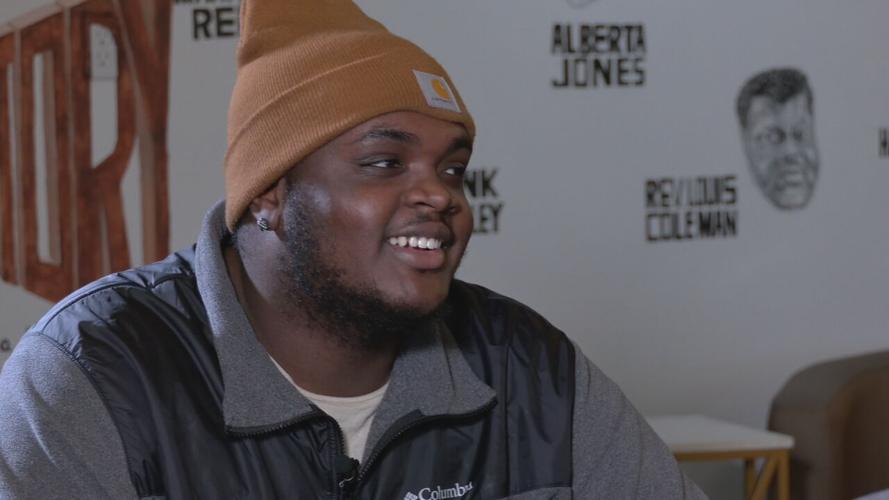
LOUISVILLE, Ky. (WDRB) -- Two months after sharing his story as part of WDRB's Beyond the Bullets series on youth violence, a 20-year-old Louisville man is starting college and working to leave behind a past shaped by loss, incarceration and gun violence.
R'Ione Harris said he feels different these days — focused, ready and determined not to turn back.
"I'm tired of going through things myself and hurting myself," Harris said. "I feel good. I feel ready."
WDRB first introduced viewers to Harris in November as part of Beyond the Bullets, a deep dive into the city's youth violence epidemic. During that discussion, Harris spoke candidly about his past — including losing four friends to murder since the age of 14 and being recruited by what he described as "dangerous people" when he was just 12 years old.
"To us, it's like a family and it's all we know," Harris said at the time.
His teenage years included time in juvenile detention, adult jail and court-ordered rehabilitation. But Harris said he reached a turning point — one that pushed him to try to change the direction of his life.
Two months later, that change is tangible.
Harris started college Monday at Kentucky State University, where he plans to study social work and clinical psychology.
"I want to open group homes and have a career in the mental health field," he said.
Kim Moore, CEO of Joshua Community Connectors and a member of Louisville's Group Violence Intervention team, have been working closely with Harris.
"This is a redemption story," she said. "This is a story about being able to right some wrongs. He may never be able to go back and address those people but he can set an example for the people coming behind him."
But Harris's journey nearly stalled. Just weeks after the Beyond the Bullets special aired, someone close to him was murdered in Louisville — a reminder of the grim reality he was trying to escape.
Last year, nearly 70% of homicide victims in Louisville were Black. Most were men, many under the age of 25. In many cases, the shooter was also young.
Moore said the threats against Harris were real.
"We just embraced him," Moore said. "We took him out of the county, worked with parole and probation, and helped him live somewhere else to keep him safe while we prepared him to go to college."
A small network of mentors, advocates and caseworkers rallied around Harris with a singular goal: get him safely to school.
Still, concerns remain.
Harris is heading to KSU — a campus that made national headlines last month after a shooting. Following that incident, students publicly criticized the university's safety measures.
Asked how he plans to avoid the same pitfalls that led him astray in the past, Harris said his approach is simple.
"Be respectful to the community and myself," he said.
Chris Exton, a case manager with Louisville's Office of Violence Prevention and a Kentucky State alumnus, said stories like Harris' show what's possible — but only with sustained, hands-on intervention.
"I always thought R'Ione was a great kid," Exton said. "Anything is possible. You can change your story, and I think that's what he's showing right now."
Exton is now helping Harris establish a support system on campus — another layer of accountability meant to keep him on track.
The chapters behind Harris won't disappear. But as he turns the page toward a fresh start, he said he's dedicated to what comes next.
"I'm very committed," Harris said.
And for him, that commitment is proof that anything is possible.
Top Stories:
After pandemic aid, Kentucky tells thousands of workers to pay back more than $31 million
JCPS plans more than $140 million in new staff, program cuts to close budget gap
Boeing knew of engine defect tied to fatal UPS plane crash in Louisville, NTSB finds
Copyright 2026 WDRB Media. All Rights Reserved.


