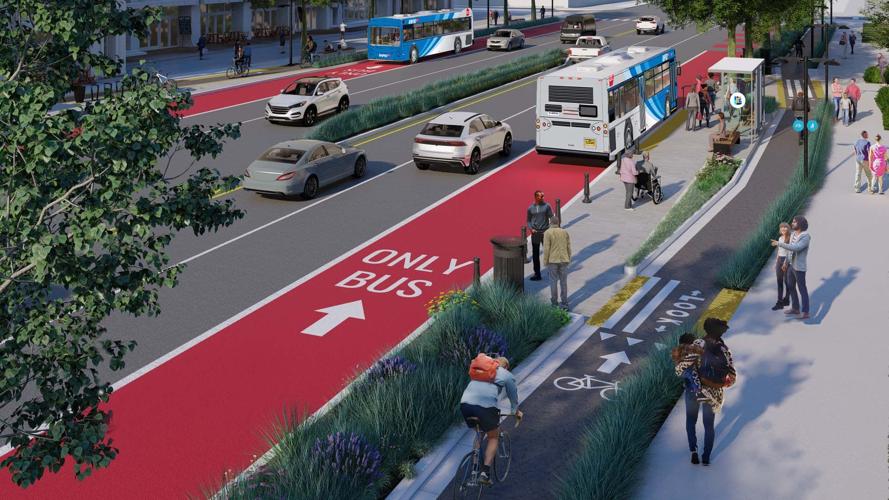




LOUISVILLE, Ky. (WDRB) -- After years of planning and public feedback, the team reimagining one of Louisville's busiest and oldest thoroughfares unveiled its plan.
The "Broadway Master Plan" calls for a TARC-only bus lane, bike lanes and crosswalk improvements in an effort to make Broadway safer and equitable. Architects and city planners with Nashville-based Gresham Smith were tapped by the city to reimagine the street in hopes of making it safer and improving the efficiency of transportation.
The plan was featured in the latest edition of "American Society of Highway Engineer National Scanner Magazine." Authors Jeremy Kubac and Louis Johnson, with Gresham Smith, said Louisville Metro Government recognizes Broadway "was a missed opportunity." They argue the plan laid out will transform it into something that will "enhance quality of life, economic vitality, safety, sustainability and equity for Louisville.
"These residents are dependent on public transportation; however, the existing transit service is inefficient and unreliable," Kubac and Johnson wrote in the piece. "The environment, created by mid-century, car-centric infrastructure, is unhealthy. The roadways are unsafe for vehicles, pedestrians and cyclists, especially for those who rely on them the most."
That proposed project is called "Building a Better Broadway" and includes designs of what the road could look like with medians, more vegetation, road pullouts and crosswalks.
"Trying to make Broadway safer and more user-friendly for everybody is the main goal of this project," Metro Council President David James said Monday.

A map of the "Broadway Master Plan," which calls for a TARC-only bus lane, bike lanes and crosswalk improvements in an effort to make Broadway safer and more equitable. (Metro Louisville Government photo)
The estimated cost for the project is more than $60 million and would come from city, state and federal investments. So far, mostly local funds have been used to create the initial master plan. The city is currently applying for federal funding.
Community input has been taken over the last two years, but the city will still be listening to feedback from those living in the neighborhoods surrounding Broadway.
"These approaches will increase accessibility and safety through universal design, increase connectivity to jobs, reduce vehicle miles traveled and reduce transportation cost burden," Kubac and Johnson wrote. "This, in turn, can improve health outcomes through air quality improvements and increased access to parks."
A firm timeline for the project has yet to be established, and funding still needs to be secured before work can begin. To read more about the plans, click here.
Copyright 2022 WDRB Media. All Rights Reserved.


